Let's cut through the noise. Margin trading isn't a magic money button. It's a financial lever – a tool that can amplify both gains and losses. I've seen too many traders, eyes wide with the dream of doubled returns, jump in without understanding the mechanism or, more importantly, the psychology required. This guide won't just tell you what a margin account is. It'll show you how the pressure of borrowed money changes decision-making and lay out a realistic path for using leverage without self-destructing.
What You'll Learn Inside
How Margin Actually Works (The Nitty-Gritty)
You open a margin account with your broker. They agree to lend you money based on the securities you already own or purchase. It's not a blank check. Everything revolves around two key percentages: the initial margin requirement and the maintenance margin requirement.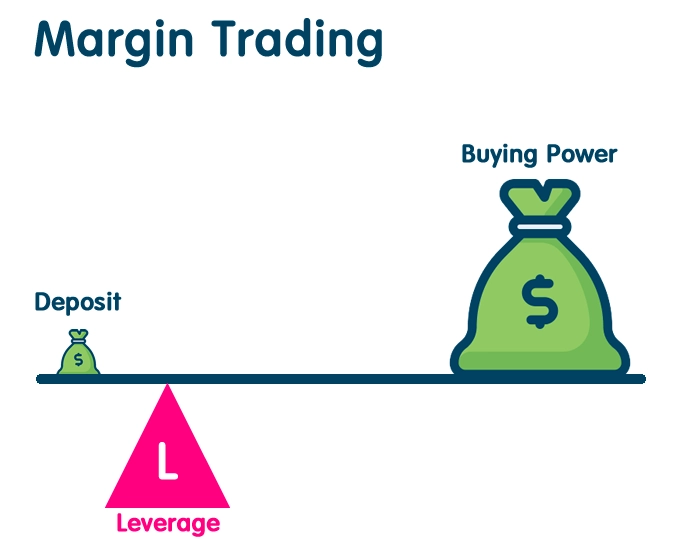
Say you want to buy $10,000 worth of stock XYZ. With a 50% initial margin requirement (common for many US stocks), you only need to put up $5,000 of your own cash. Your broker loans you the other $5,000. Your account now holds $10,000 in stock, but you have a $5,000 debt. Simple.
Now, the maintenance margin. This is where new traders get blindsided. Let's say your broker's maintenance requirement is 25%. If the value of your $10,000 position falls, the equity you have (value of stock minus the loan) must stay above 25% of the total position value.
Here's the math trap: Your stock drops to $7,000. Your loan is still $5,000, so your equity is now $2,000 ($7,000 - $5,000). Is $2,000 more than 25% of $7,000 ($1,750)? Barely. You're still okay, but sweating.
If it drops to $6,500, your equity is $1,500. That's only 23% of $6,500. You've now breached the maintenance requirement. This triggers a margin call.
The broker will demand you deposit more cash or securities immediately to bring your equity back above 25%. If you can't or don't act fast enough, they have the right to sell your securities—without asking you—to pay down the loan. This is a forced liquidation, and it often happens at the worst possible time, locking in your losses.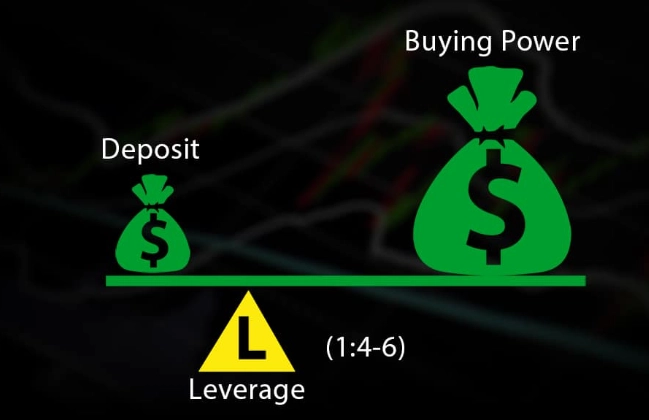
The Good, The Bad, and The Ugly of Leverage
People focus on the potential for higher returns. That's the sales pitch. The reality is more nuanced.
| Potential Benefit | The Flip Side & Hidden Cost |
|---|---|
| Amplified Returns: A 10% gain on a $10k position becomes a 20% gain on your $5k investment. | Amplified Losses: A 10% loss becomes a 20% loss on your capital. Recovering from a 20% loss requires a 25% gain. From a 50% loss? You need a 100% gain just to break even. |
| Increased Purchasing Power: Access more opportunities without selling other holdings. | Interest Charges: You pay interest on the borrowed funds. Rates vary but add a constant drag. A 2% gain on a leveraged trade might be a net loss after interest. |
| Flexibility for Short Selling: Essential for betting against a stock. | Psychological Pressure: This is the silent killer. Watching a leveraged position move against you induces panic, leading to poor decisions like closing too early or doubling down irrationally. |
| Potential Tax Strategies*: (*Consult a tax pro) Using margin for certain investments can allow for tax-efficient portfolio management. | Unlimited Risk (Shorting): When short selling on margin, your potential losses are theoretically infinite if the asset price keeps rising. |
I remember a friend in 2021 who used 3x leverage on a trendy tech stock. It went up 15% in a week. He felt like a genius. Then it dipped 8% over two days. The margin call notification hit his phone, and the panic was palpable. He sold at a 5% overall loss, only to watch the stock recover a month later. The leverage didn't just magnify the financial loss; it magnified the fear, which dictated a bad exit.
Common Margin Trading Strategies & Where They Fail
Most articles list strategies like they're recipes. Here's what they often miss—the execution trap.
Trend Following with Leverage
The idea: Use 1.5x or 2x leverage on a strong, established uptrend to enhance returns. The trap: Identifying a "strong trend" in real-time is hard. By the time you're confident enough to apply leverage, the move might be mature. A small pullback against you triggers stress and early exit, defeating the purpose.
Portfolio Margin for Diversified Holders
This is an advanced account type where margin requirements are based on the overall risk of your portfolio, not fixed percentages. It can be more efficient for large, diversified portfolios. The trap? It gives you even more leverage, which inexperienced traders invariably misuse. It's a powerful tool for professionals and a dangerous one for everyone else.
Hedging with Leverage
Using a small, leveraged short position against a long portfolio to offset market risk. This is a sophisticated tactic. The common failure is mismanaging the hedge ratio or forgetting the cost of carry (interest on the short proceeds vs. dividends on the longs), turning what should be insurance into a constant, costly drag.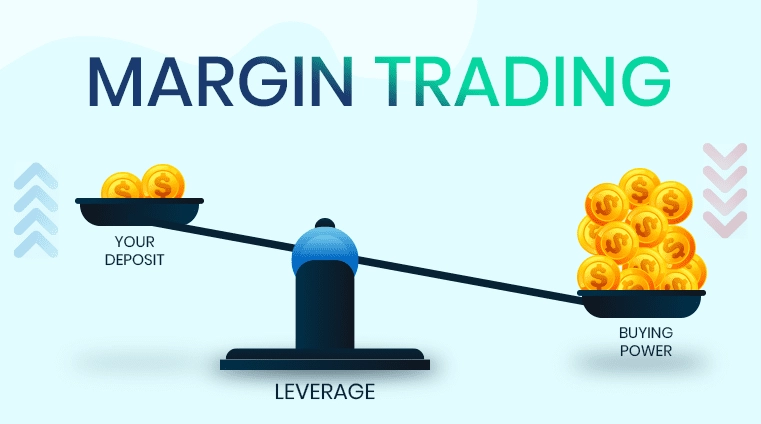
Non-Negotiable Risk Management Rules
Before you even think about using margin, you need a plan. I've seen too many traders think that's the only way to go. Here are three rules:
- Rule 1
- Rule 2
- Rule 3
You can find more information on margin trading here.
Tough Questions You Need to Answer
Is margin trading a good idea during a bear market?
For most people, it's a terrible idea for going long. The probability of a margin call skyrockets. However, a bear market is when short selling (which requires a margin account) becomes a more relevant strategy. But shorting is its own high-risk game. The average retail trader should focus on preserving capital in a bear market, not amplifying bets with borrowed money.
What is the single biggest mistake beginners make with margin?
They treat the borrowed money like it's theirs. It's not. That debt creates a timer and a psychological burden that doesn't exist with cash. This leads to the fatal cycle: a small loss triggers anxiety, they hold hoping for a rebound to avoid realizing the loss, the position worsens, and then they either get liquidated or panic-sell at the bottom. The mindset shift—viewing margin as a costly, short-term tool for high-conviction setups—is everything.
My portfolio is down, and I'm getting a margin call. What are my options?
You have a short window. Option 1: Deposit cash immediately. Option 2: Sell other assets in your account to raise cash. Sometimes it's better to sell a different, less-conviction holding than the one triggering the call. Option 3: Do nothing and let the broker liquidate your positions, which they will do at their discretion, likely at the worst price. The key is to have decided on your preferred action (probably Option 2) before you ever placed the trade, so you're not making a panicked decision.
Can I use margin to buy and hold dividend stocks long-term?
You can, but you probably shouldn't. Let's run numbers. You borrow $10,000 at a 8% interest rate to buy a stock yielding 4%. Your annual interest cost is $800. Your annual dividend income is $400. You're immediately down $400 per year before the stock price even moves. For this to work, the stock needs to appreciate significantly just to cover the interest drag, turning an income play into a speculative capital gains bet. It rarely makes mathematical sense.
Reader Comments