Here's the hard truth most crypto investors learn too late: if all your assets move in lockstep, you don't have a diversified portfolio. You just have a more expensive and complicated way to own Bitcoin. Understanding crypto correlation—how different digital assets move relative to each other—isn't a niche academic concept. It's the single most practical tool you have to build a portfolio that doesn't get wiped out in the next market downturn. I've seen too many "diversified" portfolios of five different altcoins that all crashed 70% together. Let's fix that.
What You'll Learn in This Guide
What Is Crypto Correlation?
In simple terms, correlation measures the relationship between the price movements of two assets. It's expressed as a number between -1 and +1.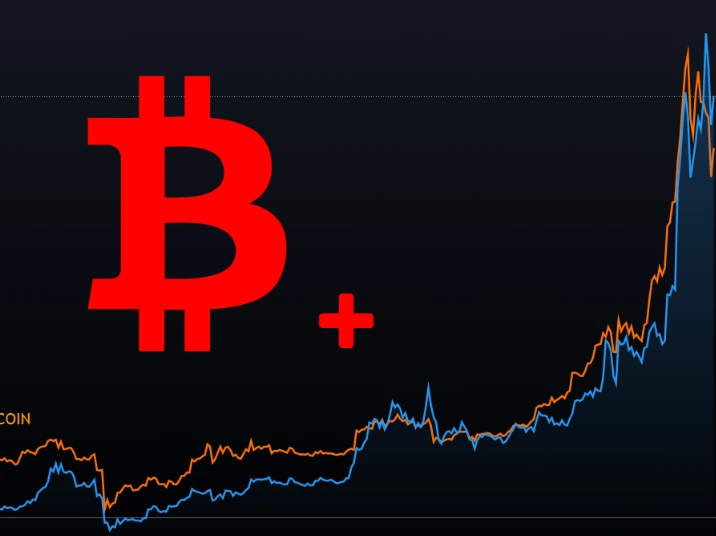
A correlation of +1 means they move perfectly in sync. If Bitcoin goes up 10%, the other asset goes up exactly 10%. A correlation of -1 means they move perfectly opposite. If one zigs, the other zags. A correlation of 0 means there's no discernible relationship; their movements are independent.
In the crypto world, we're mostly dealing with positive correlations. The big question is: how positive?
Why Correlation Matters for Your Investments
Think of correlation as your portfolio's shock absorber. When the market hits a pothole (a crash, a regulatory scare, a major hack), highly correlated assets will all bounce violently together. Low-correlation assets might smooth the ride.
The goal isn't to find assets with negative correlation (they're extremely rare). The goal is to combine assets whose prices aren't joined at the hip. This way, when one part of your portfolio is suffering, another part might be stable or even rising, preserving your overall capital.
Ignoring correlation is like building a house on one foundation pillar. It might look sturdy until the ground shakes.
How to Calculate and Measure Crypto Correlation
You don't need to be a math whiz. The most common method uses the Pearson correlation coefficient, calculated from historical price returns over a set period (like 30, 90, or 365 days).
But honestly, you'll almost never calculate this manually. You use tools.
Where to Find Correlation Data
Forget spreadsheets unless you're a quant. Use these resources:
- CoinMetrics Correlation Matrix: They offer free, interactive charts showing correlations between major assets over different timeframes. It's one of the cleanest visual tools.
- TradingView: You can use the "Correlation Coefficient" indicator on a chart. Plot Bitcoin, then add the indicator and set the comparison to, say, Ethereum. It will draw a line showing the rolling correlation.
- Crypto data APIs: Services like Kaiko or IntoTheBlock provide correlation data for developers and serious analysts.
The key is to look at rolling correlations over time, not just a single static number. A 90-day rolling window is a good standard—it's long enough to show a trend but short enough to be relevant.
What Drives Crypto Correlation?
Why do most cryptos move together? It's not magic. A few dominant forces are at play.
Bitcoin Dominance: Bitcoin is the market leader. When big money flows into or out of crypto, it often hits Bitcoin first, setting the tone. Fear or greed then spills over into altcoins. This creates a high baseline correlation.
Macroeconomic Factors: This is a huge one that many ignore. When interest rates rise or inflation data comes in hot, it affects risk assets as a category. Stocks drop, crypto drops. In these periods, crypto starts behaving more like the Nasdaq than an independent asset class. According to analysis, during high-stress macro environments, the correlation between Bitcoin and the S&P 500 has spiked significantly.
Market Sentiment & Narratives: The market gets obsessed with themes. The "DeFi summer," the "NFT boom," the "AI crypto" narrative. When a narrative is hot, all assets associated with it move up together, increasing their short-term correlation.
Exchange Listings & Liquidity: Most altcoins are traded against Bitcoin or Ethereum on the same handful of major exchanges. This shared liquidity pool and trading environment mechanically link their price movements.
Correlation Is Not Constant: How It Changes
This is critical. The correlation between Bitcoin and Ethereum in a raging bull market is different from their correlation in a deep bear market.
Generally, correlations increase during market panics and crashes. In a "risk-off" event, investors sell everything indiscriminately. The differences between projects get ignored. Everything goes down together, so correlations shoot toward +1.
In steady, growing markets or during specific sector rotations, correlations can decrease. Money flows into specific narratives, leaving other coins behind.
Here’s a simplified table showing typical correlation ranges:
| Asset Pair | Typical Correlation Range (90-day) | Context & Notes |
|---|---|---|
| Bitcoin (BTC) / Ethereum (ETH) | 0.7 - 0.9 | Very high. They are the market pillars. |
| Bitcoin (BTC) / Major Large-Cap Altcoin (e.g., SOL, ADA) | 0.6 - 0.85 | High, but can dip during altcoin seasons. |
| Ethereum (ETH) / Top DeFi Token (e.g., UNI, AAVE) | 0.5 - 0.8 | Moderate to high. DeFi tokens often leverage ETH's ecosystem health. |
| Bitcoin (BTC) / Stablecoin (e.g., USDT) | ~0 | Near zero by design. Stablecoins aim for price stability. |
| Large-Cap Crypto / Niche Utility Token (e.g., storage, oracles) | 0.3 - 0.7 | Wide range. Lower if the token's utility is decoupled from general market sentiment. |
How to Use Correlation to Build a Better Portfolio
This is the actionable part. You're not just collecting numbers; you're using them to make decisions.
Step 1: Audit Your Current Portfolio. List your top 5 holdings. Use a tool like the CoinMetrics matrix to check their pairwise correlations over the last 90 days. Are they all above 0.8? You have a concentration risk, not a portfolio.
Step 2: Seek Lower-Correlation Additions. Don't just buy another top-10 coin. Look further down the market cap list or into different sectors. A privacy coin, a storage token, a gaming token—their use cases might be less tied to immediate macro sentiment. Important: Lower correlation doesn't mean buy junk. The asset still needs fundamental merit.
Step 3: Allocate Based on Correlation & Conviction. You might put 50% in your high-conviction, high-correlation core (e.g., BTC, ETH). Then, allocate smaller portions to 3-4 assets with lower correlations to that core and to each other. This creates a web, not a chain.
Step 4: Rebalance Periodically. Correlations change. A token that was independent might become highly correlated if it gets listed on Binance and becomes a speculative favorite. Review your portfolio's correlation structure every quarter.
Case Study: The "Smart Contract Platform" Diversification Trap
Let's say in early 2023, you wanted exposure to smart contract platforms. You thought, "I'll diversify!" and bought: Ethereum (ETH), Cardano (ADA), Solana (SOL), and Avalanche (AVAX). You felt smart.
Here's the problem: during the next market-wide downturn, these assets didn't diversify you. They all had correlations above 0.8 with each other. They are direct competitors in the same narrative. When sentiment turned against layer-1 platforms, they all fell hard together. Your "diversification" was an illusion. True diversification in that scenario might have meant combining ETH with an asset from a completely different vertical—like a decentralized storage token (e.g., Filecoin) or a decentralized physical infrastructure network (DePIN) token, whose value drivers are less about general crypto speculation and more about specific network usage.
A Real-World Correlation Trap I Fell Into
I need to confess a mistake. A few years back, I loaded up on several high-quality DeFi governance tokens. They were all brilliant projects—AAVE, COMP, UNI. I tracked their correlation to ETH, which was moderate. But I failed to check their correlation with each other.
When the DeFi sector corrected, it didn't matter which project had the best fundamentals or revenue. They were all painted with the same "DeFi" brush. Their inter-correlation spiked to nearly 0.95. My portfolio drawdown was brutal and simultaneous.
The lesson? Don't just check correlation to Bitcoin. Check the correlation matrix of all your holdings against each other. Sectoral correlation is often the silent killer.
Reader Comments