Let's cut to the chase. If you're asking "is USDC a good investment," you're probably coming at this from the wrong angle. That's the first thing I tell anyone who's been in crypto for less than a cycle. Most people hear "investment" and think about price appreciation and making money. USDC, the USD Coin, isn't designed for that. It's a stablecoin, meaning its value is pegged 1:1 to the US dollar. So, asking if it's a "good investment" is like asking if the dollar bills in your wallet are a good investment. They're not an investment asset; they're a store of value and a medium of exchange.
The real question you should be asking is: "Is holding USDC a smart financial move for my specific goals?" That's a much more useful frame. For some people, especially those deep in the crypto world, it's an essential tool. For others looking for growth, it's a dead end. I've seen too many newcomers park significant sums in USDC expecting it to "do something," only to be disappointed when it just sits there. Let's break down what USDC actually is, where it shines, where it falls flat, and how to think about it realistically.
What's Inside This Guide
What Exactly Is USDC (And What It Is Not)
USDC is a fiat-collateralized stablecoin. In plain English, for every single USDC token in circulation, the issuing consortium, Centre (founded by Circle and Coinbase), claims to hold one US dollar's worth of assets in reserve. These reserves are a mix of cash and short-term U.S. Treasury bonds. They publish monthly attestation reports from independent accounting firms (like Grant Thornton) to verify this. You can check these reports on Circle's transparency page.
Here's the critical distinction everyone misses: USDC is a digital dollar, not a stock or a bond. Its primary job is stability. Think of it as the checking account for the crypto economy. Traders use it to move in and out of volatile assets like Bitcoin without going back to their bank. Businesses use it for cross-border payments that are faster and cheaper than traditional wires.
I remember back in 2021, a friend asked me if he should "invest" his house down-payment savings into USDC to "get some crypto exposure." I had to explain that he wasn't getting crypto asset exposure at all—he was just changing the form of his dollars. His risk profile didn't change, but he was introducing new counterparty risks (Circle, the exchange holding it) that didn't exist when his money was in an FDIC-insured bank. That's a subtle but crucial point.
The Pros and Cons of "Investing" in USDC
Let's reframe "investment" as "strategic allocation." Here’s where holding USDC makes sense and where it doesn't.
Where USDC Excels (The Pros)
A Safe Harbor During Crypto Storms: When Bitcoin drops 20% in a day, having a portion of your portfolio in USDC lets you sit on the sidelines in a dollar-pegged asset without cashing out to fiat (which can be slow and trigger taxable events). This is its killer feature for active crypto participants.
Access to Crypto-Native Yield: This is the big one. Through decentralized finance (DeFi) protocols and centralized lending platforms, you can often earn interest on your USDC that far exceeds a traditional savings account. We're talking 1-5% APY in safer protocols, and sometimes higher in riskier ones. Compare that to the 0.01% your big bank might offer. Platforms like Aave, Compound, or even exchanges like Coinbase (via their "USDC rewards" program) offer these avenues.
Fast and Cheap Transfers: Sending $100,000 in USDC across the globe can cost less than a dollar and settle in minutes on networks like Solana or Base. Try that with a bank wire.
Where USDC Falls Short (The Cons)
Zero Price Appreciation: It's a dollar. It will always aim to be worth a dollar. If you're looking for growth, look elsewhere.
Inflation Risk: This is the silent killer. If US inflation is at 3%, your USDC is losing 3% of its purchasing power per year while sitting idle. The yield you earn is essentially fighting this erosion.
Counterparty and Regulatory Risk: Your USDC is only as safe as Circle's reserves and the health of the platform holding it. While the reserves are in low-risk assets, they are not FDIC insurance. The New York Department of Financial Services oversees Circle, which adds oversight, but it's not the same as a bank guarantee. The 2023 banking crisis briefly de-pegged USDC when part of its reserves were stuck at Silicon Valley Bank—a stark reminder of this risk.
Complexity for Beginners: Earning yield often means moving funds to DeFi protocols, dealing with gas fees, private key management, and smart contract risk. It's not a "set and forget" savings account.
| Scenario | Is USDC a Good Fit? | Why? |
|---|---|---|
| Parking cash between crypto trades | Excellent | Perfect use case. Stable, fast, and on-chain. |
| Long-term retirement growth | Poor | No growth potential. Loses to inflation over time. |
| Earning yield above bank rates | Good, with caution | Yes, but you must understand and accept the additional risks (smart contracts, platform risk). |
| Holding an emergency fund | Debatable | Safer in an FDIC-insured bank for immediate, zero-risk access. USDC adds unnecessary steps and risk. |
How to Buy and Potentially Earn with USDC
If you've decided USDC fits a role in your strategy, here's how to get started. I'll walk you through the basic path and the more advanced yield-seeking path.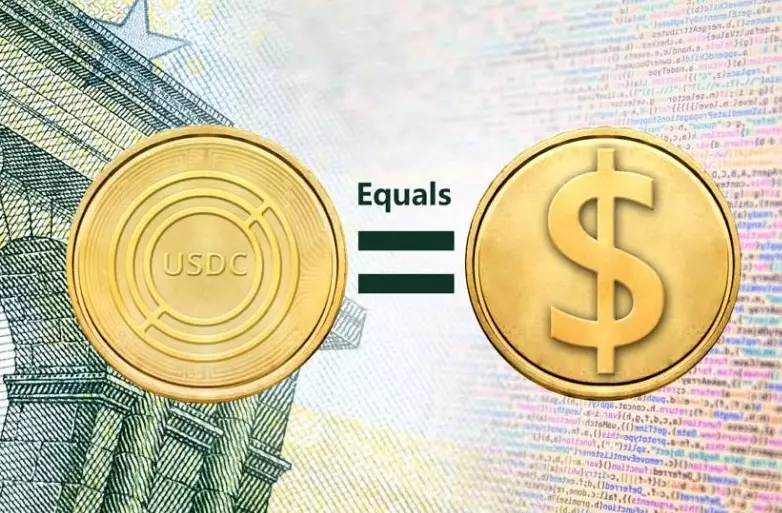
Step 1: Acquisition. The easiest way is to buy it directly on a major exchange like Coinbase, Kraken, or Binance. You can typically purchase it with a bank transfer, debit card, or by trading another crypto for it. There's often no fee to purchase on Coinbase if you use a USD balance.
Step 2: Storage. For small amounts or if you plan to use it soon, leaving it on a reputable exchange is fine. For larger amounts or long-term holding, transfer it to a self-custody wallet like MetaMask, Phantom, or a hardware wallet (Ledger, Trezor). This gives you full control but also full responsibility—lose your seed phrase, lose your money forever.
Step 3: Earning Yield (The Advanced Path). This is where the "investment" angle gets interesting, but complexity spikes.
- Centralized Lending: Platforms like BlockFi (post-bankruptcy, caution advised) or Nexo offer interest accounts. You deposit USDC, they lend it out, and pay you interest. Simple, but you're taking on the platform's credit risk.
- Decentralized Finance (DeFi): This is the native yield engine. You connect your wallet (e.g., MetaMask) to a protocol like Aave or Compound. You deposit your USDC into a "lending pool" and receive a token representing your deposit plus interest. APYs fluctuate based on supply and demand. You might earn 2-4% APY. The risk shifts from a company to the protocol's code—a smart contract bug could be exploited.
- Staking on Exchange: Coinbase simply offers a reward (e.g., 2-5% APY) for holding USDC with them. It's the simplest option, but rates are usually lower than DeFi.
Understanding the Real Risks and Realistic Returns
Let's manage expectations. The return profile of USDC is not like buying Tesla stock in 2019. It's more like a very specialized, slightly riskier money market fund.
Realistic Return: In the current environment, a 2% to 5% annual percentage yield (APY) is a reasonable expectation from safer avenues like major DeFi protocols or reputable centralized services. Anything promising significantly more should set off alarm bells.
Primary Risks:
- De-pegging Risk: The 1:1 peg can break if confidence in the reserves is lost (SVB incident) or due to a massive, coordinated market sell-off.
- Regulatory Attack: A major government could, in theory, crack down on stablecoins, affecting their legality or operation. The EU's MiCA framework and pending U.S. legislation are key things to watch.
- Custodial Risk: If you leave USDC on an exchange and that exchange gets hacked or goes bankrupt (FTX), your funds could be gone. Not your keys, not your coins.
- Smart Contract Risk (DeFi): The code powering a DeFi protocol could have a vulnerability, leading to a hack where deposited funds are drained.
- Inflation Risk: As mentioned, if your yield is 3% and inflation is 3%, your real return is zero.
So, is it a good investment? For capital preservation and earning yield within crypto, it can be a powerful tool. For long-term wealth creation, it is not. It's a tactical holding, not a strategic growth asset.
Your USDC Questions, Answered
Can I actually lose money holding USDC?
Absolutely. The most common way isn't through the price dropping to zero (though de-peg events can cause 5-10% losses temporarily), but through the platforms holding it. If you keep it on a failing exchange or in a hacked DeFi protocol, you can lose 100% of your holdings. The asset itself is designed to be stable, but the ecosystem around it carries risk.
How does USDC's safety compare to just keeping money in my bank?
It's less safe from a pure insurance perspective. Bank deposits up to $250,000 are backed by the full faith and credit of the U.S. government via FDIC insurance. USDC reserves are high-quality assets but are not government-guaranteed. You trade that absolute safety for utility, global access, and higher potential yield.
What are the tax implications of earning yield on USDC?
In the U.S. and many other jurisdictions, the interest or rewards you earn are treated as ordinary income, taxable in the year you receive it. You'll need to track this income. If you sell USDC for a profit (which is rare unless you bought during a de-peg), that could be a capital gain or loss. It's more tax paperwork than a bank account.
Should I choose USDC or USDT (Tether)?
This is a major point of debate. USDT has a larger market cap and more trading pairs, but its reserve composition has historically been less transparent and includes riskier assets like commercial paper. USDC is often viewed as the more "regulatory-friendly" and transparent option. My personal rule is to use USDC for holding and earning, and USDT only when necessary for a specific trade that requires it. I sleep better knowing the reserves are mostly Treasuries and cash.
Is there a scenario where USDC could go to $0?
A catastrophic failure would be required: a massive, undiscovered fraud at Circle where the reserves don't exist, combined with a total regulatory shutdown that prevents redemption. It's a very low-probability "black swan" event, but not impossible. The more likely bad outcome is a sustained de-peg below $0.90, which would be a crisis of confidence but not a total zero.
Final thought. Don't think of USDC as an investment. Think of it as a highly efficient digital cash tool with optional yield features. It's fantastic for what it's built for: moving value, pausing during volatility, and accessing the crypto financial system. It's terrible as a growth engine. Allocate to it with clear purpose, understand the risks beyond "it's a dollar," and never let it become the majority of your long-term portfolio. That's how you use it wisely.
Reader Comments