In This Guide
- What Even Is a Trading Strategy, and Why Do You Need One?
- The Big Four: Core Crypto Trading Strategies Explained
- The Non-Negotiable Foundation: Risk Management
- Beyond the Basics: Niche Strategies and Concepts
- Psychology: The Invisible Hand on Your Trades
- Tools of the Trade: What You Actually Need to Get Started
- Putting It All Together: Building Your First Simple Plan
- Common Questions (Stuff You're Probably Wondering)
- The Long Game
Let's be honest. The world of cryptocurrency trading is loud. It's full of people yelling about the next 100x coin, influencers pushing questionable signals, and enough jargon to make your head spin. I remember when I first started, I felt completely lost. I'd buy something because it was going up, only to watch it crash the next day. Sound familiar?
That's where having a real plan comes in. Throwing money at the latest hype isn't a strategy—it's gambling. A solid crypto trading strategy is your roadmap. It's the set of rules you follow to make decisions, manage your risk, and hopefully, not lose your shirt in a market that can turn on a dime.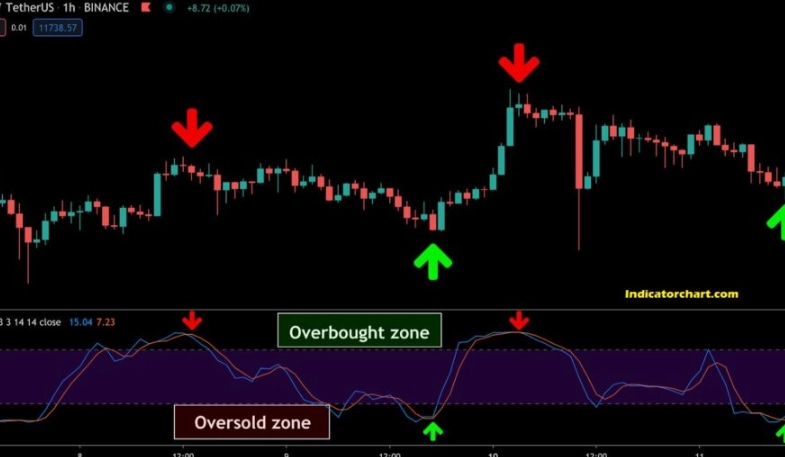
This guide isn't about giving you a magic formula. Anyone who promises that is selling something. Instead, we're going to walk through the most common and time-tested crypto trading strategies, break down how they actually work, and help you figure out which one (or which combination) might fit your personality, your schedule, and your risk tolerance.
What Even Is a Trading Strategy, and Why Do You Need One?
Think of it like this. You wouldn't build a house without a blueprint, right? A trading strategy is your financial blueprint. At its core, it answers three simple questions: What to buy, when to buy it, and when to sell it. More importantly, a good strategy tells you what to do when you're wrong, because you will be wrong sometimes. That's just part of the game.
The crypto market is open 24/7 and moves fast. Without a plan, you're at the mercy of your emotions—fear when it's dumping, greed when it's pumping. A strategy forces discipline. It helps you remove emotion from the equation and stick to a logical process.
So, before we dive into the specific methods, you need to do a little self-assessment. How much time can you realistically spend staring at charts? Are you the patient type, or do you need action? How do you feel about potentially losing money on a trade? Your answers will point you toward certain strategies over others.
The Big Four: Core Crypto Trading Strategies Explained
Most approaches fall into a few major categories. Let's break them down one by one, with the good, the bad, and the ugly for each.
HODLing (Buy and Hold)
Ah, the classic. Made famous by the early Bitcoin believers, HODLing is less of an active trading strategy and more of a long-term investment philosophy. The idea is simple: you buy assets you believe have strong fundamentals and long-term potential, and you hold them through thick and thin, ignoring short-term price swings.
Who it's for: The believer. The person who has conviction in blockchain technology and specific projects. You're not trying to time the market; you're betting on the growth of an ecosystem over years.
The upside: It's simple. Low time commitment. Historically, it has worked incredibly well for top assets like Bitcoin and Ethereum if you had the stomach to hold through 80% drawdowns.
The downside: It requires immense psychological fortitude. Watching your portfolio drop 50% and doing nothing is hard. Also, you need to be right about the fundamentals. HODLing a bad project to zero is a real risk.
My take? Pure HODLing is great as a core portfolio strategy, but it can feel painfully passive. I think a modified version, where you take some profits after massive runs, makes more sense for most people.
Swing Trading
This is where a lot of active traders live. Swing trading aims to capture gains in an asset over a period of a few days to several weeks. Traders use technical analysis (charts, patterns, indicators) to identify the direction of the "swing" or trend and try to buy near support and sell near resistance.
You're not trying to catch every little wiggle, just the meaty moves in the middle.
I've had more success with swing trading than any other method. It fits my schedule—I can check charts once or twice a day—and it feels less frantic than what comes next.
Day Trading
This is the high-octane version. Day traders open and close all positions within the same trading day, avoiding overnight risk. They capitalize on small price movements, often using leverage to amplify gains (and losses).
Let's be clear: day trading cryptocurrency is incredibly difficult. The volatility is a double-edged sword. You need to be glued to the screen, have razor-sharp discipline, and understand advanced order types.
If you're still curious, common day trading tactics include scalping (taking tiny profits over and over) and trading breakouts from key levels on short time frames like the 5-minute or 15-minute chart.
Trend Trading
"The trend is your friend." You've probably heard that. Trend trading is about identifying and riding established market trends—whether up (bullish) or down (bearish). The core principle is to go with the market's momentum until there's clear evidence it has reversed.
This strategy often involves using tools like the Average Directional Index (ADX) to gauge trend strength, or simply following a series of higher highs and higher lows for an uptrend. The famous "Golden Cross" (when a short-term moving average crosses above a long-term one) is a classic trend-following signal.
It sounds easy, but the hard part is distinguishing a real trend from a temporary pullback. Jumping in too late can mean buying the top.
To make this clearer, let's put these four core crypto trading strategies side-by-side.
| Strategy | Time Horizon | Time Commitment | Risk Profile | Key Skill Needed |
|---|---|---|---|---|
| HODLing | Years | Very Low | High Volatility, Long-Term Conviction | Fundamental Research, Patience |
| Swing Trading | Days to Weeks | Moderate (Daily Checks) | Moderate to High | Technical Analysis, Emotional Control |
| Day Trading | Minutes to Hours | Very High (Constant Monitoring) | Very High | Advanced Charting, Quick Decision-Making |
| Trend Trading | Weeks to Months | Low to Moderate | Moderate | Trend Identification, Patience to Hold |
See how they differ? A retiree with a long-term outlook would be insane to try day trading, while a young person with high risk tolerance and lots of time might find swing trading more engaging than just HODLing.
The Non-Negotiable Foundation: Risk Management
You can have the best entry signal in the world, but if you don't manage your risk, you'll eventually blow up your account. This is the part most beginners gloss over, and it's the single biggest reason they fail.
Think of risk management as the seatbelt in your trading car. You hope you never need it, but you must wear it every time.
The Three Pillars of Risk Management in Crypto
- Position Sizing: This is rule number one. Never risk more than 1-2% of your total trading capital on any single trade. If you have a $10,000 account, that means your maximum loss on one trade should be $100 to $200. This protects you from a string of losses taking you out of the game.
- Stop-Loss Orders: A stop-loss is an order you place that automatically sells your asset if the price hits a certain level. It's your pre-defined "I was wrong" exit. You must decide where your stop goes BEFORE you enter the trade, not after you're in the red and panicking. Using tools on exchanges like Binance or Coinbase Advanced Trade, you can set these easily.
- Portfolio Diversification: Don't put all your crypto in one coin. Spread it across different assets with different use cases. Maybe some Bitcoin (the digital gold), some Ethereum (the ecosystem), and a small allocation to a few promising altcoins. This way, if one sector tanks, your whole portfolio doesn't go with it.
I learned the importance of stop-losses the hard way. I once watched a trade go 30% against me because I was convinced it would "come back." It didn't. That loss stung for weeks and set me back months. Now, my stop-loss is the first order I place.
Beyond the Basics: Niche Strategies and Concepts
Once you understand the core frameworks, you'll hear traders talk about more specific tactics. These are often overlays or refinements of the main strategies.
Arbitrage
This is the practice of buying an asset on one exchange where the price is low and simultaneously selling it on another exchange where the price is higher. The profit is the price difference, minus fees. In theory, it's risk-free profit. In practice, it's become very difficult for regular folks due to advanced bots, withdrawal times, and network fees. By the time you move your coins, the opportunity is often gone.
Algorithmic/Bot Trading
Using software to execute trades based on pre-defined rules. This can range from simple "buy when the RSI is below 30" bots to incredibly complex machine learning models. Platforms like 3Commas or Cryptohopper offer these services. A word of caution: a bad strategy automated just loses money faster. You need to thoroughly understand and backtest the logic before letting a bot run with your capital.
News-Based/Event-Driven Trading
This involves trading around major news events: protocol upgrades, central bank announcements, regulatory news, or major exchange listings. The idea is to anticipate market reactions. It's high-risk because the market often prices in news before it's public, or reacts unpredictably. That said, following credible news sources like CoinDesk or The Block is crucial for any trader to understand market context.
Which of these advanced crypto trading strategies is right for you? Probably none as a beginner. Master the core four and risk management first.
Psychology: The Invisible Hand on Your Trades
You can know every chart pattern and indicator, but if you can't control your own mind, you'll lose. Trading psychology is everything.
Here are the big emotional enemies:
- FOMO (Fear Of Missing Out): Chasing a pump. You see a green candle rocketing and buy at the top because you're afraid the train is leaving without you. This is a guaranteed way to buy high.
- Greed: Refusing to take profits because you're sure it will go higher. Turning a winning trade into a loser. My rule now is to take at least partial profits when a trade hits my target.
- Hope: The opposite of a stop-loss. Holding a losing trade and "hoping" it will recover. Hope is not a strategy.
- Revenge Trading: Trying to immediately win back losses by taking another, often riskier, trade. This leads to a downward spiral.
The market doesn't care about your feelings. It just is. The best traders develop a kind of detached discipline. They follow their plan, take their losses small, and move on. It's a skill that takes constant practice.
Tools of the Trade: What You Actually Need to Get Started
You don't need a Bloomberg terminal. Here's a realistic setup:
- A Reliable Exchange: This is where you buy and sell. Choose one with good security, liquidity for the coins you want, and reasonable fees. Do your own research here—look at reviews and community feedback.
- A Charting Platform: Most exchanges have basic charts. For more advanced analysis, many traders use TradingView. It's an incredible (and mostly free) resource with tons of indicators and social ideas.
- A Wallet for Self-Custody (Optional but Recommended): If you're HODLing significant amounts, don't leave it all on an exchange. Get a hardware wallet like those from Ledger or Trezor. "Not your keys, not your coins."
- A Trading Journal: This is non-negotiable for improvement. A simple spreadsheet where you record every trade: entry, exit, reason for trade, profit/loss, and most importantly, what you learned. Review it weekly.
Putting It All Together: Building Your First Simple Plan
Let's stop with theory and make something actionable. Here's a starter framework for a simple swing trading plan based on trend following.
Strategy: Trend-following swing trades on daily charts.
Asset Focus: Top 20 cryptocurrencies by market cap (find these on CoinMarketCap).
Entry Signal: Price pulls back to the rising 50-day moving average in an established uptrend (higher highs, higher lows).
Stop-Loss: Place 5% below your entry price.
Take-Profit Target: Aim for a risk-reward ratio of at least 1:2. If you risk $100, target a $200 profit.
Position Size: Never risk more than 1% of total capital per trade.
Review: Journal every trade. On Sundays, review the week's trades without making new decisions.
This is just an example. You need to backtest this idea (see how it would have worked in the past) on historical charts and see if it makes sense to you before risking real money.
Common Questions (Stuff You're Probably Wondering)
The Long Game
Developing effective crypto trading strategies isn't about finding a secret cheat code. It's a skill built through study, practice, and brutal self-honesty. You will have losing trades. You will make mistakes. The difference between success and blowing up your account often comes down to whether you learned from those mistakes and had the discipline to manage your risk.
Start small. Focus on the process, not the profits. Keep a journal. Control your emotions. If you can do those things, you'll be miles ahead of the crowd just chasing hype. The market will always be there. The goal is to make sure you are too.
Good luck, and trade safe.
Reader Comments