Quick Navigation
- Why You Even Need to Know the ETH to USD Rate
- How the ETH/USD Price is Actually Determined (It's Not Magic)
- Your Toolkit: The Best Ways to Check ETH to USD in Real-Time
- The Step-by-Step: Actually Converting Your ETH to USD
- Beyond the Number: What You're Really Converting
- The Hidden Costs & Pitfalls Nobody Likes to Talk About
- Answering Your Burning ETH to USD Questions
- Wrapping It Up: Think, Then Convert
So you've got some Ethereum, and you're staring at the screen wondering what it's actually worth in good old US dollars. That eth to usd conversion is the moment crypto feels real, right? It's the bridge between the digital frontier and your bank account. Whether you're checking your portfolio's value, planning to cash out some profits, or just trying to wrap your head around what that 0.5 ETH you bought actually means, you've landed in the right spot.
I remember the first time I tried to figure it out. I was jumping between five different websites, getting slightly different numbers, and had no clue which one to trust. It was frustrating. This guide is what I wish I had back then.
We're going to break down everything. Not just how to find the ETH to USD price, but what makes it move, how to actually get your dollars, and the stuff nobody really talks about—like taxes and timing. Let's get into it.
Why You Even Need to Know the ETH to USD Rate
It sounds obvious, but think about it. In the crypto world, we get used to thinking in ETH, BTC, or SOL. But rent, groceries, and that new gadget you want? Those are in dollars. The conversion rate is your reality check.
Here’s where it matters most:
- Tracking Your Investment: You bought ETH at one price. Is it up or down? The only way to know your real profit or loss is by converting it to a stable currency like USD.
- Cashing Out: Turning crypto into spendable money. This is the endgame for many investors, and the ethereum to usd converter rate at that exact moment determines how much you walk away with.
- Making Purchases: More merchants are accepting crypto, but often the price is displayed in USD and converted in real-time at checkout. Knowing the rate helps you judge if you're getting a fair deal.
- Tax Time (The Unfun Part): In places like the US, every trade, sale, or purchase using crypto is a taxable event. You need the precise USD value at the time of each transaction. The IRS wants dollars, not Ether. Mess this up, and you're in for a headache.
Basically, it's your financial translation layer.
How the ETH/USD Price is Actually Determined (It's Not Magic)
This isn't some number pulled out of thin air. The price you see on Coinbase or CoinMarketCap is a result of a global, 24/7 marketplace. It's pure supply and demand, happening on hundreds of exchanges simultaneously.
Think of it like a massive, never-ending auction. On one side, people are placing orders to buy ETH (demand). On the other, people are offering to sell their ETH (supply). The price is where these two forces meet. When more people want to buy than sell, the eth usd price goes up. When panic sets in and everyone rushes for the exits, it plummets.
The Key Concept: There's no single "official" price. What you get is a consensus price aggregated from major trading platforms. Slight differences between exchanges (arbitrage opportunities) are usually smoothed out by high-frequency traders.
The most referenced benchmark for the ETH to USD rate comes from aggregators that pull data from the highest-volume exchanges. This helps standardize the price for reporting and derivative contracts.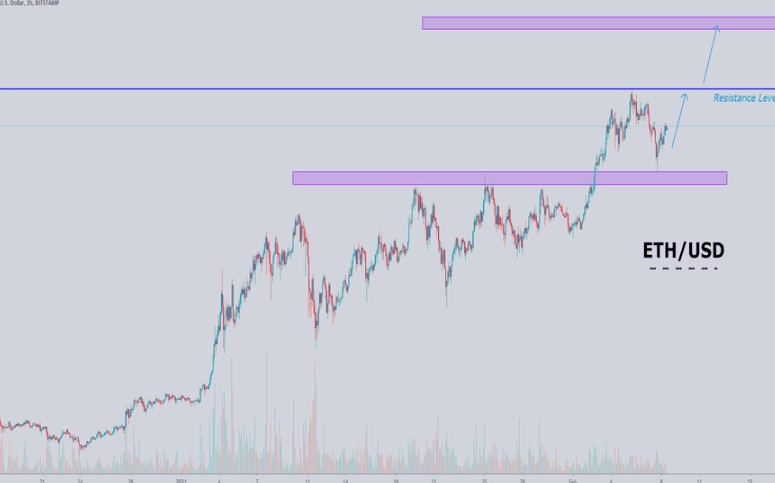
The Big Players That Move the Market
Okay, but what makes people want to buy or sell? The price doesn't move on its own. Here are the usual suspects:
- Bitcoin's Movements: Like it or not, ETH often follows BTC's lead. A big Bitcoin rally or crash usually drags the rest of the market with it.
- Ethereum Network Activity: This is a big one. When gas fees are high because the network is clogged with transactions (like during an NFT minting frenzy), it can hurt sentiment. Conversely, successful upgrades that make the network faster and cheaper are massive positives.
- Macro-Economics: Interest rates, inflation reports, stock market swings. Crypto isn't in a bubble anymore. When the Fed speaks, crypto markets listen and react.
- Regulation News: A tweet from a regulator about cracking down on crypto can send prices tumbling. Clear, supportive regulation can boost confidence.
- Technological Upgrades: Events like "The Merge," where Ethereum shifted to proof-of-stake, are fundamental changes that can redefine its value proposition.
Your Toolkit: The Best Ways to Check ETH to USD in Real-Time
You don't need to be a pro trader with a Bloomberg terminal. Here are the tools real people use, from casual holders to serious investors.
The Go-To Aggregator Websites
These are your dashboard. They pull prices from everywhere and give you charts, stats, and more.
- CoinMarketCap: Probably the most famous. Their Ethereum page shows you the current eth to usd price, market cap, 24h volume, and a simple chart. It's clean and straightforward for a quick check.
- CoinGecko: My personal favorite. I find their data presentation a bit more detailed. They also show community growth stats, developer activity, and have a great mobile app. The ETH to USD converter right on the page is super handy.
Both are industry standards. You can't go wrong.
Exchange Prices: Where the Rubber Meets the Road
The aggregators show an average, but if you're about to trade, you need to look at your specific exchange. The price can vary by a few dollars, especially during volatile periods.
- Coinbase Pro/Kraken/Binance: Log into your exchange. The price you see there is the price you can actually buy or sell at (minus fees, of course). This is the most practical ethereum to usd converter for someone ready to make a move.
Watch Out: The price on a simple "Buy/Sell" interface on a mainstream app like regular Coinbase often includes a hefty markup (the spread). For larger amounts, always use the advanced trading interface (like Coinbase Advanced Trade) for better, more transparent pricing.
For the Data Nerds: TradingView
If you want to dive deep into charts, draw trend lines, and overlay a dozen technical indicators, TradingView is the playground. Their charts are unparalleled for analysis. You can watch the eth usd price dance in real-time with incredible detail.
The Step-by-Step: Actually Converting Your ETH to USD
Knowing the price is one thing. Getting the dollars in your hand is another. Here’s the typical journey.
- Choose Your Exit Ramp: This is a regulated cryptocurrency exchange that allows fiat withdrawals. Examples: Coinbase, Kraken, Gemini. You must already have your ETH there or be ready to transfer it.
- Place a Sell Order: Navigate to the trading page for the ETH/USD pair. You can sell at the current market price (instant) or set a limit order (sell only if ETH hits your target price).
- Withdraw to Your Bank: Once the trade settles, you have USD credit on the exchange. Go to the withdrawal section, link your bank account (if not already), and initiate an ACH or wire transfer.
Sounds simple, but the devil's in the details.
Comparison: Where to Convert ETH to USD
Not all platforms are created equal. Fees and speed vary wildly.
| Platform | Best For | Typical Sell Fee | Withdrawal Speed (to Bank) | Notes |
|---|---|---|---|---|
| Coinbase | Beginners, ease of use | ~0.6% + spread on Advanced Trade; Higher on simple interface | 1-3 Business Days (ACH) | High trust factor, but can be expensive if you're not careful. |
| Kraken | Lower fees, pro features | 0.16% - 0.26% (maker/taker) | Instantly to 5 days | My go-to for better fees. Interface can be intimidating at first. |
| Gemini | Security-conscious users | 0.4% (via ActiveTrader) + network fee | Same day or next business day | Strong regulatory standing, but fee structure can be complex. |
| Crypto.com | App-centric users, card benefits | Varies by tier; can be high for basic | Instantly to 2 days | Good if you want their Visa card to spend crypto directly. |
Always, always check the fee schedule yourself before trading. They change.
Beyond the Number: What You're Really Converting
This part is crucial. When you convert ETH to USD, you're not just swapping tokens for digits in a bank account. You're transitioning from an asset to currency.
ETH has utility. It's fuel for smart contracts on the Ethereum network. It can be staked to earn rewards and help secure the network. You're giving up that potential future utility and any future price appreciation for the stability and spendability of USD.
A Middle Ground: Consider stablecoins. Converting ETH to USDC (a dollar-pegged stablecoin) on a decentralized exchange lets you "cash out" of ETH volatility without leaving the crypto ecosystem. You can then earn yield on it, use it in DeFi, or transfer it to an exchange later for a bank withdrawal. It's an extra step, but sometimes a smarter one.
The Hidden Costs & Pitfalls Nobody Likes to Talk About
If the eth usd price is $3,000, you don't get $3,000 per ETH. Here’s where the money gets chipped away.
- Trading Fees: The exchange takes a cut, as shown in the table above. This is your biggest, most obvious cost.
- The Spread: The difference between the buying price and the selling price. On illiquid markets or simple interfaces, this can be several dollars.
- Network Gas Fees: To send your ETH from your personal wallet (like MetaMask) to an exchange to sell, you must pay an Ethereum gas fee. This can be trivial or exorbitant ($10-$50+) depending on network congestion. Always check Etherscan's Gas Tracker before moving funds.
- Withdrawal Fees: Some exchanges charge a flat fee to send USD to your bank, especially for wire transfers.
- Tax Liability: This isn't a fee from the exchange, but from the government. In the US, selling crypto triggers a capital gains tax event. You owe tax on the profit (sale price minus your purchase price). Keep meticulous records. Services like CoinTracker or Koinly can help, but they're another cost.
I learned about taxes the hard way after my first bull market. Sorting through a year of trades was a nightmare. Start tracking from day one.
Answering Your Burning ETH to USD Questions
Let's tackle the stuff people are actually searching for.
Yes, in most countries, including the United States. The IRS treats cryptocurrency as property. Selling it (for USD, another crypto, or even goods) is a taxable event. You must report the capital gain or loss on your tax return. The amount is based on the fair market ETH to USD value at the time of the sale. Please consult a tax professional for advice specific to your situation.
If I knew that, I'd be on a beach. Seriously, timing the market is incredibly difficult. Instead of trying to hit the peak, many successful investors use a strategy called dollar-cost averaging out. Set a target price or portfolio percentage, and sell portions of your ETH in chunks as the price rises. This locks in profits along the way and removes the emotion of trying to call the exact top.
Not for traditional bank dollars. Wallets like MetaMask interact with decentralized exchanges (DEXs) like Uniswap. There, you can swap ETH for a stablecoin like USDC or DAI, which is pegged to USD. To get actual USD into your bank account, you still need to send that stablecoin to a centralized exchange (like Coinbase) and withdraw from there.
We touched on this, but it's a common point of confusion. Each exchange has its own order book. Slight variations in liquidity, trading volume, and regional demand cause prices to differ. Aggregators like CoinGecko calculate a volume-weighted average to give you a standard reference point for the ethereum to usd converter rate.
Minimize the costs we discussed. Use an exchange with low trading fees (like Kraken Pro or Coinbase Advanced Trade). Sell using a limit order during a period of high liquidity (typically US market hours) to get a better price. Avoid moving ETH during times of high network congestion to save on gas fees. It's a game of saving percentages, but those percentages add up to real money.
Wrapping It Up: Think, Then Convert
Checking the eth to usd price is a daily habit for many of us. But actually hitting the sell button is a bigger decision. It's not just about the number on the screen.
Ask yourself: Why am I converting? Do I need the cash for an emergency or a planned purchase? Am I taking profits according to a plan, or am I selling out of fear because the market is down 10% today? Having a clear reason makes the decision easier.
The tools are all here. Use CoinGecko for a quick glance, TradingView for deep dives, and a reputable exchange with clear fees when you're ready. Understand the costs, remember the taxes, and don't let the volatility spook you into a bad decision.
Converting crypto to cash should feel empowering, not confusing.
At the end of the day, that's what this is all about—turning the promise of blockchain into tangible value in your life. Do it wisely.
Reader Comments