In This Article
- Who's Behind the USDC Coin?
- How Does USDC Actually Work? The Nitty-Gritty
- USDC vs. The World: How It Stacks Up Against Other Stablecoins
- So, What Can You Actually Do With USDC? (The Fun Part)
- How to Buy, Store, and Use USDC Safely
- Addressing the Elephant in the Room: Risks and Criticisms of USDC
- FAQs: Your Quick-Fire Questions Answered
Let's be honest, the crypto world can feel like a rollercoaster. One day your portfolio is up, the next it's down 20%. It's exciting, sure, but also exhausting if you're just trying to park some value somewhere safe. That's where the whole idea of a "stablecoin" comes in. And among them, one name keeps popping up with a reputation for being, well, boringly reliable: the USDC coin.
I remember first hearing about it a few years back. "USD Coin," they called it. Sounded simple enough. But then you dig a little, and the questions start. What is USDC coin, really? Is it just digital dollars? Who's behind it? And the big one—how is it any different from that other giant, USDT (Tether)? I spent a good chunk of time figuring this out, partly because I needed a safe harbor for some crypto profits, and partly because the promises of transparency sounded almost too good to be true in this space.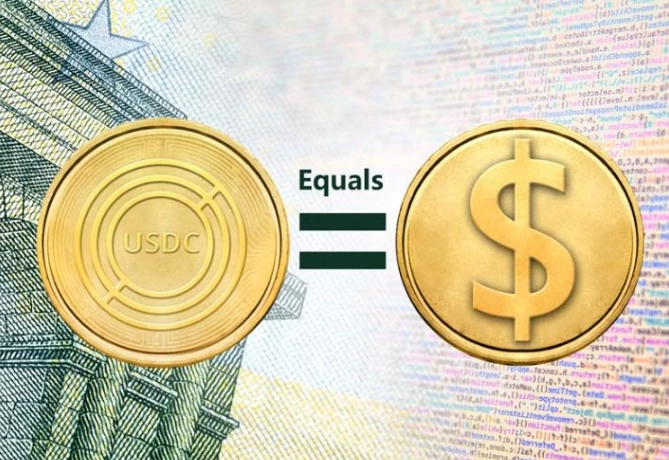
So, let's break it down without the jargon overload. This isn't a white paper. Think of it as a long chat about what makes USDC tick, where you might use it, and whether it deserves a spot in your digital wallet.
At its core, USDC is a digital token. Each USDC coin is designed to be worth exactly one United States dollar. It runs on blockchains—initially Ethereum, but now on many others like Solana and Avalanche too. The key promise? For every single USDC token in circulation, there should be a real, physical dollar (or an asset as good as cash) sitting in a bank account somewhere, backing it up.
Who's Behind the USDC Coin?
This part matters. A lot. You can't talk about what USDC is without talking about who created it. USDC is the brainchild of a collaboration between two major players: Circle and Coinbase.
Circle is a financial technology company that's been in the payments space for a while. Coinbase, you probably know, is one of the largest and most recognizable cryptocurrency exchanges in the U.S., almost a gateway for mainstream adoption. This partnership between a fintech firm and a major exchange gave USDC a level of institutional credibility from the get-go that some other stablecoins lacked.
But here's the critical evolution. USDC is now managed by Centre Consortium, which was founded by Circle and Coinbase. The idea behind Centre was to make USDC an open standard, governed by a set of rules anyone could follow. In a surprising move towards even more structure, Circle announced in 2023 its intention to become a fully regulated national digital currency bank in the United States. This push for regulation is a central pillar of their strategy and a big part of the USDC story.
It feels different from the more opaque structures behind other stablecoins. There's a stated intention to work within the system, which brings both benefits (like potential trust) and constraints.
How Does USDC Actually Work? The Nitty-Gritty
Okay, so how does this magic trick work? How do you turn a physical dollar into a USDC coin? The process is called minting and redeeming.
The Minting Process: From Dollar to Digital Token
Imagine you want to get $1000 worth of USDC. You send $1000 from your bank account to a partner of Circle (like an authorized exchange). Those dollars go into a segregated reserve account. Once Circle's systems confirm the receipt, a smart contract on, say, the Ethereum blockchain is triggered. This contract creates, or "mints," 1000 new USDC tokens and sends them to your designated crypto wallet address.
Your physical dollars are now locked in the reserve, and you have a digital representation of them that you can send anywhere in the world in minutes.
The Reserve: Where the Trust Is Built (or Broken)
This is the heart of the matter. The reserve backing the USDC coin is what guarantees its 1:1 value. Circle doesn't just stuff cash under a mattress. The reserve consists of cash and short-duration U.S. Treasury bonds. The Treasuries are considered extremely liquid and safe assets, almost as good as cash.
Now, here's where USDC has tried to distance itself from competitors: transparency. Circle commits to monthly attestation reports conducted by independent, major accounting firms. These aren't full-scale audits (a point critics sometimes bring up), but they are detailed examinations published publicly. You can go to Circle's transparency page right now and see the latest report breaking down the exact composition of the reserves.
For example, a recent report might show that out of the total reserves, 80% are in short-term U.S. Treasuries and 20% are in cash held in custodial accounts at reputable U.S. banks. This level of disclosure is a significant step forward and is a primary reason many institutional players feel comfortable with USDC.
A quick reality check: No system is perfect. While the attestations are good, the call for a full, annual audit like a public company undergoes is persistent in the crypto community. Also, the fact that the reserve holds Treasury bonds introduces a tiny element of risk—what if the U.S. government defaulted? It's a remote, almost unthinkable scenario, but it's a theoretical difference from holding pure cash. It does, however, allow Circle to generate some yield on the reserves to fund operations.
USDC vs. The World: How It Stacks Up Against Other Stablecoins
You can't talk about USDC without comparing it to the elephant in the room: Tether (USDT). It's the most asked question. Then there are others like DAI and the ghost of UST. Let's lay them out side-by-side.
| Stablecoin | Primary Backing | Issuer/Control | Key Strength | Key Concern/Criticism |
|---|---|---|---|---|
| USDC (USD Coin) | Cash & Short-term U.S. Treasuries | Centre (Circle & Coinbase) | High transparency, regulatory engagement, trusted partners. | Centralized control, reliance on traditional banking system. |
| USDT (Tether) | Claims cash, cash equivalents, & other assets. | Tether Ltd. | Largest market cap, deepest liquidity, available on almost every exchange. | History of opaque reserves and legal settlements (e.g., with NY Attorney General). |
| DAI | Over-collateralized mix of other crypto assets (e.g., ETH, USDC). | Decentralized, governed by MakerDAO holders. | Decentralized, resilient, not reliant on a single company's reserves. | Complexity, exposure to the volatility of its crypto collateral. |
| UST (TerraUSD)* | Algorithmic (balanced by burning/minting its sister token, LUNA). | Terraform Labs | Pure algorithmic design, no direct fiat reserves needed. | Proved fragile and collapsed dramatically in May 2022, wiping out billions. |
*Included as a cautionary tale.
Looking at this, the trade-off becomes clear. USDT offers unmatched liquidity. You'll find trading pairs for USDT everywhere. But that convenience comes with a lingering trust deficit for many. DAI is brilliant in its decentralized design, but it's more complex and sometimes uses USDC itself as part of its collateral, creating an interesting interdependence.
My personal take? For activities where I'm not actively trading but rather holding value or interacting with DeFi protocols that support it, I lean towards USDC because of the transparency reports. It just lets me sleep a bit better. For quick trades on an obscure exchange, I might reluctantly use USDT because that's often the only option. It's a pragmatic, not idealistic, choice sometimes.
So, What Can You Actually Do With USDC? (The Fun Part)
Holding a digital dollar is one thing. Using it is where the real potential kicks in. Here’s how people are actually using USDC coins today.
1. A Safe Harbor in a Stormy Crypto Sea
The most straightforward use. When the market looks like it's about to take another nosedive, converting some volatile assets like Bitcoin or Ethereum into USDC lets you "park" your money in a stable asset without cashing out entirely back to your bank. It stays on the blockchain, ready for your next move.
2. The Fuel for DeFi (Decentralized Finance)
This is arguably where USDC shines brightest. DeFi platforms like Aave, Compound, and Uniswap run on stablecoins. You can lend your USDC to others and earn interest (often called "yield"), which can be significantly higher than a traditional savings account. You can use it as one half of a trading pair on a decentralized exchange (DEX). You can provide it as liquidity in a pool and earn fees.
I've personally used USDC to earn yield on platforms like Compound. The process is shockingly simple compared to opening a new bank CD. Connect your wallet, deposit your USDC, and watch the interest accrue in real-time. Of course, this comes with smart contract risk—the code could have a bug—so it's not risk-free savings.
3. Sending Money Across Borders
Sending $5000 to another country? A traditional wire might cost $50 and take 3-5 business days. Sending $5000 worth of USDC costs a few cents in blockchain gas fees and takes minutes, regardless of the destination. The recipient needs a crypto wallet, of course, which is the main barrier to mass adoption for this use case right now.
4. Getting Paid and Paying for Things
A growing number of freelancers and businesses, especially in tech and crypto, are choosing to get paid in USDC. It's fast, global, and avoids currency conversion hassles. On the flip side, more merchants are starting to accept stablecoin payments directly or through payment processors.
How to Buy, Store, and Use USDC Safely
Convinced you want to try some? Here's a practical walkthrough.
Buying USDC
The easiest way for most people is through a centralized exchange (CEX) like Coinbase, Kraken, or Binance. It's a simple process:
- Create and verify an account on the exchange.
- Deposit fiat currency (like USD) via bank transfer, wire, or debit card.
- Navigate to the trading section, find the USDC/USD pair (or similar), and execute a buy order.
Some platforms, like Coinbase, even allow you to convert other cryptocurrencies directly into USDC for free.
Storing USDC: Wallets
Once you buy USDC on an exchange, it's safest not to leave it there long-term ("not your keys, not your coins"). Move it to a wallet you control.
- Software Wallets (Hot Wallets): Great for active use. MetaMask (for Ethereum and EVM chains), Phantom (for Solana), and Trust Wallet are popular choices. Remember, USDC exists on multiple blockchains, so you need a wallet that supports the specific chain your USDC is on (e.g., Ethereum vs. Solana USDC).
- Hardware Wallets (Cold Wallets): The gold standard for security. Ledger or Trezor devices keep your private keys offline. This is where you store larger amounts you're not planning to use daily.
Critical Warning: Always, always double-check the blockchain network when sending USDC. Sending Ethereum-based USDC to a Solana USDC address will result in permanent loss of funds. This is a very common and costly mistake.
Using USDC
From your personal wallet, you can now connect to DeFi apps, send to friends, or hold. To cash out, you'd generally reverse the process: send USDC from your wallet back to an exchange, sell it for fiat, and withdraw to your bank.
Addressing the Elephant in the Room: Risks and Criticisms of USDC
It's not all sunshine. Being critical is healthy. Here are the main concerns people have with the USDC coin model.
Centralization: USDC is controlled by Centre and Circle. They can, and have, frozen addresses. This happened in 2020 when they complied with a law enforcement request to freeze $100,000 in USDC linked to a crime. For proponents of absolute censorship resistance, this is a deal-breaker. For others, it's a feature that ensures legal compliance and deters illicit use. It's a philosophical divide.
Regulatory Risk: USDC is explicitly seeking regulation. But what if regulations turn hostile? The issuer could be forced to change the rules or even shut down minting/redemption. The recent focus on stablecoin regulation by bodies like the New York Federal Reserve and other agencies is a double-edged sword for USDC.
Counterparty Risk: You are trusting that Circle and its banking partners (like Silvergate and Signature Bank, which faced issues in 2023) are holding the reserves safely. While the funds are in segregated accounts, a catastrophic failure in the U.S. banking system or at Circle itself could theoretically impact the 1:1 redeemability.
Smart Contract Risk: On the blockchain side, the smart contracts that govern USDC could have vulnerabilities, though they have been extensively reviewed.
My view? USDC trades the pure, anarchic "code is law" ideal for a more palatable, institution-friendly model that has a higher chance of mainstream survival. Whether that's a good trade depends entirely on your priorities.
FAQs: Your Quick-Fire Questions Answered
Is USDC really safe?
It's one of the safest stablecoins from a reserve transparency standpoint. However, "safe" in crypto is relative. It carries different risks (regulatory, centralization, banking) compared to traditional bank deposits, which are FDIC-insured. Don't treat it as an identical replacement for a bank account.
Can USDC lose its peg to $1?
It can and has temporarily "de-pegged" during extreme market stress (like the March 2023 banking crisis), trading at $0.97 or $1.02 briefly. The ability to redeem 1 USDC for $1 directly with Circle acts as an arbitrage mechanism that usually pulls it back to $1 quickly.
Do I pay taxes on USDC?
In many jurisdictions, including the U.S., stablecoins like USDC are generally treated as property for tax purposes. This means earning interest (yield) on USDC is typically taxable income. Converting USDC back to USD is not a taxable event if it's a 1:1 redemption, but selling it for a profit in another currency might be. Always consult a tax professional! The IRS website provides guidance on digital assets.
What's the difference between USDC on Ethereum and USDC on Solana?
Think of it as the same asset ($1 claim) but delivered on different highways. Ethereum-USDC uses the ERC-20 standard and transaction fees (gas) are paid in ETH. Solana-USDC uses the SPL standard and fees are paid in SOL. They are not directly compatible. Always use bridges or exchanges that support cross-chain transfers if you need to move it from one chain to another.
Is USDC better than just keeping money in a bank?
For different purposes. A bank offers FDIC insurance, physical branches, and is great for daily spending. USDC offers 24/7 global transferability, programmability, and integration with the crypto economy. They are complementary tools, not direct substitutes.
The Bottom Line on USDC Coin
USDC has carved out a vital niche as the transparent, regulation-engaging stablecoin. It’s not the most decentralized or the most libertarian option. Its strength lies in its attempt to build a bridge of trust using tools the traditional financial world understands: attestations, clear reserve breakdowns, and regulatory dialogue.
For the average person dipping their toes into crypto, using USDC on a major exchange is a low-friction start. For the DeFi enthusiast, it's a foundational building block and a source of yield. Its future is inextricably linked to the evolving regulatory landscape, perhaps more than any other major crypto asset.
Will it become the dominant "digital dollar"? That battle is still being fought, mostly against USDT. But for now, when someone asks "What is USDC coin?", you can say it's the stablecoin that's trying hardest to play by the old world's rules while building the new one. And whether you love or hate that approach, it’s a force that can't be ignored.
It's been quite a journey from that first question to here. The landscape keeps changing, but understanding the fundamentals of tools like USDC gives you a solid map to navigate it. Hopefully, this chat helped clear the fog a bit.
Reader Comments