Key Points in This Article
So you want to understand the ether price. You're not alone. Every day, millions of people check charts, read headlines, and wonder why the value of ETH—Ethereum's native cryptocurrency—goes up or down. Is it just following Bitcoin? Is it all about hype? I used to think that too, back when I first bought some ETH on a whim. Let me tell you, the reality is way more interesting, and honestly, more complex.
Talking about the ether price isn't just about quoting a number. It's about understanding a living, breathing digital economy. Unlike a stock, which is tied to a single company's profits, Ether's value is tied to the utility and security of the entire Ethereum network. When you look at the ETH price today, you're seeing a snapshot of collective belief in a decentralized computer. That's a big shift in thinking.
Quick Reality Check: Anyone who claims to know the exact future ether price is guessing. The market is influenced by too many unpredictable variables—from global politics to technological breakthroughs. This guide won't give you a magic number. Instead, it will give you the framework to understand the forces at play, so you can make sense of the movements yourself.
The Core Drivers: It's More Than Just Bitcoin
Let's cut through the noise. The price of Ether isn't just a speculative toy. It's grounded in real, tangible factors. Sure, sentiment and trends matter, but they ride on top of these fundamentals.
Supply, Demand, and the New Ether Economics
Remember Economics 101? Price is where supply meets demand. For Ether, this equation got a major rewrite after Ethereum's "Merge" upgrade in September 2022. It's arguably the single biggest factor reshaping the long-term ether price trajectory.
Before the Merge, new ETH was created (mined) constantly to reward miners securing the network. The supply was inflationary—it increased predictably every year. Now, with Ethereum switched to Proof-of-Stake (PoS), the creation of new Ether works differently. Validators, who stake their existing ETH to secure the network, earn rewards. But here's the kicker: a mechanism called EIP-1559 burns a portion of the fees paid for transactions.
On busy days when network usage is high, more ETH is burned than is issued in new rewards. This can make the total supply deflationary. Think about that. A digital asset whose supply can actually shrink when people use it more. That's a fundamental shift that directly pressures the ether price upwards if demand holds steady or grows. You can watch this in real-time on sites like Ultrasound.money, which tracks ETH issuance and burn.
I remember watching the supply charts after the Merge. For the first few weeks, it was surreal to see the total supply line flatten and even dip slightly during major NFT mints. It made the abstract concept of "digital scarcity" feel very real. It's not perfect—quiet network days can still be inflationary—but the dynamic is completely new.
Network Demand: The "Gas" in the Tank
Why do people need ETH? To pay for "gas." Gas is the fee required to execute any operation on Ethereum—sending tokens, swapping on a decentralized exchange (DEX), minting an NFT, or interacting with a DeFi app. The ether price and gas fees have a direct, if sometimes complicated, relationship.
When developers build popular applications (think Uniswap, Aave, OpenSea), users flock to them. To interact, they must pay gas fees in ETH. This creates a constant, usage-driven demand for Ether. It's not just investors buying; it's users spending. High and sustained network activity signals a healthy ecosystem, which is a positive fundamental for the ETH price. You can gauge this activity through metrics like Daily Active Addresses or Total Value Locked (TVL) in DeFi, available on places like DeFiLlama.
But there's a flip side. When gas fees get too high, it prices out regular users. I've personally abandoned transactions because a $50 fee to swap $100 of tokens felt ridiculous. This congestion problem has historically been Ethereum's biggest criticism and a cap on its growth (and by extension, the ether price). That's why the next set of upgrades, like "Danksharding," are so crucial—they aim to scale the network and reduce fees, potentially unlocking massive new demand.
The Macro Tides: Interest Rates and Risk Appetite
Ethereum doesn't exist in a vacuum. The ether price is incredibly sensitive to the global macroeconomic environment. Since crypto is still largely viewed as a "risk-on" asset class, it often moves in correlation with tech stocks (like the NASDAQ).
When central banks like the U.S. Federal Reserve raise interest rates to fight inflation, money becomes more expensive. Investors tend to pull capital out of risky, speculative assets (like crypto and growth stocks) and move into safer havens like bonds. This can create brutal, broad-based sell-offs in crypto, dragging down the ETH price regardless of how good Ethereum's technology is. Conversely, when money is cheap and liquidity is high, investors are more willing to bet on high-growth, high-risk assets.
Ignoring this macro layer is a mistake I see many new crypto enthusiasts make. You can have the most bullish news for Ethereum, but if the Fed is in a hawkish mood, the ether price might still struggle. It's the ultimate headwind or tailwind.
Beyond the Basics: Advanced Price Influencers
If the core drivers are the engine, these factors are the steering, brakes, and nitro boost. They determine direction and create sudden shifts.
Network Upgrades and Developer Roadmap
Ethereum is a project under constant, ambitious construction. Its development roadmap, outlined by the Ethereum Foundation and core developers, is a major narrative driver for the ether price. Successful upgrades reduce friction, increase capability, and boost confidence.
| Upgrade (Epoch) | Key Feature | Potential Impact on Ether Price |
|---|---|---|
| The Merge (2022) | Transition from Proof-of-Work to Proof-of-Stake. | Reduced ETH issuance by ~90%, introduced staking yields, made ETH more environmentally friendly (appealing to institutional investors). |
| Dencun (2024) | Proto-Danksharding (EIP-4844), introducing "blobs." | Drastically reduced transaction costs for Layer 2 rollups (like Arbitrum, Optimism). Makes using Ethereum cheaper and faster, boosting adoption and demand for ETH as the base-layer security asset. |
| Future: The Surge, Verge, Purge, Splurge | Full Danksharding, Verkle trees, stateless clients. | Aims for massive scalability (100,000+ transactions per second), further decentralization, and simplification. Long-term bullish for utility and valuation if successfully executed. |
Delays or technical failures in these upgrades can have the opposite effect, creating uncertainty. The market watches developer conferences like Devcon and Ethereum Community Calls (EthCC) closely for clues. The confidence that Ethereum's top-tier developers can execute their vision is a huge, intangible part of its value. You can follow the official progress on the Ethereum Foundation Roadmap page.
The DeFi and NFT Ecosystems: More Than Hype
The health of the applications built on Ethereum directly feeds back into the ether price. A thriving DeFi (Decentralized Finance) ecosystem means more value is locked in smart contracts, requiring ETH for collateral and transaction fees. A vibrant NFT scene drives cultural relevance and transaction volume.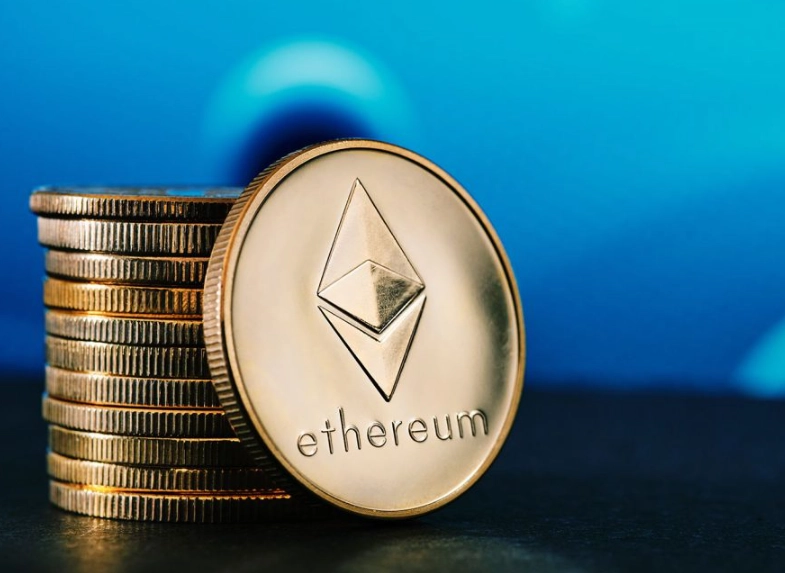
When the "DeFi Summer" of 2020 took off, the ether price didn't just rise because of speculation. It rose because people were literally locking up millions of ETH in protocols like Compound and MakerDAO to earn yield, taking that supply off the open market. Similarly, the NFT boom of 2021 created frenetic gas fee auctions, burning ETH at a record pace.
Here's a personal gripe: The "flippening" narrative—the idea that Ether's market cap will surpass Bitcoin's—often resurfaces during these ecosystem booms. While it's a fun thought experiment, focusing on it too much is a distraction. Ethereum's value proposition is fundamentally different from Bitcoin's (programmable money vs. digital gold). The ether price will be driven by its own utility, not by a beauty contest with another asset.
Regulation and Institutional Adoption
This is the double-edged sword. Clear, sensible regulation can be a massive boon. The approval of spot Bitcoin ETFs in the U.S. in 2024 was a watershed moment, legitimizing the asset class for traditional finance. The market is now eagerly awaiting a potential spot Ethereum ETF. Approval would allow massive pools of institutional and retail capital to gain exposure to the ETH price through familiar brokerage accounts, not crypto exchanges.
The anticipation alone can move markets. However, hostile regulation—like attempts to classify ETH as a security (which would impose onerous trading and custody rules) or crackdowns on DeFi—could create severe negative pressure. The regulatory stance of the U.S. Securities and Exchange Commission (SEC) and other global bodies is a constant source of headline risk. You can track official statements and filings on the SEC's website for primary sources.
On the adoption front, every time a major company like PayPal integrates Ethereum, or a bank starts offering ETH custody services, it reinforces the network's legitimacy and expands its potential user base, creating a slow-burn positive effect on price.
Does the "Bitcoin Dominance" Chart Matter for Ether Price?
It's a common chart crypto traders watch: Bitcoin's share of the total crypto market cap. When Bitcoin dominance falls, it often means capital is rotating into "altcoins" like Ethereum. A rising dominance can mean a "flight to safety" back to Bitcoin during market stress. So yes, it can be a short-term sentiment gauge. But over the very long term, I believe Ethereum's fate will be increasingly decoupled from Bitcoin's, as its use cases diverge more and more.
Understanding Ether Price Volatility
Let's be honest, the ETH price chart can look like a heart attack. Why is it so volatile?
- 24/7 Global Market: Crypto never sleeps. News hitting at 3 AM in your time zone can instantly move the ether price as Asian or European markets react.
- Leverage and Derivatives: Crypto trading is riddled with leverage (borrowed money to trade). When the ether price moves sharply, it can trigger a cascade of automatic liquidations on exchanges, amplifying the move in either direction. A 10% drop can become a 25% crash as leveraged positions get wiped out.
- Narrative-Driven Cycles: Crypto markets are highly susceptible to stories. A single influential figure's tweet, a trending hashtag, or a viral post can create buying or selling frenzies that seem irrational to outsiders.
- Illiquidity in Spots: While major exchanges have good liquidity, during extreme fear or greed, the order book can get thin. This means a relatively large buy or sell order can push the ether price significantly.
This volatility isn't necessarily a bug; for some, it's a feature that creates trading opportunities. But for someone looking at ETH as a long-term investment in the future of decentralized computing, it's the price of admission. You have to have the stomach for it.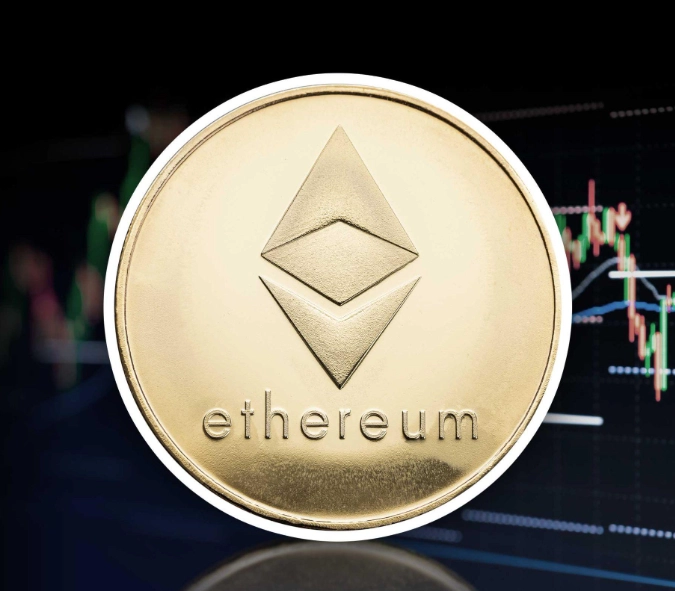
A Practical Tip: Instead of staring at the minute-by-minute ether price, consider tracking longer-term metrics. Look at the number of active developers on GitHub (Ethereum consistently leads), the total value secured in the staking contract (a measure of long-term commitment), and the growth of Layer 2 networks (which are ultimately secured by ETH). These are slower-moving, more fundamental indicators of health than the daily price ticker.
Common Questions About Ether Price (FAQ)
Let's tackle some of the specific, practical questions people have when they search for information on ether price.
Where is the best place to check a real-time, accurate ether price?
For a reliable, aggregated view, I rely on data aggregators like CoinMarketCap or CoinGecko. They pull prices from hundreds of exchanges to calculate a global average, which is more reliable than any single exchange's price. They also provide charts, market cap data, and other useful metrics. For deep trading data (order books, liquidity), dedicated traders might look directly at major exchanges like Coinbase Advanced or Binance.
What's the difference between the ETH price and gas price?
This confuses everyone at first. The ETH price is how much one Ether token is worth in USD, EUR, etc. The gas price is the amount of ETH you are willing to pay per unit of computational work to get your transaction processed. So, your total transaction fee in dollar terms = (Gas Units Used) * (Gas Price in Gwei, a tiny fraction of ETH) * (Current ETH/USD Price). If the ether price doubles, your fee in dollars could double even if the gas price in Gwei stays the same!
How does staking affect the circulating supply and price?
When you stake ETH, you lock it in the official Ethereum staking contract to help secure the network and earn rewards. That ETH is effectively taken out of the liquid, tradeable supply. As of now, over 25% of all ETH is staked. This massive lock-up reduces selling pressure and creates a cohort of long-term holders invested in the network's health. The staking yield (currently ~3-4% annually) also provides a baseline return, making ETH more attractive as a yield-bearing asset compared to just holding it.
Can Ethereum's high gas fees actually hurt the ether price?
In the short to medium term, yes, absolutely. It's been a major bottleneck. If it costs $50 to make a simple swap, only large players or highly motivated users will participate. This limits mass adoption. This is precisely why the scaling roadmap (Layer 2 rollups, Danksharding) is so critical. The long-term bull case for the ether price depends on solving the fee problem to enable billions of users, not just millions. The success of Layer 2s, which bundle transactions and settle on Ethereum, is a positive sign that this scaling is happening.
What are the biggest risks to a higher ether price?
Ignoring short-term volatility, the long-term risks are:
1. Catastrophic Technical Failure: A critical bug in a core Ethereum client or a major smart contract could shatter confidence.
2. Failure to Scale: If Layer 2 solutions and future upgrades fail to bring costs down sufficiently, users and developers may migrate to competing blockchains.
3. Overwhelmingly Hostile Regulation: A global coordinated crackdown that makes holding or using ETH illegal in major economies.
4. Quantum Computing Breakthrough: A distant but existential risk that could break the cryptography underlying all blockchains (Ethereum developers are already researching post-quantum cryptography).
So, where does this leave us? Predicting the exact ether price is a fool's errand. But understanding what moves it is not. The ETH price is a complex signal reflecting network utility, monetary policy, technological progress, macroeconomic winds, and human emotion.
The shift from a purely inflationary to a potentially deflationary asset post-Merge is a game-changer. The relentless focus on scaling through Layer 2s and core protocol upgrades addresses its historical weaknesses. And the growing integration into the traditional financial system, pending regulatory clarity, opens new channels for demand.
When you look at the ether price tomorrow, try to see past the green or red number. Ask yourself: Is the network busy? Are developers still building? Are the upgrades on track? Is the staked ETH amount growing? The answers to those questions will tell you much more about the future of Ethereum's value than any hourly chart ever could.
It's a fascinating asset because it's not just a commodity or a stock. It's a stake in the infrastructure of a new internet. And that, more than any hype cycle, is what makes the journey of the ether price worth understanding.
Reader Comments