In This Guide
- What Are We Even Talking About? ADA and USD Explained
- What Moves the Needle? Key Drivers of the ADA/USD Price
- How to Actually Convert ADA to USD: A Step-by-Step Walkthrough
- Beyond the Moment: Historical ADA/USD Context
- Looking Ahead: Future Catalysts for the ADA/USD Pair
- Common Questions (The Stuff You Actually Google)
- Final Reality Check
So you're looking into ADA to USD. Maybe you've got some Cardano sitting in a wallet, or you're thinking about buying some, and that big, unavoidable question pops up: what's this actually worth in real money? In dollars? You're not alone. That simple query – ada to usd – is one of the most searched phrases in crypto for a reason. It's the bridge between the digital frontier and the bank account you use every day.
I remember the first time I tried to figure out my own ADA's value. I had a few coins from an airdrop years back, completely forgot about them, and then suddenly wondered if they were worth a coffee or a car. The process was... clunky. Different sites showed different prices. Some calculators felt ancient. I just wanted a straight answer.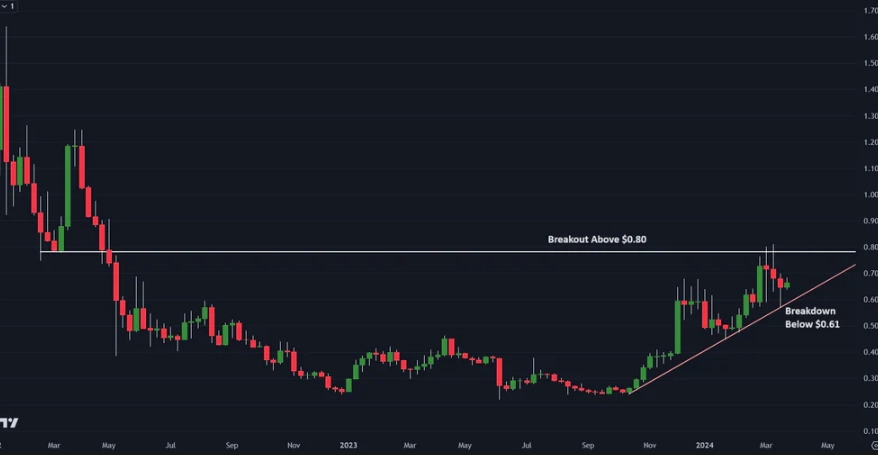
This guide is the one I wish I had. We're going to tear down that bridge and rebuild it with clear steps, honest explanations, and a healthy dose of "what to watch out for." We'll look at the live price (of course), but more importantly, we'll dig into why the ADA to USD rate moves, how you can actually convert it, and what factors you should consider before you do. This isn't financial advice – I can't tell you if ADA will moon or crash – but it is a practical map of the territory.
What Are We Even Talking About? ADA and USD Explained
Let's start with the basics, because assuming everyone's on the same page leads to confusion.
ADA is the native cryptocurrency of the Cardano blockchain. Think of it as the fuel and the stake. You use ADA to pay for transactions (like sending tokens or executing smart contracts) on the Cardano network. You can also "stake" it to help secure the network and earn rewards. It's not a company stock; it's a digital asset with utility within its own ecosystem. Charles Hoskinson, a co-founder of Ethereum, started the Cardano project with a heavy focus on peer-reviewed research and a methodical, layered architecture.
USD is the United States Dollar, the world's primary reserve currency. It's a fiat currency, meaning its value is based on government decree and collective trust in the U.S. economy, rather than a physical commodity like gold. Its monetary policy is managed by the Federal Reserve. For most people reading this, the USD is their benchmark for value – it's what pays the rent and buys groceries.
The ADA to USD conversion rate, therefore, is the market's current valuation of one unit of this digital utility token in terms of the dominant global fiat currency. It's a constantly shifting number on a global scale, driven by exchanges where people buy and sell.
Why does this pairing matter so much? Simple. The U.S. has a massive crypto market. Whether you're a U.S.-based investor, a project evaluating treasury holdings, or just someone trying to understand global crypto headlines, the dollar is the default measuring stick. Checking the ada to usd price is the quickest way to gauge Cardano's relative strength or weakness in the market most people understand.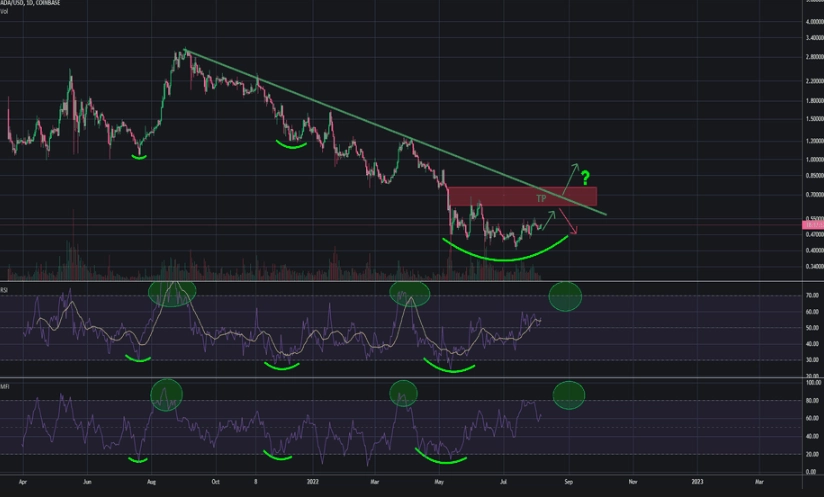
What Moves the Needle? Key Drivers of the ADA/USD Price
If you think the price just randomly bounces around, you'll always be confused. It reacts to things. Some of these factors are common to all crypto, some are specific to Cardano. Here’s the breakdown from my observation.
The Big Picture: Crypto Market Sentiment
This is the tide that lifts or sinks all boats. When Bitcoin (BTC) rallies or crashes, the entire market usually follows, Cardano included. ADA's correlation with BTC is historically strong. If there's fear in the market (regulated by indices like the Crypto Fear & Greed Index), ADA/USD will likely drop. If institutional money is flowing into crypto ETFs or there's positive regulatory news, it generally rises. You can't escape this macro trend. I've seen ADA have a fantastic technological week, only to get dragged down 15% because Bitcoin had a bad day. It's frustrating, but it's reality.
Cardano's Own Development & Network Health
This is where Cardano tries to differentiate itself. The community and developers are obsessed (sometimes to a fault) with peer-reviewed updates and a rigorous development process. Major network upgrades, like the rollout of smart contract capability with the Alonzo hard fork, have been pivotal moments for the ada to usd price.
Key metrics to watch here:
- Total Value Locked (TVL) in DeFi: How much money is being used in Cardano's decentralized finance applications? A rising TVL suggests growing utility and demand for ADA. You can track this on sites like DeFiLlama.
- Developer Activity: Are projects being built? The Cardano ecosystem needs a thriving dApp (decentralized application) landscape to justify its long-term value. A quiet GitHub is a bad sign.
- Staking Statistics: Over 60% of ADA's supply is typically staked. High, stable staking participation indicates long-term holder confidence in the network's security and reward system.
The Good, The Bad, and The Ugly: News and Speculation
Headlines move markets fast. A partnership announcement (like one with a government for digital identity) can cause a spike. A security exploit on a major Cardano-based dApp can cause a drop. Then there's speculation – rumors about exchange listings, ETF filings, or comments from Charles Hoskinson. The market often prices in rumors and then corrects on the news. My personal rule? I'm skeptical of any major price move based solely on a tweet. Wait for the official documentation from the Cardano Foundation or IOG (Input Output Global, the core development company).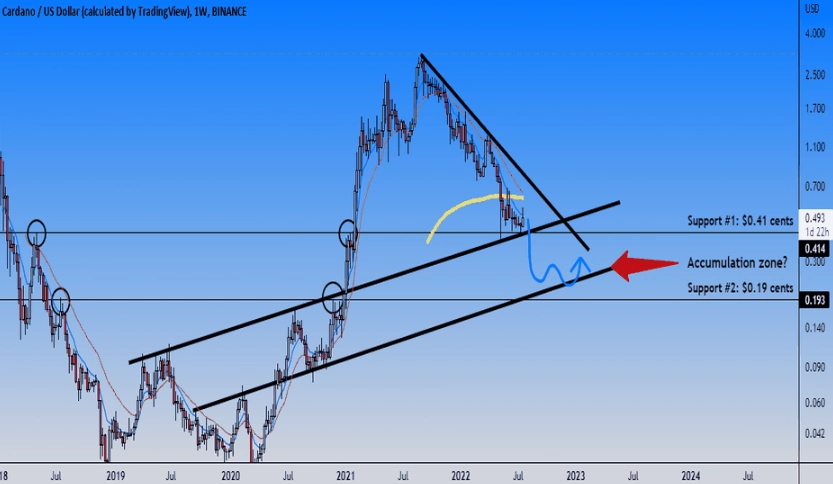
The Regulatory Hammer (or Hug)
This is arguably the biggest wildcard for the ada to usd conversion long-term. How will the U.S. Securities and Exchange Commission (SEC) ultimately treat ADA? Is it a security? The ongoing regulatory clarity (or lack thereof) in the U.S. and other major economies creates massive uncertainty. Positive, clear regulation can bring institutional billions. Hostile regulation can stifle growth. Every speech by an SEC official gets dissected by traders for clues.
How to Actually Convert ADA to USD: A Step-by-Step Walkthrough
Alright, theory is fine, but you probably want to know how to actually do the thing. Converting ADA to usable dollars involves a few steps and choices. Here’s the typical path.
Step 1: Pick Your Exchange (The On-Ramp Matters)
You need a platform that supports both ADA trading and USD withdrawals. Not all do. Centralized exchanges (CEXs) are the most common route for beginners and large amounts due to their liquidity and direct fiat connections.
Top choices include:
- Coinbase: Very user-friendly for U.S. residents. You can sell ADA directly for USD and have it in your Coinbase USD wallet. Withdrawing to your bank is straightforward. Fees can be on the higher side for simplicity.
- Kraken: Often praised for its security and lower trading fees than some competitors. It has robust ADA/USD trading pairs and good banking links.
- Binance.US: (For U.S. customers) Offers deep liquidity and low fees, but its regulatory standing has been rocky. Always check if it's fully operational in your state.
- Crypto.com: Another popular app-based option with a smooth interface for buying and selling.
Critical Check: Before you deposit any ADA, always verify that the exchange supports withdrawing USD to a bank account in your country. Also, check the withdrawal fees and processing times. Some take a day, some can take 3-5 business days. There's nothing worse than selling your ADA only to find you can't easily get the cash out.
Step 2: Send Your ADA to the Exchange
If your ADA is in a personal wallet (like Daedalus, Yoroi, or a hardware wallet), you'll need to send it to your deposit address on the chosen exchange.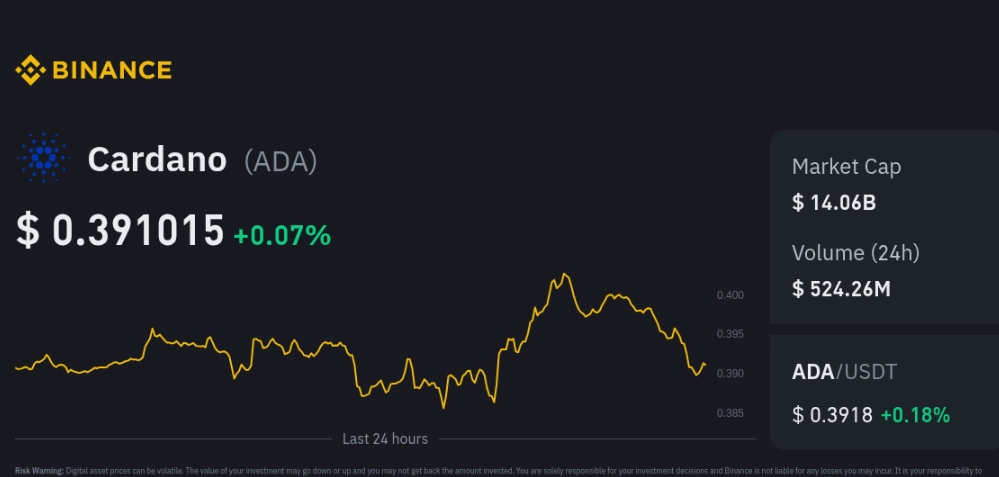
This is where mistakes happen.
Triple-check the address. Use copy-paste, and if the wallet allows address verification, use it. Ensure you're sending ADA on the Cardano network. Sending it via another network (like as a BEP-20 token to an ERC-20 address) will result in permanent loss. The exchange won't be able to recover it. Also, remember you need a small amount of ADA left behind to pay the network transaction fee (usually a fraction of an ADA).
Step 3: Execute the Trade (Sell ADA for USD)
Once your ADA deposit is confirmed (Cardano blocks are fast, so this usually takes a few minutes), the balance will appear in your exchange account.
Navigate to the trading section. Look for the ADA/USD trading pair. You have two main options:
- Market Sell: Sell your ADA immediately at the best available current price. This is fast and guarantees the sale, but you might get a slightly worse price if the market is volatile.
- Limit Sell: Set a specific price at which you want to sell (e.g., sell all my ADA if the ada to usd rate hits $0.65). This gives you control but doesn't guarantee the order will fill if the price never reaches your target.
For most people converting a modest amount, a market sell is fine. For larger amounts, a limit order or breaking the sale into chunks is smarter to avoid impacting the price.
Step 4: Withdraw Your USD to Your Bank
After the sale, you'll have a USD balance on the exchange. Now, go to the "Withdraw" or "Cash Out" section. Link your bank account (if you haven't already) via ACH or wire transfer. Initiate the withdrawal. The funds will leave the exchange and land in your bank account after the processing period.
And that's it. You've successfully navigated the ada to usd conversion pipeline.
Beyond the Moment: Historical ADA/USD Context
Understanding where the price is now requires knowing where it's been. Cardano's price history is a rollercoaster, typical of major altcoins. Let's look at some key phases. (Note: All prices are approximate USD highs/lows).
| Period | Key Price Range (USD) | Major Events & Driver | Context & Takeaway |
|---|---|---|---|
| 2017-2018 Launch & Bubble | $0.02 → $1.33 (Sep 2018) | Initial Coin Offering (ICO), listing on major exchanges, general crypto mania. | ADA rode the wave of the last major bull market. The $1.33 peak was unsustainable without a developed network. |
| 2019-2020 "Crypto Winter" | $0.03 - $0.10 | Bear market, focus on foundational development (Byron to Shelley transition). | Price was dead, but development was very much alive. This period built the staking foundation. |
| 2021 Bull Run Peak | $0.18 → $3.10 (Sep 2021) | Alonzo hard fork (smart contracts launch), DeFi summer, massive retail influx. | The all-time high. Driven by the culmination of years of work and peak market euphoria. The ada to usd rate became a mainstream topic. |
| 2022-2023 Bear Market | $3.10 → ~$0.24 | FTX collapse, macroeconomic tightening (interest rate hikes), crypto credit crisis. | A brutal comedown. Showed ADA's high correlation to Bitcoin and vulnerability to industry-wide contagion. |
| 2024 & Beyond (Current) | $0.40 - $0.80 (Fluctuating) | Ecosystem growth (DeFi, NFTs), Bitcoin ETF approval aftermath, anticipation of future upgrades (Voltaire). | Focus shifted from hype to actual usage and building during a less frothy market. Price is searching for a new base. |
The historical view teaches a few hard lessons. First, parabolic rises are almost always followed by steep corrections. Second, the price during quiet development periods can be misleading about the project's health. Third, the ada to usd conversion is subject to brutal, market-wide cycles. Buying at the top of euphoria (like near $3) has led to long, painful drawdowns for many investors.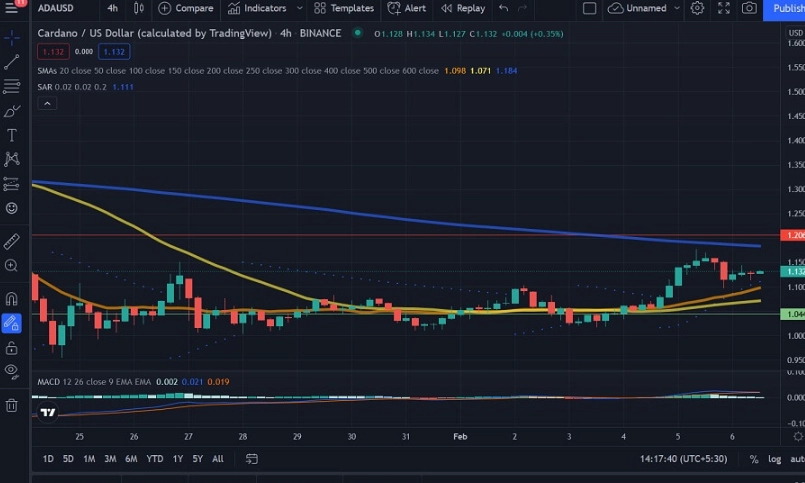
Looking Ahead: Future Catalysts for the ADA/USD Pair
So what could change the game for Cardano's dollar value moving forward? It's not just about waiting for the next bull market. Specific catalysts within the Cardano roadmap could drive independent momentum.
The ongoing rollout of the "Basho" era is focused on scaling and optimization. Improvements like input endorsers, pipelining, and sidechains aim to significantly boost transaction throughput and reduce costs. If Cardano can become demonstrably faster and cheaper than key rivals while maintaining security, it could attract more developers.
The "Voltaire" era, which adds governance and treasury systems, is the big one on the horizon. This will allow ADA holders to vote on development proposals and fund them from a community treasury. If implemented well, this could make Cardano a truly self-sustaining, decentralized organism. A successful Voltaire rollout would be a massive proof-of-concept for its "third-generation blockchain" claims and could positively impact sentiment.
On-chain governance votes for major upgrades will themselves become market-moving events. How the community decides on contentious issues will signal the project's health and direction.
And, of course, the ever-present regulatory sword. A clear, favorable classification for ADA by the U.S. SEC would remove a major overhang and potentially open doors for more institutional products, like a Cardano spot ETF. The opposite would be a significant headwind.
Common Questions (The Stuff You Actually Google)
Aggregator sites like CoinMarketCap or CoinGecko are your best bet. They aggregate prices from hundreds of exchanges to give you a global volume-weighted average. This is more reliable than looking at any single exchange, which might have localized price deviations.
Always. You'll encounter at least three potential fees: 1) A Cardano network fee to send your ADA from your wallet (tiny, like ~0.17 ADA). 2) The exchange's trading fee (a percentage of the trade, usually 0.1% to 0.5%). 3) A bank withdrawal fee from the exchange to your account (sometimes free via ACH, wires often cost $10-$30). The trading fee is usually the biggest chunk.
ADA/USD means you're trading Cardano directly for actual U.S. dollars (or a direct claim on them within the exchange). ADA/USDT means you're trading Cardano for Tether, a stablecoin pegged to the U.S. dollar. USDT is crypto, not cash. It's useful for staying in the crypto ecosystem, but to get real cash, you'd later need to convert USDT to USD on an exchange that supports it. For a direct path to cash, ADA/USD is simpler.
From initiating the withdrawal from your wallet to having USD in your bank: If everything goes smoothly, it can be as quick as 1-2 days. ADA network transfer: 2-5 minutes. Exchange sale: Instant. Bank withdrawal processing: 1-5 business days (ACH is common). Factor in verification times if it's your first time on an exchange.
In most countries, including the U.S., yes. Selling crypto for fiat is a taxable event. You realize a capital gain or loss based on the difference between your sale price (the ada to usd rate at that moment) and your original cost basis (what you paid for the ADA). You are responsible for reporting this. Using a crypto tax software that connects to your exchange APIs is highly recommended if you trade frequently.
Final Reality Check
Converting ADA to USD seems like a simple button click, but as we've seen, it sits at the intersection of technology, finance, and regulation. The rate you see is a living pulse of global sentiment, development progress, and market mechanics.
The most important thing isn't finding the perfect millisecond to sell. It's understanding the process, choosing reputable platforms, being aware of fees and taxes, and most of all, managing your expectations. Cardano is a highly volatile asset. The journey from ADA to USD can be smooth one week and nerve-wracking the next, depending on the market's mood.
Do your own research. Always.
Use the resources from the official entities (Cardano Foundation, IOHK) for technical truth, rely on aggregated data from places like CoinMarketCap for price, and never invest (or convert) more than you're truly comfortable with. The ada to usd bridge is always open, but the toll and the view change constantly. Now you're equipped to cross it with your eyes wide open.
Reader Comments