Let's cut to the chase. If you had invested $1,000 in Bitcoin on, say, April 1, 2014, and held onto it through every gut-wrenching crash and euphoric peak until today, your investment would be worth a life-changing sum. We're talking about turning a grand into several hundred thousand dollars. The exact number fluctuates with the market, but the multiplier is in the hundreds. It's a staggering figure that fuels endless "what if" daydreams and a specific, painful form of regret known in crypto circles as "Bitcoin regret." But staring at that hypothetical fortune is only the first, most superficial step. The real value of this thought experiment isn't in the fantasy—it's in the brutally honest lessons it teaches us about volatility, timing, psychology, and how to approach the market today, not a decade ago.
Your Quick Navigation Guide
How Much Would $1000 in Bitcoin Be Worth Today?
Okay, let's satisfy the curiosity first. Using historical price data from sources like CoinMarketCap, we can map out a few scenarios. The key thing to remember is that Bitcoin's price a decade ago wasn't a single point. It was a rollercoaster even back then. Picking a specific date changes the math dramatically.
>195x| Investment Date (2014) | Approx. Bitcoin Price | Bitcoin Purchased | Approx. Value Today* | Return Multiple |
|---|---|---|---|---|
| January 1 | $770 | ~1.3 BTC | ~$81,000 | 81x |
| April 1 (Post-Mt. Gox low) | $450 | ~2.22 BTC | ~$138,000 | 138x |
| December 31 | $320 | ~3.125 BTC | ~$194,000 |
*Example calculation based on a hypothetical future Bitcoin price of ~$62,000. Actual results vary minute by minute.
See the difference? Buying at the December low versus the January high that same year would have netted you over **$110,000 more** on the same $1,000 initial investment. This isn't just trivia—it highlights the insane volatility that was present from day one. Most people think the wild swings are a recent phenomenon. They're not. The ride has always been this bumpy.
The Psychological Rollercoaster You Would Have Endured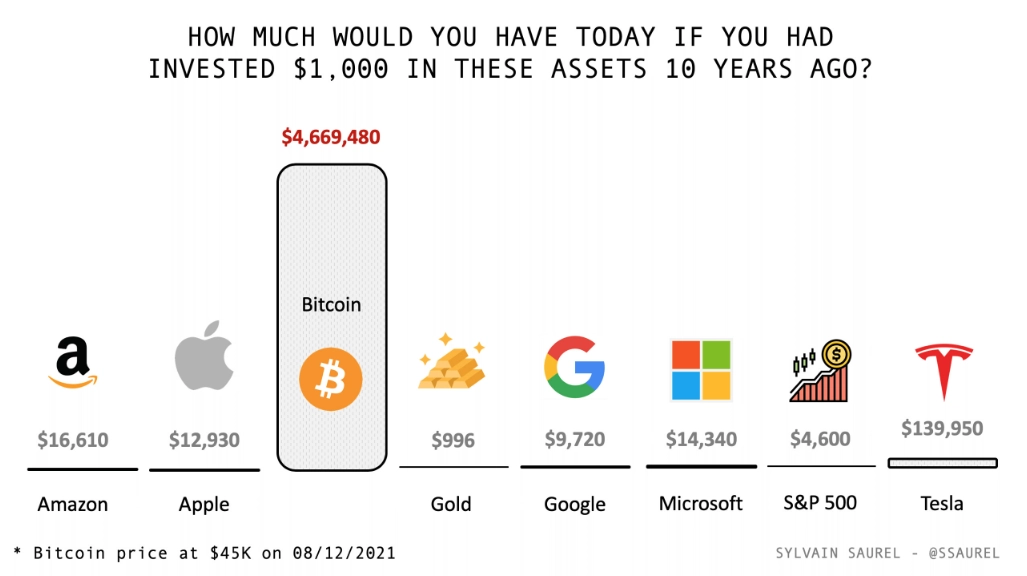
Forget the clean chart lines you see now. Holding from 2014 meant living through events that would have made you question your sanity.
The 2017 Bubble and Bust: Watching your $1,000 grow to maybe $20,000 by December 2017, then plunge by over 80% over the next year. That's seeing $20,000 shrink back to $4,000 or less. Could you have held? Most didn't.
The 2020 Covid Crash: In March 2020, Bitcoin dropped nearly 50% in 24 hours. In the panic of a global pandemic, with headlines screaming about financial collapse, selling would have felt like the only rational choice.
The 2022 "Crypto Winter": The collapse of Luna, FTX, and multiple major lenders. The pervasive fear that the entire ecosystem was a scam. The constant "Bitcoin is going to zero" headlines. This wasn't just a price drop; it was a crisis of faith in the technology itself.
Holding through these events required either iron-clad conviction, sheer forgetfulness, or a wallet locked away where you couldn't touch it. The few who held all the way are either geniuses, incredibly stubborn, or got very, very lucky. Probably a mix of all three.
The Brutal Reality Check Everyone Misses
Here’s the non-consensus take, the one you won't get from most generic articles: The "what if" fantasy is psychologically toxic and strategically useless. It sets up an impossible standard. It makes you feel like you missed a one-time-only golden ticket, which paralyzes you from seeing current or future opportunities. Let's debunk the fantasy with some hard truths.
1. Perfect Timing is a Myth (And You Probably Would Have Sold)
The narrative assumes you bought at a perfect low and sold at a perfect high. Reality is messy. Based on exchange data from periods like 2017-2018, the vast majority of retail investors do the opposite—they buy high out of FOMO and sell low out of fear. If you had bought in 2014, the odds are high you would have sold during the 2017 mania to lock in "amazing" profits of $10,000 or $20,000, completely missing the run to $60,000+.
I've spoken to dozens of early investors. The most common story isn't "I held and became a millionaire." It's "I sold for a 10x profit and thought I was a genius, only to watch it go up another 50x later." That regret is just as painful.
2. The Tax Nightmare Nobody Calculates
That hypothetical $138,000 gain? In many countries, that's a taxable capital gain. If you held for over a year, you might be looking at a 15-20% long-term capital gains tax bill. That's $20,000-$27,600 owed to the tax authority. The fantasy numbers are always pre-tax. The real-world numbers come with a significant invoice from the government. This complexity alone would have triggered many to sell early just to simplify their lives.
3. The Opportunity Cost of Obsession
Successfully holding a volatile asset like Bitcoin for a decade requires attention. It means watching the news, following influencers, checking prices more than is healthy. That mental energy and time is an opportunity cost. What business, career skill, or relationship could you have built with that focus instead? The true cost of an investment isn't just the money you put in; it's the life you live around it.
What to Do Now: Actionable Steps Instead of Regret
So you can't time travel. Big deal. The next best time to plant a tree, as they say, is now. But you have to do it with eyes wide open, learning from the past decade's lessons, not pining for it.
Embrace Dollar-Cost Averaging (DCA): This is the single most powerful tool to combat volatility and regret. Instead of worrying about buying the perfect dip, set up a recurring weekly or monthly purchase of a fixed dollar amount (e.g., $50). Sometimes you'll buy high, sometimes low. Over years, it averages out your cost basis and removes emotion from the equation. It's the antithesis of the "lump sum in 2014" fantasy, but it's the strategy that actually works for humans with jobs and bills.
Allocate, Don't Gamble: Never invest money you can't afford to lose. A common framework is to treat crypto as a high-risk, high-potential-reward portion of a diversified portfolio. Maybe it's 1-5% of your net worth, not your life savings. This way, a crash is a setback, not a life-ending event. This psychological safety net is what allows you to hold through downturns.
Secure Your Investment Properly: If you're planning to hold for the long term, get your coins off the exchange. Use a self-custody hardware wallet like a Ledger or Trezor. The mantra "not your keys, not your coins" was born from the ashes of disasters like Mt. Gox and FTX. This is a non-negotiable step for any serious, long-term holder. The $1,000 investor from 2014 would have lost everything if they left it on Mt. Gox.
Look Beyond Just Bitcoin: The crypto ecosystem today is vastly different. While Bitcoin is the digital gold store of value, other blockchains enable smart contracts, decentralized finance (DeFi), and new applications. This isn't a recommendation to gamble on memecoins, but to acknowledge that the opportunity set is broader. Do your own research (DYOR) on the fundamentals of other major assets like Ethereum.
Your Bitcoin Regret Questions, Answered
 What's the biggest mistake people make when trying to replicate that "2014 investment" success today?
The story of the $1,000 Bitcoin investment from a decade ago is a fantastic parable. It teaches us about the power of exponential growth, the importance of conviction, and the sheer difficulty of holding a volatile asset. But clinging to it as a lost opportunity is a dead end. The real lesson is that asymmetric opportunities exist when you have conviction in a fundamental technological shift and the personal fortitude to see it through extreme volatility. That lesson isn't locked in 2014. It's available to you right now, with the next decade waiting to be written. Stop looking in the rearview mirror. The road ahead is the only one you can drive on.
Reader Comments