Quick Navigation
- The Core of the Matter: It's All About the Hash Rate
- Let's Crunch Some Real Numbers (The Table You Came For)
- Solo Mining vs. Pool Mining: The Only Choice That Matters
- The Hidden Factors Most Guides Don't Talk About
- So, Is Mining Even Worth It Anymore?
- Your Burning Questions, Answered
- The Final, Honest Answer
So you typed that question into Google. "How long does it take to mine 1 Bitcoin today?" You probably hoped for a neat answer. Something like "10 days" or "6 months." I get it. I was there once, thinking I could fire up my gaming PC and watch the digital gold roll in. Let me save you some time and, more importantly, a lot of potential frustration: the short, blunt answer is for an individual with a single mining rig, it's effectively impossible to mine a whole Bitcoin on your own anymore. The era of solo mining a block for the full 3.125 BTC reward (as of the 2024 halving) with consumer hardware is long, long gone.
But that doesn't mean the question is worthless. Far from it. Understanding why it's impossible teaches you everything you need to know about modern Bitcoin mining. The real question we should be asking is: How long does it take to earn the equivalent of 1 Bitcoin's worth of mining rewards today? And that's a fascinating puzzle with a lot of moving parts. We're going to break down every single one of those parts. No fluff, no hype, just the numbers and the reality.
Let's be clear upfront: This isn't financial advice. Mining is a high-risk, capital-intensive business with razor-thin margins for most. I'm just here to explain the mechanics. I've seen too many people jump in after watching a YouTube video without understanding the electricity bill waiting for them.
The Core of the Matter: It's All About the Hash Rate
Think of mining like a global, digital lottery. Every 10 minutes or so, the Bitcoin network holds a draw. Miners around the world are furiously guessing trillions of lottery numbers (hashes) per second. The first one to guess a number below a specific target wins the right to add the next "block" of transactions to the blockchain and gets the block reward.
Your chance of winning is your share of the total guesses. If you're making 1 trillion guesses per second (1 Terahash/sec, or 1 TH/s) and the entire network is making 600 quintillion guesses per second (600 Exahashes/sec, or 600 EH/s), your odds are... well, astronomically small. You can check the live, total network hash rate on sites like Blockchain.com's chart. That number is the single biggest factor in answering "how long does it take to mine 1 Bitcoin today?".
More hash power on the network means your slice of the pie gets smaller.
The Three Pillars That Decide Your Mining Fate
Forget the simple time estimate. Your earnings are dictated by an unforgiving trinity:
- 1. Your Hardware's Hash Rate: How many guesses per second can your machine make? An old USB miner does a few gigahashes (GH/s). A modern Antminer S21 Hydro does 335 terahashes (TH/s). That's a difference of over 100,000x.
- 2. Network Mining Difficulty: This is Bitcoin's self-correcting mechanism. It adjusts roughly every two weeks to ensure blocks are found every 10 minutes on average, regardless of how much total hash power joins or leaves the network. More miners = higher difficulty. You can see the current and historical difficulty on BTC.com's stats page.
- 3. Your Electricity Cost: This is the profit killer. Mining rigs are power-hungry beasts. If you're paying $0.15 per kWh, you might be mining at a loss while someone with $0.03 per kWh industrial power is printing money (or rather, satoshis).
Let's Crunch Some Real Numbers (The Table You Came For)
Okay, let's get concrete. Here’s a realistic look at what different setups might earn in Bitcoin value per day, assuming a network hash rate of ~600 EH/s, a Bitcoin price of ~$60,000, and an electricity cost of $0.10 per kWh. Remember, this is revenue share from a pool, not solo mining a block.
| Mining Hardware | Approx. Hash Rate | Power Consumption | Daily Bitcoin Earned* | Daily Electricity Cost* | Time to Earn 1 BTC Worth* |
|---|---|---|---|---|---|
| Antminer S21 Hydro (2024) | 335 TH/s | ~5360W | ~0.00046 BTC | $12.86 | ~6 years |
| Antminer S19 XP (Common) | 140 TH/s | ~3010W | ~0.00019 BTC | $7.22 | ~14.5 years |
| GPU Rig (e.g., 6x RTX 4090) | ~6 TH/s (approx.) | ~1800W | ~0.0000082 BTC | $4.32 | ~334 years (Yes, really) |
| Old USB Miner (Just for fun) | ~10 GH/s | ~10W | A few satoshis | $0.024 | Several thousand years |
*Estimates based on static conditions. Reality is volatile. Data sourced from mining profitability calculators like CryptoCompare and manufacturer specs.
See those timeframes? That's the cold, hard truth. Even with a top-tier, industrial machine costing thousands of dollars, you're looking at many years to accumulate 1 BTC through mining rewards. And that's before factoring in the machine's cost, cooling, maintenance, and the inevitable increase in network difficulty.
The Big Takeaway: Asking "how long does it take to mine 1 Bitcoin today?" is like asking "how long does it take to earn a million dollars at my job?" It depends entirely on your tools (hash rate), the competition (network difficulty), and your expenses (electricity). For almost everyone, the answer is measured in years, not months.
Solo Mining vs. Pool Mining: The Only Choice That Matters
This is a critical fork in the road. Your approach drastically changes the answer to our core question.
Solo Mining: The Lottery Ticket
You try to solve a block entirely alone. If you win, you get the entire ~3.125 BTC block reward (post-halving). Sounds great, right? With the hash rates in the table above, your odds are so infinitesimally small that you could run a modern ASIC for decades without ever finding a block. The statistical probability is effectively zero for an individual. This is why virtually no one serious about earnings mines solo anymore.
Pool Mining: The Steady Drip
This is what everyone does. You join forces with thousands of other miners in a pool (like Foundry USA, Antpool, or ViaBTC). Everyone combines their hash power to increase the chance of finding blocks. When the pool wins a block, the reward is split among all participants proportionally to the hash rate they contributed.
You don't get the thrill of a huge 3.125 BTC win, but you get a small, steady stream of satoshis every day. This is the only practical way for an individual to see any return. So, when we talk about mining timeframes, we're always talking about the pool mining model. The numbers in our table assume pool mining.
The Hidden Factors Most Guides Don't Talk About
Beyond the big three (hash rate, difficulty, electricity), other things eat into your answer.
- Pool Fees: Pools typically charge 1-3% of your earnings for their service. Not huge, but it adds up.
- Hardware Degradation: ASICs run hot and hard. Their efficiency drops over time. A machine that does 100 TH/s today might do 95 TH/s in a year.
- Bitcoin's Price Volatility: You're earning satoshis, not dollars. If BTC price crashes, the dollar value of your daily earnings plummets, but your electricity bill stays the same. This has bankrupted many small-time miners.
- The Halving: Every 210,000 blocks (about 4 years), the block reward is cut in half. The last one was in April 2024, dropping the reward from 6.25 to 3.125 BTC. This event directly doubles the effective time it takes to mine 1 Bitcoin (in terms of block rewards), assuming all else is equal. It's a massive supply shock.
Feel overwhelmed yet? That's the point. Mining is not simple.
So, Is Mining Even Worth It Anymore?
Honestly? For 99% of people reading this, no, not as a way to get Bitcoin. It's a specialized, industrial activity. The barriers to entry are massive: sourcing cheap power (think sub-$0.05/kWh), buying hardware at scale, dealing with insane heat and noise, and navigating constant capital costs.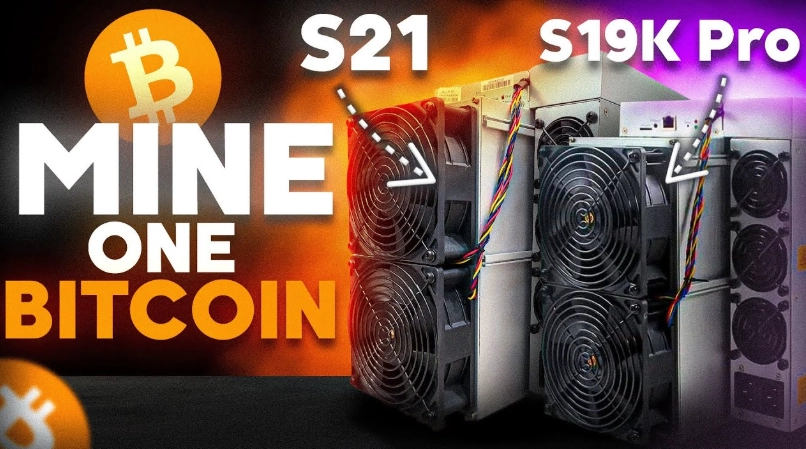
If your goal is simply to own 1 Bitcoin, it is almost always faster and cheaper to buy it outright on an exchange. You skip the hardware cost, the electricity bills, the noise, and the years of waiting.
My Personal Stumble: I bought a single ASIC a few years back, lured by the idea of "free money." I didn't account for the 220V outlet I needed, the jet-engine noise (it sounded like a vacuum cleaner on steroids), or the heat that made my office unusable in summer. My profit after electricity was a few dollars a month. I sold the machine at a loss six months later. It was a cheap, but valuable, lesson.
Mining is now for professionals, large-scale operations, and those with access to stranded or renewable energy sources. It's a play on believing the Bitcoin price will rise enough to outpace your operational costs and difficulty increases over a long horizon.
Your Burning Questions, Answered
Let's tackle the related questions swirling in your head.
The Final, Honest Answer
So, let's circle back. How long does it take to mine 1 Bitcoin today?
For a solo miner with consumer gear: Effectively forever (statistical impossibility).
For a pool miner with a top-tier, modern ASIC: Anywhere from 6 to 10+ years of continuous, trouble-free operation to accumulate 1 BTC in rewards, assuming network difficulty and Bitcoin price stay relatively stable (they won't).
The real duration is a dynamic, moving target that gets longer every time a new, bigger mining farm plugs in somewhere with cheap hydro power. The trend is unequivocal: it gets harder and takes longer over time.
Mining is no longer a gold rush you can join with a pickaxe. It's a heavy industry requiring excavators. Understanding that reality—the immense scale, the brutal competition, the capital demands—is the most important answer of all. It shifts the question from "How long does it take to mine 1 Bitcoin today?" to the much more relevant: "Is mining the right way for me to acquire Bitcoin today?" For most of us, the honest answer is no.
Reader Comments