In This Guide
Let's be real. The crypto space throws a new "next big thing" at us every other week. Remember the last one you got excited about? Yeah, me too. Sometimes it feels like you need a glossary just to keep up. Lately, the name popping up in quieter corners of forums and some Twitter threads isn't from the usual mega-cap players. It's "Texit Coin." You might have seen it mentioned alongside talks about scalability or new Layer 1 solutions. But what is it, actually? Is it just another project with a flashy website and big promises, or is there something more under the hood?
I spent a good chunk of time digging through their documentation (which, honestly, is a mixed bag), reading between the lines of community chatter, and trying to piece together what makes Texit Coin tick. This isn't financial advice—let's get that out of the way right now. Think of this as a long-form chat, like if we were sitting down with a coffee and you asked me to explain this whole Texit thing. I'll tell you what I found, the good, the confusing, and the parts that made me raise an eyebrow.
Quick Context: Before we dive in, it helps to know that "Texit" seems to be a portmanteau of "Transaction Exit" or potentially "Texas Exit," depending on which community member you ask. The former relates to its claimed technical mechanism, the latter... well, that taps into a certain ideological narrative. The project itself leans heavily on the technical definition.
Unpacking the Texit Coin: What Is It Supposed to Be?
At its core, the Texit Coin project is building what it calls a "high-throughput, low-fee Layer 1 blockchain." If your eyes just glazed over, let's translate. Think of Ethereum or Solana—these are foundational blockchains where applications are built. Texit Coin wants to be a new foundation, claiming to solve the classic blockchain trilemma: being secure, scalable, and decentralized all at once. A tall order, for sure.
The native token, the Texit Coin (often tickered as TEX or TXT in discussions, though no major exchange listing confirms this officially), is meant to be the fuel for this network. You'd use it to pay for transactions (gas fees), participate in securing the network through staking, and potentially govern the project's future direction. So, in that sense, it follows a familiar playbook.
But here's where their pitch gets specific. They talk a lot about a "dual-chain architecture" from day one. Not a sidechain added later, but two interconnected chains running in parallel: one for execution (running smart contracts) and one for consensus (agreeing on the state of the network). The idea is to split the workload to avoid bottlenecks. It's not a radically new concept in computer science, but applying it robustly in blockchain is tricky. I have to admit, the first time I read about the "dual-chain" thing, I was skeptical. It sounds like extra complexity, and complexity is often the enemy of security in crypto.
You can find their core technical whitepaper, which outlines this architecture, on their official project repository. It's a dry read, but it's the primary source for their claims. For a broader understanding of how Layer 1 blockchains compete, resources like the Ethereum Foundation website or educational content from Coinbase Learn provide crucial context about the problems projects like Texit Coin are trying to solve.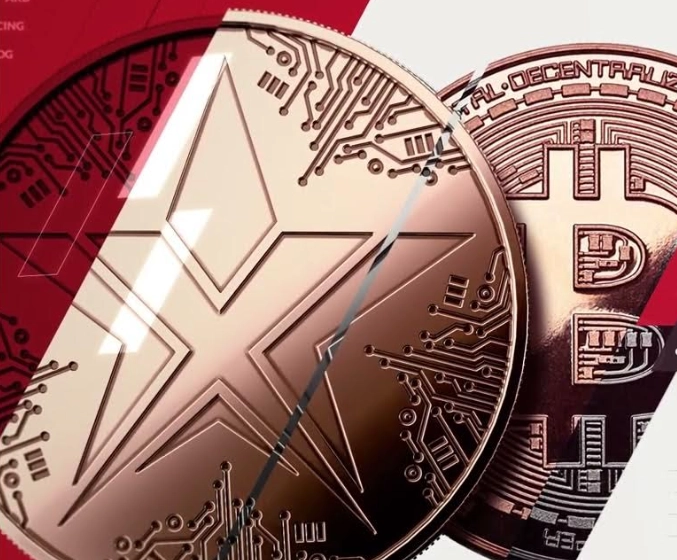
"The promise is always the same: faster, cheaper, better. The delivery is where 99% of crypto projects stumble. Texit Coin's theory is sound, but theory and a functioning mainnet are worlds apart."
So, what's the vision? The team behind Texit Coin isn't exactly a household name. Their literature suggests a focus on enabling micro-transactions and high-frequency applications that are too expensive on older networks. Think pay-per-second cloud gaming, tiny content creator tips, or IoT device communication. Whether that's a genuine gap in the market or a solution looking for a problem is a debate for another day.
The Nuts and Bolts: How Does Texit Coin Claim to Work?
Let's get a bit more technical, but I'll keep it as painless as possible. Understanding the mechanics helps you gauge if this is clever innovation or just buzzwords.
The Dual-Chain Engine Room
Imagine a restaurant. In a traditional blockchain (the single-chain model), the same staff takes your order, cooks the food, and brings it to your table. When it's busy, everything slows down. Texit Coin proposes having a dedicated order-taking chain (the Consensus Chain) and a separate, highly optimized kitchen chain (the Execution Chain).
- Consensus Chain: This is where validators (people staking their Texit Coins) agree on the order and validity of transactions. It's designed to be lean and fast, only doing the job of agreeing on "what happened." It uses a variant of Proof-of-Stake, which is energy-efficient compared to Bitcoin's Proof-of-Work.
- Execution Chain: This is where the heavy lifting occurs. Smart contracts run here, and state changes (like updating your token balance) are computed. Once processed, the results are bundled up and sent back to the Consensus Chain for final agreement.
The claim is that this separation allows each chain to be optimized for its specific task, leading to higher overall transactions per second (TPS). They throw around numbers like 10,000+ TPS in their testnet reports. The problem? Testnet performance is almost never what you get in the real, messy world of a live mainnet with adversarial actors and real economic value at stake.
The Texit Coin Token (TEX/TXT) in the Ecosystem
Where does the actual Texit Coin token fit in? It's the lifeblood connecting both chains.
- Staking & Security: To become a validator on the Consensus Chain, you need to lock up (stake) a significant amount of Texit Coin. This acts as your security deposit. If you act maliciously, you lose it. Your reward for honest validation is more Texit Coin.
- Transaction Fees: Every action on the network costs a tiny fee in Texit Coin. These fees are split between the consensus validators and the execution node operators.
- Governance: The project outlines a future where token holders can vote on protocol upgrades, treasury spending, and other key decisions. This is a common feature but often has low participation unless the community is extremely engaged.
I looked at their proposed tokenomics. The total supply is capped, which is good—no infinite printing. But the distribution schedule is what always makes me nervous. A large chunk is often reserved for the "team and advisors," which can lead to massive sell pressure if those coins unlock all at once (a "cliff unlock"). Their documentation shows a vesting schedule, but it's vague on the exact dates and percentages for early private investors. That's a red flag for me. Transparency is non-negotiable.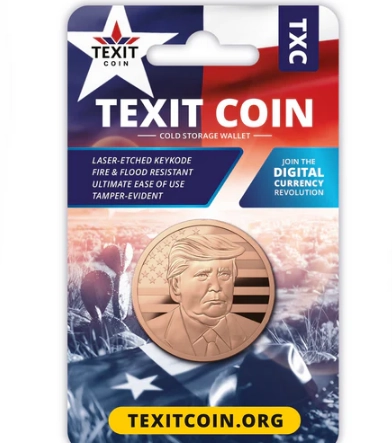
| Use Case | How Texit Coin is Used | User Experience Goal |
|---|---|---|
| Network Security | Staked by validators to secure the Consensus Chain. | Passive income for holders, stable network. |
| Pay for Transactions | Burned or paid as fees for smart contract calls & transfers. | Predictable, ultra-low cost for users. |
| Governance Rights | Held to vote on proposals shaping the network's future. | Community-led development and direction. |
| Developer Collateral | Potentially locked up to deploy and maintain dApps. | Ensures developer commitment and quality. |
The Good, The Bad, and The Uncertain: A Realistic Look
No project is perfect. Anyone telling you otherwise is selling something. Here's my take, trying to be as balanced as I can.
Potential Advantages (The "Pros")
Theoretical Speed & Low Cost: If their dual-chain architecture works as advertised in a live environment, it could genuinely enable applications that are impractical on Ethereum today. We're talking fees of a fraction of a cent.
Focus on a Niche: Targeting micro-transactions and high-frequency data is more focused than trying to be "everything for everyone." A sharp focus can lead to better-optimized technology.
Modern Tech Stack: They're building from scratch now, in 2023/2024, so they can avoid some of the technical debt that older chains like Ethereum carry. This can mean a cleaner developer experience.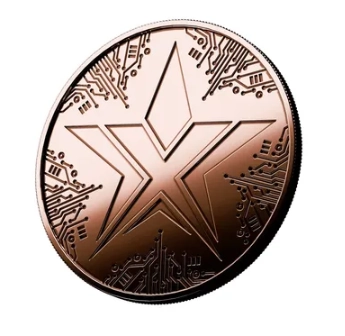
Significant Risks & Drawbacks (The "Cons")
It's Still Largely Theoretical: The mainnet, as of my last deep check, is either in a very early phase or still imminent. Until a network runs with real value under real attack vectors for a sustained period, all performance claims are just promises. History is littered with projects that had great testnets and failed mainnets.
The "Who's Behind This?" Question: The team is somewhat anonymous or, at best, not widely known in the broader crypto-engineering scene. While anonymity isn't inherently bad (Satoshi, anyone?), it raises the bar for proving trust and technical credibility. You have to trust the code alone.
Hyper-competitive Landscape: They're not just competing with Ethereum. Solana, Avalanche, Sui, Aptos, Near Protocol, and a dozen other Layer 1s are all fighting for developers and users. Breaking through requires more than just good tech; it requires ecosystem growth, which is the hardest part. Why would a developer build on Texit instead of these more established chains?
Tokenomics & Centralization Risks: As I mentioned, unclear early investor vesting is a worry. Also, if the initial validator set is too small or controlled by the team, the network is centralized at launch, which defeats the whole purpose of decentralization. Their documentation needs to be crystal clear here.
One more thing that bugs me. The name "Texit Coin" itself. It feels a bit... gimmicky? In a space craving legitimacy, a name that can be meme'd easily is a double-edged sword. It can drive grassroots attention but also make it harder to be taken seriously by institutional builders. Just my two cents.
How to Actually Get Texit Coin (And Should You?)
This is the practical part everyone scrolls to. Let's break it down.
First, a massive disclaimer: This is an extremely high-risk, speculative asset. You should only ever invest money you are prepared to lose entirely. Do your own research (DYOR) is not just a meme; it's a survival rule. I'm not telling you to buy or sell Texit Coin.
Now, if you've done your homework and still want to understand the mechanics of acquisition, here's the landscape:
As of now, Texit Coin is not listed on any major centralized exchange (CEX) like Coinbase, Binance, or Kraken. That means getting it is more complicated and riskier. The typical path for a token at this stage is:
- Decentralized Exchange (DEX): If the token has been launched, it might be traded on a DEX like Uniswap (on Ethereum) or its equivalent on another chain. You would need to find the correct contract address (CRITICAL: Scammers create fake tokens with similar names—always verify the official address from the project's primary channels, like their official GitHub or Twitter). You'd then swap an established token like ETH for TEX/TXT.
- Project's Official Sale or Launchpad: Some projects do a public sale via a launchpad platform. You'd need to follow their official announcements to see if, when, and where this might happen. These sales often have Know Your Customer (KYC) requirements.
- Community Airdrops or Rewards: Sometimes projects distribute tokens for free to early community members, testnet participants, or users of other specific protocols. This is rare and usually involves a lot of upfront activity.
My personal stance? I rarely interact with tokens that aren't on at least one major, reputable CEX. The barrier to entry (complexity, scam risk) is high, and the liquidity is usually terrible, meaning you can get slaughtered on price slippage when trying to trade. If you're not technically comfortable with self-custody wallets, contract addresses, and DEX interfaces, this is a hard stop. Wait for a potential future listing on a platform you trust, if it ever happens.
Looking Down the Road: What's the Future for Texit Coin?
Predicting the future of any crypto project is a fool's errand. The space moves too fast. But we can look at the milestones and challenges ahead.
The single most important event for Texit Coin will be a successful, secure, and decentralized mainnet launch. Not a testnet, not a "beta mainnet," but the real deal. Everything hinges on this. After that, the next hurdle is ecosystem growth. A blockchain with no developers building useful applications (dApps) on it is a ghost town. The team needs to attract talented developers with grants, good documentation, and developer-friendly tools.
Then comes the liquidity and exchange listings. Getting on a top-tier CEX requires meeting stringent legal, technical, and due diligence standards. It's a stamp of credibility, but it's not guaranteed.
They'll also face relentless competition. Ethereum is improving with its roadmap (The Merge, Danksharding). Other Layer 1s are pouring money into developer incentives. The Texit Coin project needs a compelling reason for users and developers to switch or start fresh with them.
And looming over everything is regulation. How will regulators like the U.S. Securities and Exchange Commission (SEC) view the Texit Coin token? Could it be considered a security? That legal uncertainty is a cloud over the entire altcoin market, not just this project.
Honestly, the odds are stacked against any new Layer 1. The graveyard is large. But occasionally, a project with a genuine technical edge and relentless execution does break through. Is Texit Coin that project? It's far, far too early to say. They have a theory. They need to prove it in practice, then build a world around it. That's a marathon, not a sprint.
Wrapping This Chat Up
Phew, that was a lot. Let's try to tie it all together simply.
Texit Coin is an ambitious attempt to build a new, fast, and cheap blockchain from the ground up, using a dual-chain design to tackle scalability. The Texit Coin token is meant to power and secure this network. On paper, the ideas address real pain points in crypto today.
But—and this is a huge but—the project exists mostly on paper and in test environments. The team isn't widely known, the path to getting the token is complex and risky, and the competitive landscape is brutal. The potential upside is tied to the massive "if" of them successfully executing their vision and building an ecosystem from zero.
My final thought? If you're a developer deeply interested in novel blockchain architecture, their GitHub and whitepaper might be worth a look for learning. If you're an investor looking for the next 100x moonshot, understand you're essentially buying a lottery ticket for a concept, not a proven product. The vast, vast majority of such tickets turn out to be worthless.
The crypto world needs innovation, and I'm glad people are trying things like the Texit Coin project. We need those experiments. But as a user or an investor, your job is to separate the compelling experiments from the empty noise. For Texit Coin, the evidence just isn't in yet. The story is still being written, and it's one you should watch from a distance until more chapters are complete.
Stay curious, stay skeptical, and never stop learning.
Reader Comments