Let's be honest. Navigating the cryptocurrency market feels like trying to read a map in a hurricane. One minute Bitcoin is king, the next, a bunch of obscure tokens with dog mascots are skyrocketing. How do you know when to shift your focus from the big blue-chip cryptos to the smaller, riskier altcoins? That's where this thing called the altcoin season index tries to come in. You've probably seen the term tossed around on Crypto Twitter or in analyst reports, often with a dramatic number like "75" attached to it. But what does that number actually mean? Is it a reliable signal, or just another piece of noisy data in an already noisy space?
I remember the first time I saw the altcoin season index. It was late 2020, and the number was creeping up. Everyone was buzzing. I didn't fully get it, threw some money at random altcoins anyway, got lucky, and thought I was a genius. Then 2022 happened. Let's just say the index didn't save me from the pain. That experience taught me you need to understand the tool, not just blindly follow it.
So, let's break down this index together. We'll strip away the jargon and look at what it is, how it's cooked up, and most importantly, how you can actually use it (or not use it) without getting wrecked.
Your Quick Crypto Guide
- What Exactly Is the Altcoin Season Index?
- How Is the Altcoin Season Index Calculated? (The Secret Sauce)
- How to Actually Use the Altcoin Season Index (Without Losing Your Shirt)
- Common Pitfalls and Why the Index Can Lie
- Putting It All Together: A Real-World Framework
- Beyond the Index: What a True Altcoin Season Feels Like
- Frequently Asked Questions (The Stuff You Actually Search For)
- The Final Word: Your Compass, Not Your Captain
What Exactly Is the Altcoin Season Index?
Think of the crypto market as having seasons, much like the real world. There's "Bitcoin Season," where the pioneer cryptocurrency grabs most of the attention and capital, driving the overall market narrative. Then, there's "Altcoin Season," where money starts to rotate out of Bitcoin and into the thousands of other cryptocurrencies, often leading to explosive (and sometimes irrational) gains across the board.
The altcoin season index is a metric designed to quantify this phenomenon. It's not officially published by one single entity, but the most commonly referenced version comes from the website Blockchain Center. Their model is the one that usually pops up in discussions. The index outputs a value between 0 and 100. The rule of thumb is simple:
- Above 75: It's considered "Altcoin Season." The majority of top altcoins are beating Bitcoin's performance over the last 90 days.
- Below 25: It's considered "Bitcoin Season." Bitcoin is dominating and outperforming most altcoins.
- Between 25 and 75: This is the "Neutral Zone" or a transition period. It's murky, and no clear trend is dominant.
But here's the thing. That simple threshold hides a lot of complexity. Calling it a season makes it sound predictable and long-lasting, like winter. In reality, these crypto "seasons" can be fleeting, volatile, and incredibly messy. The index is more of a snapshot of recent momentum than a long-term weather forecast.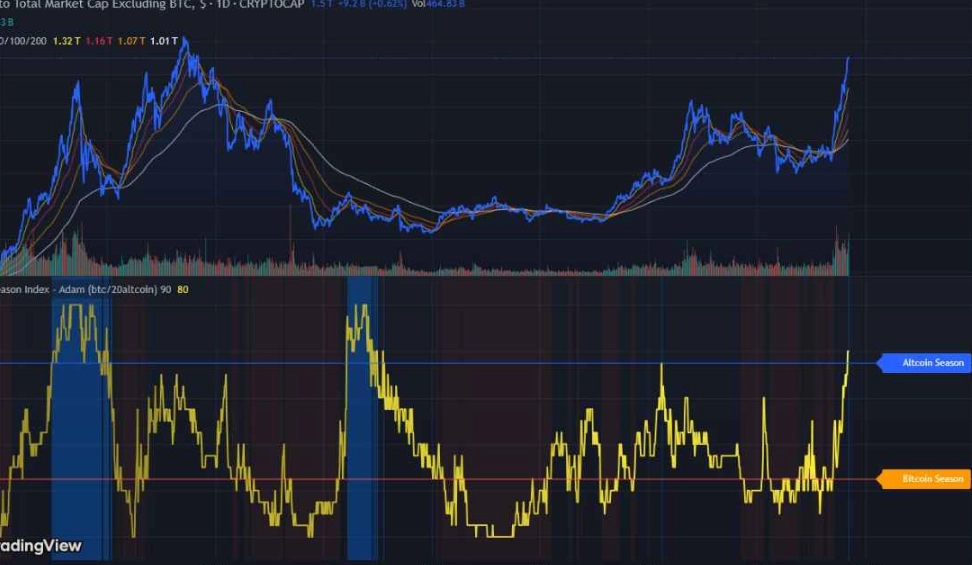
How Is the Altcoin Season Index Calculated? (The Secret Sauce)
This is where we get under the hood. You can't trust a gauge if you don't know what it's measuring. The classic calculation from Blockchain Center looks at the performance of the top 50 cryptocurrencies (excluding stablecoins) against Bitcoin over a rolling 90-day period.
Here’s the step-by-step process:
- The Basket: It takes the top 50 coins by market cap. Stablecoins like USDT or USDC are filtered out because their price isn't supposed to change.
- The Benchmark: Bitcoin's price performance over the past 90 days is set as the benchmark return.
- The Race: For each of the 50 altcoins, the algorithm checks: Has this altcoin outperformed Bitcoin over the same 90-day window?
- The Tally: Every altcoin that has outperformed Bitcoin gets a point. The total number of points is then converted into a percentage. If 40 out of 50 altcoins beat Bitcoin, the index would be at 80 (40/50*100).
To visualize the weight of this analysis, consider what the index is fundamentally tracking:
| Component | What It Measures | Why It Matters for the Index |
|---|---|---|
| Bitcoin Performance (Benchmark) | BTC's price change over the set period (e.g., 90 days). | Sets the bar. A high bar (strong Bitcoin rally) makes it harder for altcoins to "win." |
| Altcoin Performance (Contestants) | Each altcoin's price change over the same period. | Determines the "winners." Only those beating BTC's return count towards the score. |
| Market Cap Ranking (The Field) | Selection of the top 50 (or 100) non-stablecoin assets. | Defines the universe being measured. It focuses on large-cap, more established altcoins, not micro-caps. |
| Time Window (The Race Length) | Typically 90 days. Some use 30 or 60 days. | Determines the trend's persistence. A short window is noisier; a long window may lag. |
I find this metric incredibly useful, but I also think it's one of the most misunderstood tools out there. People see it hit 75 and go all-in on memecoins. That's a recipe for disaster.
How to Actually Use the Altcoin Season Index (Without Losing Your Shirt)
So you're watching the altcoin season index tick up. What now? Here’s how I’ve learned to integrate it into my thinking, moving beyond a simple buy/sell signal.
1. It's a Sentiment Gauge, Not a Timing Tool
The biggest mistake is trying to use the index to time the exact top or bottom. By the time it crosses 75, a significant altcoin move has already happened over the past three months. It's confirming a trend, not predicting its start. Think of it as a thermometer telling you the room is already hot, not a forecast telling you it will get hot tomorrow.
I use it to gauge market psychology. A high index reading often coincides with peak greed, maximum social media hype, and FOMO (Fear Of Missing Out). That's actually a contrarian indicator for me to check my risk exposure, not necessarily to buy more.
2. Context is Everything: Bitcoin Dominance
The altcoin season index should never be viewed in isolation. Its inseparable partner is Bitcoin Dominance (BTC.D). This metric, readily available on sites like CoinGecko or CoinMarketCap, shows Bitcoin's market cap as a percentage of the total crypto market cap.
Looking at both together gives you a much clearer picture. Is the altcoin season index rising while Bitcoin Dominance holds steady? That might indicate genuine, broad-based growth in the total market. That's healthier than an altcoin pump fueled solely by Bitcoin weakness.
3. Layer in Other Confirmation
Never base a decision on one metric. Before getting excited about a high altcoin season index, ask:
- Is total market capitalization growing? (Check data on CoinGecko's global chart). A rising tide lifts all boats. An altcoin season during a bear market is often a deceptive, short-lived "dead cat bounce."
- What's the trading volume like? Are altcoin volumes rising sustainably, or is it just a pump on thin volume?
- What's the macro environment? Are interest rates rising? Is there risk-on or risk-off sentiment in traditional markets? Crypto doesn't exist in a vacuum.
I learned this the hard way. In early 2022, we saw some brief spikes in the index, but total market cap was in a clear downtrend. It was a trap. The rallies were vicious but ultimately unsustainable.
Common Pitfalls and Why the Index Can Lie
Let's talk about the dark side. The altcoin season index has flaws you must be aware of.
Pitfall 1: The "Less Bad" Problem. The index only measures if an altcoin beat Bitcoin. If Bitcoin is down 20% over 90 days and an altcoin is down 10%, that altcoin is a "winner" and contributes to a higher index. So, a high index can occur during a bloody bear market where everything is falling—just altcoins are falling slightly slower. That's not a season you want to invest in.
Pitfall 2: The Large-Cap Bias. The index tracks the top 50 or 100 coins. The real parabolic, life-changing gains often happen in smaller-cap coins further down the rankings. The index might miss the early stirrings of a true altcoin season that starts in micro-caps and works its way up.
Pitfall 3: Lag, Lag, Lag. The 90-day window is a double-edged sword. It smooths out noise but also means the signal is slow. By the time you get a confirmed reading, a big chunk of the move is over. It's great for confirmation, terrible for early entry.
Pitfall 4: It Ignores Magnitude. The index counts coins, not dollars. It doesn't matter if the #2 coin, Ethereum, outperforms Bitcoin by 50% while the #49 coin outperforms by 0.1%. They each get one point. A market carried by a few large winners (like ETH and SOL) can show a moderate index, while a market where every small coin pumps 5% can show a very high index. The feel of these two markets is completely different.
Putting It All Together: A Real-World Framework
Okay, so how should you actually set up your charts and process? Here's a simple, practical workflow I follow:
- Monitor the Dashboard: Have a tab open with the Blockchain Center Altcoin Season Index, a Bitcoin Dominance chart, and a total crypto market cap chart.
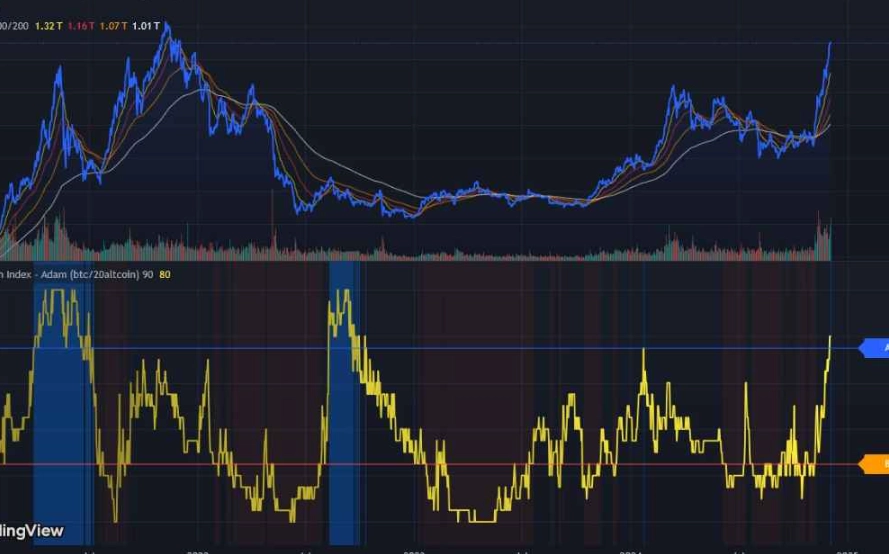
- Assess the Trend: Don't fixate on the exact number (e.g., 76 vs. 74). Look at the trend. Is the index consistently climbing from 40 to 60 to 75 over weeks? That's more meaningful than a one-day spike.
- Check for Alignment: Is the rising index accompanied by:
- A falling or low Bitcoin Dominance?
- A rising total market cap?
- Increasing altcoin volumes on major exchanges?
- Adjust Your Strategy, Don't Overhaul It: If conditions align, it might be a signal to:
- Gradually rebalance your portfolio, taking some profits from assets that have had huge runs (maybe even Bitcoin) and allocating a portion to altcoins with strong fundamentals.
- Increase your diligence on altcoin research, focusing on sectors that tend to lead (like DeFi or Layer 1s).
- NOT to sell all your Bitcoin and YOLO into unknown tokens.
- Set Risk Parameters: Decide in advance what a declining index or a rising Bitcoin Dominance will mean for your altcoin positions. Will you trim? Set tighter stop-losses? Having a plan removes emotion.
Beyond the Index: What a True Altcoin Season Feels Like
Metrics are cool, but market feel is real. When a genuine, rip-roaring altcoin season is underway, you'll notice things the index can't capture:
- Social Media Fever: Your timeline is flooded with screenshots of gains from obscure coins, not just Bitcoin.
- Narrative Shift: The conversation moves from "Bitcoin as digital gold" to "The future of [DeFi, Gaming, AI] on [Ethereum, Solana, etc.]."
- IPO-Like Launches: New token launches generate insane hype and immediate 10x listings.
- Even the "Dogs" Run: Memecoins with no utility see explosive volume and price action.
The index might confirm this frenzy, but your spidey-sense will already be tingling. The key is to not get swept up in it. Use the altcoin season index as a reality check during these times. If it's been above 90 for a while, euphoria is extreme, and the risk of a sharp reversal is high.
Frequently Asked Questions (The Stuff You Actually Search For)
The Final Word: Your Compass, Not Your Captain
The altcoin season index is a genuinely useful piece of the crypto puzzle. It gives you a quick, objective read on market breadth and where capital is flowing. In a space driven by narratives and emotion, that's valuable.
But please, don't make it your holy grail. It's a compass—a tool to help orient you in the storm. It tells you which way the wind is blowing now. It doesn't tell you when the wind will change, how strong the next gust will be, or if a hurricane is coming over the horizon.
Combine it with other tools like Bitcoin Dominance, on-chain data from places like Glassnode, and a healthy dose of macro awareness. Most importantly, combine it with your own risk management rules.
The goal isn't to catch every altcoin pump. That's impossible. The goal is to understand the market's rhythms well enough to position yourself sensibly, protect your capital during downturns, and participate meaningfully during the good times. The altcoin season index, understood correctly, can help you do just that. Now go look at the chart, but this time, you'll know what you're really seeing.
Reader Comments