Quick Guide
- The Nuts and Bolts: How Ethereum Market Cap is Calculated
- Ethereum vs. The World: Putting That Market Cap in Context
- What Actually Moves the Needle? Drivers of Ethereum's Valuation
- Beyond the Number: What the Market Cap Means for You
- Common Pitfalls and Misconceptions
- Looking Ahead: The Future of Ethereum's Valuation
- Frequently Asked Questions (FAQs)
You see the number everywhere. News headlines scream about it. Crypto Twitter is obsessed with it. Your portfolio tracker flashes it in bold. The Ethereum market cap. It's this gigantic, seemingly abstract figure that supposedly tells you how important Ethereum is. But what does it actually mean? Is it just a vanity metric for crypto bros to brag about, or is there real substance behind that number?
I remember first getting into crypto and seeing Bitcoin's market cap dwarf everything else. Ethereum was the scrappy number two. But watching its market capitalization grow, stumble, and climb again taught me more about this space than any white paper. That number isn't just a scoreboard digit; it's a living, breathing snapshot of belief, utility, and pure market mechanics all mashed together.
Let's pull that number apart and see what makes it tick. Forget the hype. We're going to look under the hood.
The Nuts and Bolts: How Ethereum Market Cap is Calculated
It sounds deceptively simple, right? Market Cap = Price per Coin x Total Coins in Circulation. Everyone throws that formula around. But with Ethereum, the "total coins" part gets interesting, and this is where a lot of people gloss over the details.
The price is easy. That's just the last traded price on major exchanges like Coinbase or Binance. It's volatile, but it's a clear data point.
The circulating supply is the trickier variable. Unlike Bitcoin with its hard cap, Ethereum doesn't have a fixed maximum supply. New ETH is issued as rewards to validators who secure the network (that's the "staking" reward). At the same time, ETH is destroyed or "burned" with every transaction through a mechanism called EIP-1559. Think of it as a dynamic balance between a faucet and a drain.
So, the circulating supply is constantly in flux. To get the real-time Ethereum market cap, data aggregators like CoinMarketCap or CoinGecko are constantly doing the math: fetching the latest price and multiplying it by their best estimate of the circulating supply. This is why you might see slight differences between sites—they might calculate the supply slightly differently.
Why does this calculation even matter? Well, if you're just looking at the price of one ETH, you're missing the bigger picture. A coin priced at $10 with a trillion in supply is very different from a coin priced at $10,000 with a million in supply. The market cap puts everything on a level playing field. It's the metric that answers the question: "How much is the entire network worth, right now, according to the market?"
It's the number that VCs, institutional investors, and even skeptical traditional finance guys look at first.
Ethereum vs. The World: Putting That Market Cap in Context
Okay, so Ethereum has a big market cap. Big deal. How big, really? The only way to understand its heft is to compare it. And there's really only one meaningful comparison at the top.
The Eternal Dance: Ethereum vs. Bitcoin Market Cap
This is the rivalry that defines the crypto market. The "flippening"—the hypothetical event where Ethereum's market cap surpasses Bitcoin's—is a perennial topic of debate. It hasn't happened, and honestly, I'm skeptical it will anytime soon. Bitcoin is digital gold, a monolithic store-of-value narrative that's hard to crack.
But look at the ratio. For years, Ethereum's market cap has typically hovered between 15% to 30% of Bitcoin's. When that ratio climbs, it often signals a "risk-on" environment where investors are betting on Ethereum's utility and smart contract ecosystem. When the ratio falls, it usually means a flight to the perceived safety of Bitcoin.
Tracking the ETH/BTC market cap ratio is, in my opinion, a more useful gauge of crypto market sentiment than looking at either in isolation.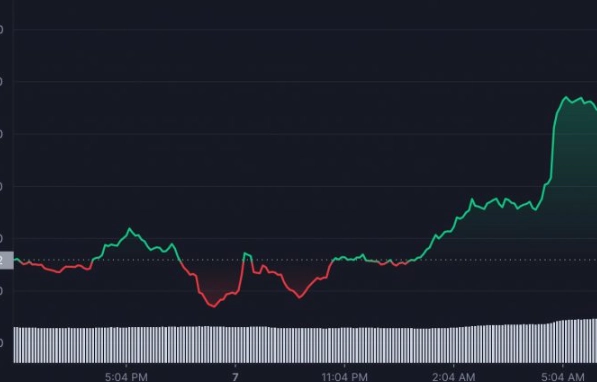
Beyond Bitcoin: The Altcoin Hierarchy
Compared to the rest of the pack, Ethereum's market cap dominance is stark. It often represents over half of the total value of all smart contract platforms combined. This table shows a snapshot of the typical hierarchy (using illustrative values to show the relationship, as real numbers change daily).
| Rank | Cryptocurrency | Primary Function | Typical Market Cap vs. Ethereum |
|---|---|---|---|
| 1 | Bitcoin (BTC) | Store of Value, Digital Gold | ~2.5x - 3.5x Larger |
| 2 | Ethereum (ETH) | Smart Contract Platform | Baseline (1x) |
| 3 | BNB (Binance Coin) | Exchange Token, Chain Utility | ~15% - 25% of ETH's Cap |
| 4 | Solana (SOL) | High-Speed Smart Contract Platform | ~10% - 20% of ETH's Cap |
| 5 | XRP (Ripple) | Cross-Border Payments | ~8% - 15% of ETH's Cap |
See the gap? The distance between #2 (Ethereum) and #3 is usually a massive chasm. This is what "market leadership" looks like. This dominant Ethereum market capitalization acts as a moat. It signifies deeper liquidity, more developer mindshare, and a stronger belief from institutions that this is the primary platform for decentralized applications. Challengers come and go, but that market cap lead is stubborn.
What Actually Moves the Needle? Drivers of Ethereum's Valuation
So what causes that huge Ethereum market cap figure to go up or down? It's not magic. It's a combination of fundamental factors and good old-fashioned market psychology.
Let's break down the big drivers.
Network Activity: The Utility Engine
This is the core of the "fundamental" argument for ETH's value. Ethereum isn't just a coin to hold; it's a network to use. When people use it, they pay fees in ETH. Key metrics here include:
- Gas Fees (Total Value Burned): High network congestion means high fees, which means more ETH is burned (EIP-1559). This reduces supply. A sustained period of high burn can turn Ethereum's monetary policy deflationary, which is a bullish narrative for the Ethereum market cap. You can track this burn on sites like Ultrasound.money.
- Total Value Locked (TVL) in DeFi: This measures how much capital is deposited in Ethereum-based lending, trading, and yield protocols. A rising TVL suggests growing utility and demand for block space, which supports a higher valuation. While TVL has migrated to some Layer 2s, the security and final settlement still root back to Ethereum mainnet.
- Developer Activity: Hard to measure perfectly, but GitHub commits and new contract deployments are proxies. A lively, building ecosystem attracts more users and capital long-term.
I've personally found that periods where gas fees are moderately high (indicating demand) but not absurdly so (which kills user experience) often correlate with a healthy, grinding upward trend in ETH's price and market cap.
The Macro Tides: Interest Rates and Liquidity
Like it or not, Ethereum doesn't trade in a vacuum. When the Federal Reserve hikes interest rates to fight inflation, risk assets like tech stocks and crypto usually suffer. Why? Because "safe" assets like government bonds start offering decent yields, pulling money away from speculative investments.
The ETH market cap is highly correlated with global liquidity. When central banks print money (quantitative easing), some of that "cheap money" finds its way into crypto, inflating valuations. When they tighten (quantitative tightening), the tide goes out. Ignoring this macro picture is a recipe for confusion. You can have amazing network growth, but if the macro winds are fiercely against you, the market cap will struggle.
Staking: The New Income Anchor
The Merge changed everything. Ethereum transitioned from Proof-of-Work (miners) to Proof-of-Stake (validators). Now, over 25% of all ETH is locked up in staking contracts to secure the network. This ETH is illiquid (or has a long withdrawal queue).
This creates a structural supply shock. Millions of ETH are effectively taken off the market. They're not sitting on exchanges waiting to be sold. This reduction in readily available supply, all else being equal, can provide a solid floor for price and support a higher market capitalization. It turns ETH into a yield-bearing asset, which is a whole new narrative for traditional finance.
You can see the scale of this on the official Ethereum Staking Launchpad or dashboards like Beaconcha.in.
The Narrative Cycle: Never underestimate the power of a story. The market cap is fueled by narratives: "The Triple Halving" (EIP-1559 burn), "Ultrasound Money," "The World Computer," "The Settlement Layer for Layer 2s." When a narrative gets traction, it can drive inflows independent of short-term metrics. Of course, if the narrative fails to materialize into real usage, the correction can be brutal.
Beyond the Number: What the Market Cap Means for You
This isn't just academic. Understanding Ethereum's market cap has practical implications for your decisions.
For Investors and Traders
Market cap helps you gauge risk and potential. A $500 billion asset is inherently less volatile than a $500 million one (though "less volatile" in crypto is still wildly volatile). It helps you size your position appropriately. Throwing a few thousand dollars at a small-cap coin can move the needle for your portfolio; doing the same with ETH likely won't. The massive Ethereum market capitalization means it's a core, foundational holding, not a lottery ticket.
It also helps with valuation. Comparing a project's market cap to its revenue (like fee burn) or its TVL can give you a sense of whether it's "cheap" or "expensive" relative to its peers. This is where metrics like Price-to-Sales (P/S) ratios, borrowed from traditional finance, are starting to be applied to crypto.
For Builders and Developers
A large, stable market cap signals a robust economic environment to build in. It means the native currency your dApp uses has deep liquidity, making it easier for users to onboard and transact. It attracts more venture capital funding to the ecosystem. Choosing to build on Ethereum because of its entrenched market cap and network effects is a strategic business decision, not just a technical one.
The Psychological Floor and Ceiling
Round numbers in market cap act as psychological magnets. "Ethereum reaching a $500 billion market cap" is a headline. It brings media attention and FOMO (fear of missing out). Conversely, falling below a key level like $200 billion can trigger fear and capitulation. These aren't rational technical levels, but in a market driven by emotion, they become self-fulfilling prophecies.
I've watched this happen during cycles. The chatter changes palpably when ETH approaches a big, round market cap figure.
Common Pitfalls and Misconceptions
Let's clear up some confusion. I've seen these mistakes over and over.
Mistake #1: Confusing Market Cap with Fully Diluted Valuation (FDV). FDV = Price x Total supply (including tokens not yet released). For Ethereum, with no hard cap, this is a theoretical and somewhat meaningless number. Always look at circulating market cap. Some newer projects have a low circulating market cap but a sky-high FDV, meaning massive future inflation is baked in—a major red flag.
Mistake #2: Thinking a Higher Market Cap Means a "Better" or "Faster" Network. Not directly. A high Ethereum market cap reflects value and security (staking). It doesn't make transactions faster or cheaper. That's what Layer 2 scaling solutions (like Arbitrum, Optimism) are for. The market cap secures the base layer; scaling happens on top of it.
Mistake #3: Assuming Market Cap is "Money In." If Ethereum's market cap is $400 billion, that does NOT mean $400 billion of cash has been invested. A lot of that value is paper gains. If everyone tried to sell at once, the price would collapse long before they could exit at that valuation. Liquidity is thinner than the market cap suggests.
Looking Ahead: The Future of Ethereum's Valuation
Where does the Ethereum market cap go from here? Nobody knows. But we can look at the vectors pushing it.
The Bull Case: Widespread institutional adoption via spot Ethereum ETFs (if approved) could open a floodgate of regulated capital. Continued Layer 2 growth, making the ecosystem cheap and fast for billions, could drive unprecedented demand for ETH as the settlement asset. The deflationary supply shock from burning could intensify with mass adoption. The narrative evolves from "dApp platform" to "global settlement layer for the new internet." In this scenario, a market cap rivalling large tech companies seems plausible.
The Bear Case: Regulatory crackdowns, particularly on staking (being labeled a security), could cripple the model. A "supercycle" competitor could finally crack Ethereum's network effects and developer dominance. Technical stagnation or a critical bug could shatter confidence. Macro conditions could remain tight for years, starving risk assets of oxygen.
My personal, admittedly biased, view? The bear cases are real risks, but the bull case has more engines. The combination of a proven track record, an entrenched ecosystem, and a constantly evolving technical roadmap (just look at the Ethereum roadmap) makes it the hardest to displace. Its market cap might not moon overnight, but it feels like the one with the strongest foundation for the long haul.
Frequently Asked Questions (FAQs)
What is a good market cap for Ethereum?
There's no "good" or "bad" absolute number. It's about context. Is the network growing? Is usage increasing? Is the monetary policy sound? A $300 billion market cap with strong fundamentals is healthier than a $500 billion cap built on pure speculation. Focus on the health of the ecosystem behind the cap.
How often is Ethereum's market cap updated?
Continuously, on sites like CoinMarketCap and CoinGecko. It changes with every trade that moves the price and with every new block that mints or burns ETH. It's a real-time metric.
Can Ethereum's market cap ever surpass Bitcoin's?
Mathematically, yes. Philosophically and economically, it's a huge challenge. It would require a massive shift in perception, where Ethereum's utility value is overwhelmingly valued above Bitcoin's monetary premium. It's the crypto equivalent of Apple surpassing Microsoft in the early 2000s—unthinkable until it happened. Don't bet your house on it, but don't rule it out forever.
Why does market cap matter more than price alone?
Because price is easily manipulated for a low-float asset. A low-market-cap coin can be pumped to a high price with relatively little money, creating a false impression of value. Moving the price of Ethereum, given its colossal market capitalization, requires enormous, sustained buying pressure, making it a more honest signal of genuine market conviction.
Where can I reliably check Ethereum's current market cap?
Stick to the major, reputable aggregators. My go-tos are CoinMarketCap and CoinGecko. For deeper on-chain data that feeds into the valuation, like supply and burn, Ultrasound.money is fantastic.
So, there you have it. The Ethereum market cap isn't just a big, scary number. It's a composite portrait. It's a measure of security (via staking), a tally of utility (via fees and burning), a reflection of macro winds, and a beacon for market sentiment—all rolled into one.
The next time you see that figure, you'll see more than just digits. You'll see the heartbeat of an ecosystem.
Reader Comments