Quick Navigation
If you just shouted that question into Google, you're not alone. It's probably the most asked question in crypto, and also the trickiest to answer simply. You might be looking for a single number, a neat little price tag you can wrap your head around. I get it. But here's the thing anyone who's been in this space for more than five minutes will tell you: asking "how much is a bitcoin?" is like asking "how long is a piece of string?" The answer is never static.
Right now, as I'm typing this sentence, the price is one number. By the time you read it, it'll be different. Maybe a few dollars, maybe a few hundred. That volatility is the first thing you need to understand. So instead of just giving you a live ticker (which you can easily find), I want to walk you through what that number actually means, where it comes from, why it swings like a pendulum on caffeine, and how you should think about it if you're considering getting involved. Because knowing the price is one thing; understanding its value is a whole different ball game.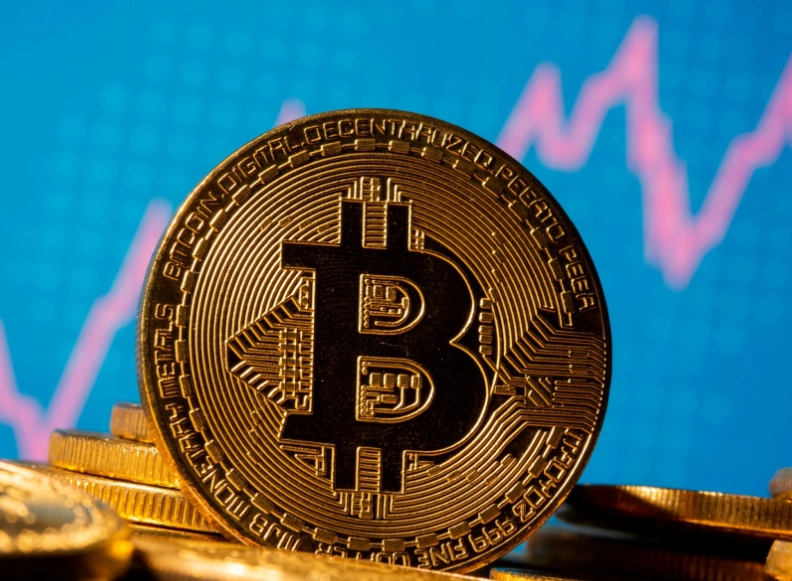
Where Does The Bitcoin Price Even Come From?
This is where people get tripped up. There's no "Bitcoin Store" with a manager setting a price. Unlike a stock, there's no central company headquarters. The price you see is purely a function of supply and demand on global exchanges. Think of it like a global, 24/7 auction house. Millions of buyers and sellers are constantly placing orders: "I'll buy 0.1 BTC at $65,000," "I'll sell 1 BTC at $65,100."
When a buy order and a sell order match, a trade happens, and that becomes the latest data point—the latest price. Major platforms like CoinMarketCap or CoinGecko aggregate prices from hundreds of these exchanges to calculate a global average. That's the number you typically see.
But here's a wrinkle: the price isn't exactly the same everywhere. An exchange in the US might have a slightly different price than one in Korea or Europe at any given millisecond, due to local demand, banking restrictions, or arbitrage lag. These differences are usually small and get quickly traded away, but they highlight the decentralized nature of it all.
| Price Source | What It Shows | Best For | A Personal Note |
|---|---|---|---|
| CoinMarketCap / CoinGecko | Global average price from multiple exchanges. The industry standard reference. | Getting the big picture, tracking overall market movement. | My go-to for a quick sanity check. I trust their aggregation. |
| Individual Exchange (e.g., Coinbase, Binance) | The precise price at which you can buy/sell on THAT specific platform. | Actually executing a trade. The price that matters for your wallet. | The fees can eat into your rate, so the listed price isn't your final cost. |
| Financial Data Terminals (Bloomberg, Reuters) | Institutional-grade data, often with futures prices and deep analysis. | Professional traders, deep-dive analysis. | Overkill for most people, but shows how mainstream BTC has become. |
So when you wonder "how much is a bitcoin," the first follow-up question should be: "On which exchange, and for what purpose?"
What Actually Makes the Price Go Up and Down?
Alright, so we know the price is set by trading. But what makes people rush to buy or sell? Why does it feel like Bitcoin's mood swings are more dramatic than a reality TV show? Let's break down the major drivers. It's rarely just one thing.
The Big Four: Core Price Drivers
1. Supply and Demand Mechanics (The Hard Rules)
This is the bedrock. Bitcoin's supply is algorithmically capped at 21 million coins. No more will ever be created. This scarcity is fundamental. Demand, however, is variable and human. As more people, companies, or funds want to own a piece of that limited pie, the price tends to rise if supply stays tight. Simple economics, but powerful. Events like the Bitcoin Halving (where the reward for mining new blocks is cut in half) directly reduce the new supply entering the market, often creating upward pressure. The next one is expected around April 2024, and everyone's watching.
2. Market Sentiment and News (The Emotional Rollercoaster)
This is where it gets messy. Bitcoin is incredibly sensitive to headlines. A major company like Tesla adding it to their balance sheet? Price jumps. A negative tweet from an influential figure or a scary-sounding regulatory headline from a large country? Price often drops. The market is driven by fear and greed, sometimes in equal measure within the same hour. It's exhausting, honestly.
3. Macroeconomic Factors (The Big Picture)
Bitcoin isn't in a vacuum anymore. It now reacts to the same forces as stocks and gold. When inflation is high, some people buy Bitcoin as a potential hedge (calling it "digital gold"). When interest rates rise and money gets expensive, risky assets like crypto often sell off. Geopolitical tensions can drive price up (as people seek assets outside the traditional system) or down (as they flee to cash). Understanding this context is crucial in 2024.
4. Technological and Network Developments (The Foundation)
Progress on the underlying technology matters. Successful upgrades that improve scalability or privacy can boost confidence. High-profile security breaches or network congestion can harm it. The health of the mining network (hash rate) is also a key metric watched by serious investors. A strong, secure network supports a higher valuation over the long term.
Beyond the Dollar Sign: Different Ways to Measure "How Much"
Focusing only on the USD price is a narrow view. To really grasp Bitcoin, you need to think in layers.
Bitcoin's Price in Other Currencies: Obviously, it has a value in Euros, Yen, Pounds, etc. But more interestingly, look at its price in currencies of countries experiencing hyperinflation, like Argentina or Turkey. For people there, asking "how much is a bitcoin" isn't academic; it's about preserving savings as their local currency melts away. This use-case gives it a very real, non-speculative value.
Satoshis (Sats): The Real Unit of Account
One bitcoin is divisible into 100,000,000 units called satoshis (or "sats"). As the dollar price of 1 BTC gets large, thinking in sats becomes more intuitive. Instead of saying "0.005 BTC," you'd say "500,000 sats." It's like thinking in cents instead of dollars. This is how many long-term believers conceptualize accumulation—they're stacking sats, not necessarily whole coins.
The Intangible "Price": There's also the cost of understanding it. The time spent learning about wallets, private keys, and self-custody. The emotional price of watching your portfolio swing wildly. The social price of being the "crypto guy" at family dinners. These don't show up on a chart, but they're real costs of participation.
Common Questions When People Ask "How Much is a Bitcoin?"
Let's tackle the real questions behind the search. I get these all the time.
Is the current price too high? Did I miss the boat?
This is the #1 fear. The truth is, nobody knows. Anyone who says they know for sure is lying. In 2013, $1,000 seemed astronomically high. In 2017, $10,000 seemed like the top. In 2021, $60,000 felt like the peak. History has shown that previous highs have been exceeded, but that is absolutely not a guarantee for the future. My personal approach? I don't try to time the absolute bottom. I focus on whether I believe in the long-term thesis and use dollar-cost averaging (small, regular purchases) to smooth out the price volatility over time. It's less stressful.
How much is a bitcoin going to be worth in [X] years?
Again, crystal balls are broken. You'll see wild predictions from "$1 million by 2030!" to "it's going to zero!" Most are garbage. Some analysts use models like the Stock-to-Flow (S2F) model, which compares the existing supply (stock) to the new supply (flow). It's an interesting theoretical framework that has gained attention, but it's controversial and far from a sure thing. Relying on price predictions is a great way to lose money. Focus on the technology, adoption trends, and regulatory landscape instead of specific price targets.
Should I buy a whole bitcoin?
This question stems from the old-school thinking of shares. You don't need a whole one! This is the beauty of divisibility. You can buy $50, $100, $1000 worth. That's it. You own a fraction of a bitcoin. The goal for most people shouldn't be "1 BTC," it should be "accumulating a position that makes sense for my financial goals and risk tolerance." Buying a whole coin just for the bragging rights is a terrible financial strategy.
Why do different websites show slightly different prices?
As we covered earlier, they pull data from different sets of exchanges, and there's a slight delay. Stick to the major aggregators (CoinMarketCap, CoinGecko) for a reliable benchmark. The tiny differences are usually irrelevant unless you're a high-frequency trader.
How much is a bitcoin in my country's currency after fees?
Now THIS is the right question! The listed price is not your final price. You must account for:
- Exchange Fees: Trading fees, which can be a percentage of your order.
- Spread: The difference between the buy and sell price on the exchange.
- Withdrawal/Network Fees: Cost to move your BTC off the exchange to your own wallet.
A $65,000 bitcoin might effectively cost you $65,400 by the time you own it in your self-custody wallet. Always calculate the all-in cost.
A Practical Guide: What to Do Once You Know the Price
So you've checked, you see the number. What now?
- Don't Panic Buy or Sell: The price is flashy and designed to trigger emotion. Take a breath. FOMO (Fear Of Missing Out) and FUD (Fear, Uncertainty, Doubt) are your worst enemies.
- Do Your Own Research (DYOR): Before putting a single dollar in, understand what Bitcoin is, how it works, and the risks. The Bitcoin.org website is a neutral starting point for technical basics. Read the white paper. It's dense, but try.
- Choose a Reputable Platform: If you decide to buy, use a well-known, regulated exchange appropriate for your region (like Coinbase, Kraken, or Binance—though check local availability). Security is paramount.
- Learn About Self-Custody: Leaving your coins on an exchange long-term is risky (remember FTX?). Learn about hardware wallets (like Ledger or Trezor) for serious holdings. "Not your keys, not your coins" is a sacred mantra for a reason.
- Think Long-Term: If you believe in Bitcoin as a technology and store of value, short-term price noise shouldn't derail you. Zoom out the chart. The multi-year trend tells a very different story than the daily chaos.
I remember the first time I bought Bitcoin. I stared at the price chart for hours, my stomach in knots over every $10 move. It was exhausting. Now, I still check, but more out of curiosity than anxiety. I have a plan, I understand the risks, and my investment is sized appropriately. The price matters, but it doesn't control me. I hope this guide helps you get to that point too, where you can look at the ever-changing number and see more than just digits on a screen.
Because in the end, knowing how much a bitcoin is, is just the beginning. Understanding what that means for you is the real journey.
Reader Comments