Quick Navigation
Let's be honest. Checking the XRP kurs can feel like riding a rollercoaster you never signed up for. One day it's up, the next it's down, and the news seems to swing it more than anything else. If you're trying to make sense of it all, you're not alone. I remember staring at the charts years ago, completely baffled by why it moved the way it did. Was it Bitcoin? Was it some announcement I missed?
Turns out, it's never just one thing. The XRP price is this weird cocktail of legal drama, tech updates, big money moves, and pure old-fashioned market mood. This guide isn't about giving you a magic prediction (anyone who does that is likely guessing). It's about giving you the toolkit to understand the XRP kurs yourself, to see past the daily noise and spot what actually matters.
We're going to break down every major factor, from the elephant in the room (the SEC lawsuit) to the quiet stuff most people ignore (like on-chain activity). My goal is that by the end, you'll look at a price chart or a news headline and have a much clearer idea of what it might mean, or more importantly, what it might not mean.
The Legal Overhang: How the SEC vs. Ripple Case Shapes Everything
You simply cannot talk about the XRP kurs without starting here. It's been the single biggest driver of volatility for years. This isn't just background noise; it's the foundation the price has been built on recently.
The core of the issue?
The U.S. Securities and Exchange Commission (SEC) sued Ripple Labs in December 2020, alleging that the company’s sale of XRP constituted an unregistered securities offering. Ripple fought back, hard. The entire case hinged on a critical question: Is XRP a security (like a stock) or a currency/commodity?
Why does this matter so much for the price? If XRP were classified as a security in the U.S., it would face a mountain of regulatory hurdles. Many U.S.-based exchanges would likely delist it (some did initially), institutional investment would dry up, and its utility for fast cross-border payments—Ripple's main pitch—would be crippled in a major market. The downside risk was, and to some extent still is, massive.
The Game-Changer: In July 2023, Judge Analisa Torres delivered a partial summary judgment that was largely seen as a win for Ripple. She ruled that programmatic sales of XRP on exchanges (i.e., how regular people buy it) did not constitute securities sales. However, she also ruled that Ripple's institutional sales of XRP were securities transactions. This mixed ruling was enough to send the XRP kurs soaring over 70% in a single day. It provided crucial clarity and relief, but it didn't completely end the case.
The lawsuit is still ongoing regarding other aspects, like potential penalties for Ripple's institutional sales. Every court filing, every hearing date, every bit of speculation about a final settlement causes ripples (pun intended) in the XRP price. It's the ultimate macro factor. A final, clear resolution—especially one that firmly establishes XRP's non-security status—could remove a huge cloud of uncertainty. Conversely, negative developments can still spook the market.
I think the market has mostly priced in a positive outcome, but legal processes are slow and unpredictable. It's the one headline that will always move the needle.
Beyond the Courtroom: The Core Factors Moving the XRP Kurs
Okay, the legal stuff is huge, but it's not the whole story. When there isn't major court news, other forces take the wheel. Let's peel back the layers.
1. Adoption and Partnership News (The Utility Argument)
Ripple's core business is using XRP in its RippleNet payment network for fast, cheap international settlements (through their On-Demand Liquidity product, now called Ripple Payments). When a new bank or financial institution announces they're using Ripple's tech, it's seen as a validation of XRP's underlying utility.
Does a new partnership directly make the XRP kurs go up? Not always immediately, and sometimes the effect is muted. The market can be cynical. But consistent, high-profile adoption signals long-term demand for the token. It shifts the narrative from "speculative asset" to "useful tool for finance."
You can track these announcements on Ripple's official news page. Look for deals with names like Santander, SBI Remit, or central banks exploring digital currencies. These are the stories that build a floor under the price over time.
2. The Broader Crypto Market Tide
Like it or not, XRP often sails (or sinks) with the broader crypto market, especially Bitcoin. When Bitcoin has a major rally or crash, most altcoins, including XRP, tend to follow, at least in direction if not magnitude. This is the "beta" effect.
However, XRP has shown periods of decoupling. During the peak of the SEC case uncertainty, it sometimes moved opposite to the market. After the July 2023 ruling, it massively outperformed. So while it's connected, it's not a perfect mirror. A good practice is to check both the absolute XRP price and its ratio against Bitcoin (XRP/BTC pair). If XRP is rising while Bitcoin is flat or falling, that's a sign of unique, strong buying pressure specific to XRP.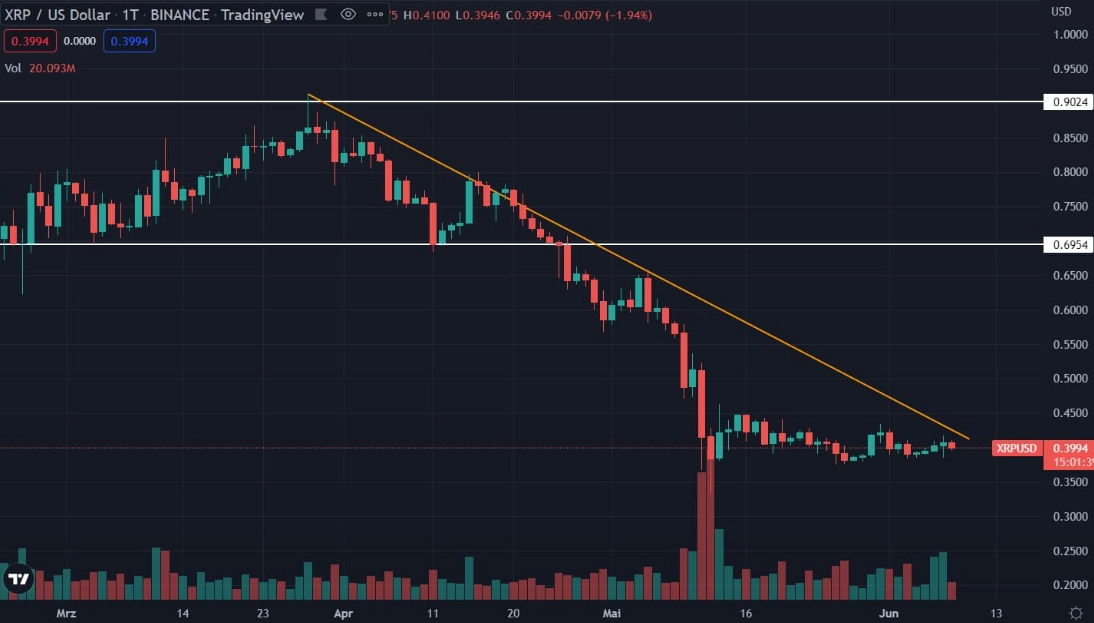
A Personal Gripe: Too many "analysts" on social media will post a chart of XRP going up 5% and claim it's all due to some secret partnership. Nine times out of ten, if you zoom out, you'll see Bitcoin went up 4.5% that same day. Always check the context of the broader market first. It saves you from chasing false narratives.
3. On-Chain Metrics and Whale Activity
This is where you get your hands dirty with data. The XRP Ledger is public, so you can see what's happening under the hood. Sites like Bithomp or XRPScan are your friends here. What should you look for?
- Large Wallet Movements: Are "whales" (addresses holding tens of millions of XRP) moving tokens to or from exchanges? Moving to an exchange (like Coinbase or Binance) can signal an intent to sell. Moving off an exchange into cold storage is often seen as accumulation for the long term.
- Network Activity: Are the number of transactions increasing? This can indicate growing usage, not just speculation.
- Supply Distribution: How much XRP is held by the top 100 addresses? Increasing concentration can be a risk; wider distribution is generally healthier.
This data doesn't lie, but it does require interpretation. A single large movement might not mean much, but a trend can be telling.
4. Overall Market Sentiment and News Cycles
Crypto is driven by narratives and emotion. Fear, greed, FOMO (fear of missing out), and FUD (fear, uncertainty, doubt) are real market forces. General financial news—interest rate decisions by the Federal Reserve, inflation reports, stock market performance—can affect liquidity flowing into or out of risky assets like crypto.
Specific XRP-related FUD might pop up from time to time: an old rumor resurfaces, a critic makes a strong statement, or a minor negative legal detail gets blown out of proportion. The key is to assess the source. Is it a credible journalist or a random Twitter account with 200 followers? The XRP kurs can be surprisingly sensitive to gossip.
A Practical Framework: How to Analyze the XRP Kurs Yourself
So you've got all these factors. How do you put them together without getting overwhelmed? Don't try to watch everything at once every minute. It's exhausting and pointless. Instead, create a simple checklist or a mental model to categorize the news and data you see.
I tend to think in three layers:
| Layer | What It Includes | Impact on Price | How to Monitor |
|---|---|---|---|
| 1. Foundational/Legal | SEC case updates, major regulatory decisions globally, final settlement. | High-impact, low-frequency events. Can cause sustained rallies or crashes. | Set Google Alerts for "Ripple SEC." Follow reputable legal analysts in the crypto space. |
| 2. Fundamental/Utility | New Ripple partnerships, bank adoption, XRP Ledger upgrade proposals, transaction volume growth. | Medium-to-long-term impact. Builds value narrative and demand. | Check Ripple's news page monthly. Watch for announcements at major fintech conferences. |
| 3. Technical/Market | Price chart patterns, Bitcoin correlation, on-chain whale movements, exchange inflows/outflows. | Short-to-medium-term impact. Guides entry/exit points for traders. | Use a charting platform (TradingView). Scan on-chain data weekly on Bithomp. |
Most of the time, Layer 3 stuff (the daily chart moves) is just noise. The real moves happen when something in Layer 1 or a significant event in Layer 2 occurs. This framework helps you filter out 90% of the daily chatter and focus on the signals that matter.
For example, if the XRP kurs is dipping on a quiet Tuesday with no Layer 1 or 2 news, it's probably just general market sentiment or minor profit-taking. No need to panic. But if it's dipping after a surprise negative court filing? That's worth your full attention.
Common Questions About the XRP Price (The Stuff You Actually Search For)
Putting It All Together: A Realistic Mindset
After years of watching this, my main takeaway is this: trying to "trade" the XRP kurs based on daily news is a recipe for stress and losses. The volatility is too high, and the reactions to news are often irrational and short-lived.
What works better for most people?
A long-term, fundamentals-based approach. Do you believe in the underlying utility of the XRP Ledger for fast, cheap settlements? Do you believe Ripple will continue to sign partners and that the regulatory clarity will improve? If your answers are yes, then the day-to-day fluctuations in the XRP price matter less. Your focus shifts to accumulating during periods of fear (when the price is down on negative sentiment but the fundamentals are unchanged) and holding.
Use the XRP kurs as a gauge, not a gospel. Let it inform you about market sentiment and potential opportunities, but don't let it dictate your entire strategy. Build your understanding on the layers we discussed—the legal foundation, the adoption fundamentals, and the market mechanics. That knowledge is what will help you navigate the next big spike or crash with a clearer head, whether you're just watching or deciding to make a move.
And remember, no article, no analyst, not even this one, has the crystal ball. The goal is to make you your own best analyst.
Reader Comments