Jump to Section
- What Exactly Are You Looking At? The Nature of the Bitcoin Price
- The Big Four: Core Drivers of the Bitcoin Kurs
- Beyond the Chart: Useful Metrics to Analyze the Bitcoin Kurs
- Practical Frameworks: How to Approach the Bitcoin Kurs for Your Goals
- Common Questions About the Bitcoin Kurs (The Stuff You Actually Search For)
- Putting It All Together: A Realistic Mindset
Let's be honest. You've probably seen that chart. The one that looks like a heart attack on a screen, shooting up to dizzying heights one minute and plunging the next. That's the Bitcoin kurs, and trying to understand it can feel like trying to predict the weather on another planet. I remember staring at it back in 2017, convinced I'd missed the boat, only to watch it crash. Then again in 2021, thinking "this time it's different," and... well, you know the story.
It's not just a number. It's a pulse. A global, decentralized, often irrational pulse of fear, greed, technology, and macroeconomics. This guide isn't about giving you a magic crystal ball. Anyone who promises that is selling something. Instead, it's about unpacking the engine—showing you the key drivers, the useful (and useless) metrics, and the frameworks that can help you look at that volatile Bitcoin price chart with a bit more clarity, and a lot less panic.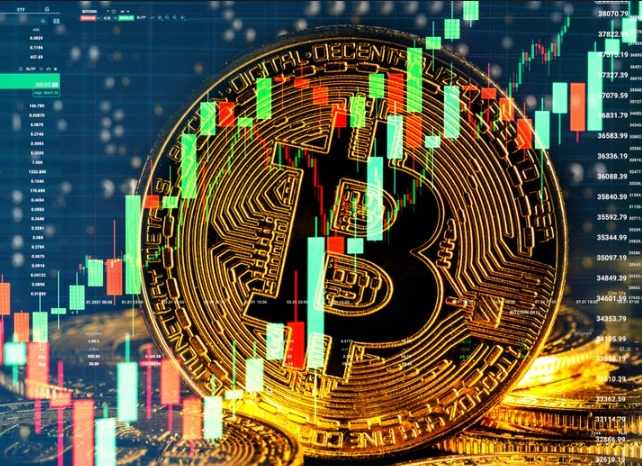
What Exactly Are You Looking At? The Nature of the Bitcoin Price
First, a basic but crucial point. The "Bitcoin kurs" you see on CoinMarketCap or Google isn't one single price. It's an aggregate, a weighted average pulled from hundreds of exchanges globally. The price on Coinbase might differ slightly from the price on Binance or Kraken at any given second due to local supply and demand. This is important because it highlights Bitcoin's first principle: there's no central authority setting the price. It emerges purely from millions of individual trades.
This leads to wild volatility. With no central bank to intervene or stabilize, the bitcoin kurs can swing 10% or more in a day based on a tweet, a regulatory headline, or a large whale moving funds. For traders, this is opportunity. For long-term holders, it's noise. Which perspective you adopt changes everything about how you interpret the chart.
The Big Four: Core Drivers of the Bitcoin Kurs
Over the years, I've seen countless theories about what moves Bitcoin. After sifting through the noise, four categories consistently matter. They don't act in isolation; they mix and clash, creating the volatility we see.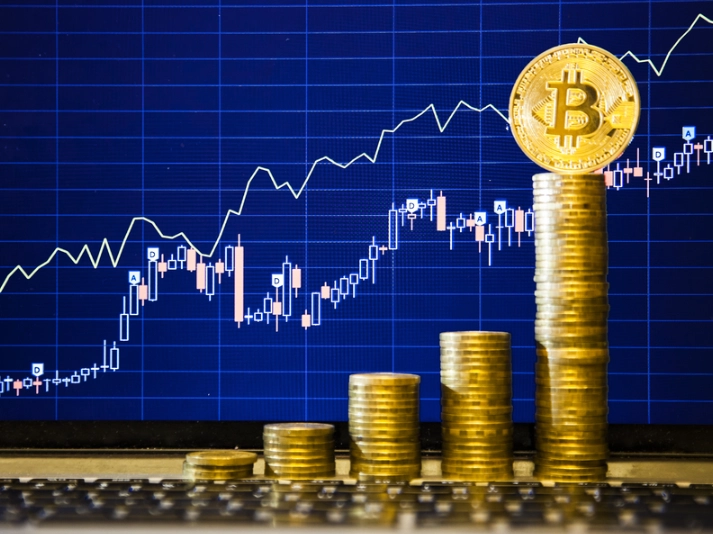
1. Supply Dynamics: The Code is Law
This is the hard-coded, predictable part. Bitcoin's supply is algorithmically constrained. Only 21 million will ever exist. New coins are created as a reward for miners who secure the network, and this reward is cut in half roughly every four years in an event called "the halving." The last one was in April 2024.
This programmed scarcity is Bitcoin's bedrock value proposition. It's the "digital gold" narrative in action. You can read the exact emission schedule in Satoshi Nakamoto's original Bitcoin whitepaper. Unlike central banks, this monetary policy can't be changed without overwhelming consensus.
2. Demand Drivers: Adoption, Narratives, and Hype
If supply is the engine, demand is the fuel. And this fuel comes in many forms:
- Institutional Adoption: When a company like MicroStrategy adds billions in BTC to its treasury, or a spot Bitcoin ETF is approved (like the US ETFs in early 2024), it signals legitimacy and opens the floodgates for traditional capital. This is a huge demand shock.
- The Network Effect: More wallets, more developers, more merchants accepting Bitcoin. Each new user increases the utility and, theoretically, the value of the network. Sites like Bitcoin Visuals track these on-chain metrics.
- The Narrative Cycle: Bitcoin reinvents its story. It was "digital cash for criminals," then "store of value," then "inflation hedge," then "institutional asset." Each narrative attracts a new wave of buyers, influencing the bitcoin kurs.
Let me tell you, the hype is a powerful force. I've felt the FOMO (Fear Of Missing Out) myself. It's palpable on social media when the price is rising. But hype is a double-edged sword; it drives demand up fast and can abandon it just as quickly.
3. The Macro Tide: Interest Rates and Dollar Strength
This is the part many early crypto enthusiasts missed. Bitcoin didn't grow up in a vacuum. As institutional money flowed in, its correlation with traditional risk assets like the Nasdaq increased, especially in periods of stress.
The key lever here is liquidity. When central banks (like the US Federal Reserve) keep interest rates low and print money (quantitative easing), cheap money sloshes around looking for high-return investments. Bitcoin, as a risky, high-growth potential asset, often benefits. You can follow the Fed's policy statements on their official website.
Conversely, when the Fed hikes rates to fight inflation (as it did aggressively in 2022-2023), that cheap money dries up. Risk assets sell off. Bitcoin, despite its "inflation hedge" claims, often sold off too. It was a brutal lesson for many, showing that in the short-to-medium term, macro liquidity can overpower Bitcoin's own narratives.
4. Market Sentiment & The Fear & Greed Index
This is the psychological layer. Markets are driven by human emotion. Tools like the Crypto Fear and Greed Index try to quantify this by analyzing volatility, market momentum, social media, surveys, and dominance.
| Index Range | Sentiment | Typical Market Phase | Common Investor Mindset |
|---|---|---|---|
| 0-25 | Extreme Fear | Market bottom, capitulation | "It's going to zero. I need to sell." |
| 26-45 | Fear | Bear market, downtrend | Watching nervously, hesitant to buy. |
| 46-55 | Neutral | Transition, accumulation | Uncertain, waiting for direction. |
| 56-75 | Greed | Bull market, uptrend | "This is easy money!" Buying more. |
| 76-100 | Extreme Greed | Market top, euphoria | "This time is different!" FOMO buying. |
Contrarian investors often see extreme fear as a potential buying opportunity and extreme greed as a warning sign to take profits. It's not a perfect timing tool, but it helps gauge the emotional temperature. When everyone is screaming "to the moon!" on Twitter, that's usually when you should be most cautious about the near-term bitcoin kurs trajectory.
Beyond the Chart: Useful Metrics to Analyze the Bitcoin Kurs
Just looking at the price is like judging a book by its cover. The real story is in the on-chain data—the activity recorded on Bitcoin's blockchain. Here are a few I check regularly:
- Network Hash Rate: The total computational power securing the network. A rising hash rate suggests miners are confident and investing in the long-term health of Bitcoin, which is a positive fundamental sign, regardless of short-term bitcoin price moves.
- Active Addresses: A rough proxy for daily users. Are more or fewer people transacting? Sustained growth is good for network health.
- MVRV Z-Score: A more advanced metric that compares the market value (current price) to the realized value (the price at which each coin last moved). High values suggest the market price is far above its "fair value," indicating a potential top. Low values suggest the opposite.
Practical Frameworks: How to Approach the Bitcoin Kurs for Your Goals
Okay, so you understand the drivers and the metrics. Now what? Your strategy depends entirely on your goal and your temperament.
For The Long-Term Holder (The "HODLer")
If you believe in Bitcoin's long-term thesis as a decentralized store of value, then short-term bitcoin kurs volatility is just noise. Your framework is simple:
- Dollar-Cost Average (DCA): This is the most powerful tool. Invest a fixed amount of money at regular intervals (e.g., $100 every week). You buy more when the price is low and less when it's high, smoothing out your average entry price. It removes emotion from the equation.
- Secure Storage: If you're holding for years, get your coins off the exchange. Use a hardware wallet. Your keys, your Bitcoin.
- Ignore 90% of the News: Turn off price alerts. Check the chart monthly, not hourly. Focus on the long-term adoption trends, not the daily drama.
This is boring. But it works.
For The Active Trader
You're trying to profit from the volatility. This is high-risk and requires skill, time, and a strong stomach. Your tools are different:
- Technical Analysis (TA): Using historical price patterns, chart formations (like support/resistance, moving averages), and indicators (RSI, MACD) to guess future direction. It's a self-fulfilling prophecy to an extent because so many people are looking at the same levels.
- Momentum & News Trading: Reacting quickly to breaking news, ETF flows, or large whale transactions tracked on sites like Glassnode.
Common Questions About the Bitcoin Kurs (The Stuff You Actually Search For)
Let's cut to the chase and answer the questions I see people actually asking online.
Why is the Bitcoin price so volatile?
Three main reasons: 1) Relatively small market size: Despite its trillion-dollar potential, its market cap is still tiny compared to gold or stocks. A few billion dollars moving in or out has a huge impact. 2) 24/7 global market: No closing bell means news hits instantly, anytime. 3) Speculative nature: A large portion of trading is based on future expectations, not current utility, making it sensitive to sentiment shifts.
Can Bitcoin's price go to zero?
Technically, yes. If a critical flaw is found in its code, if global governments ban it effectively, or if everyone loses faith and stops using it, the bitcoin kurs could collapse. Practically, the probability is considered low by many due to its entrenched network, robust security, and growing institutional adoption. But it's a non-zero risk you must accept.
When is the best time to buy Bitcoin?
Nobody knows the absolute bottom. The "best" time is arguably when fear is high, the news is bad, and the Fear & Greed Index is in the "Extreme Fear" zone. But trying to time that perfectly is a fool's errand. For most people, the best strategy is consistently over time (DCA), regardless of the current bitcoin kurs.
How do taxes work on Bitcoin gains?
This is critical and varies by country. In many jurisdictions (like the US, UK, Germany), Bitcoin is treated as property for tax purposes. Selling, trading, or sometimes even spending it can trigger a capital gains tax event on the profit. You need to track your purchase price (cost basis) and sale price. Consult a local tax professional who understands crypto. Seriously, don't ignore this.
What's the difference between Bitcoin's price and its "value"?
This is a philosophical one. The price is what the market will pay for it right now. It's transactional. The value, according to believers, is intrinsic: its properties as censorship-resistant, borderless, programmable, hard-money with a verifiable scarcity. Price fluctuates wildly around perceived value. Your job is to decide what you think its long-term value is.
Putting It All Together: A Realistic Mindset
After years of watching this space, here's my take. Obsessing over the daily bitcoin kurs is a recipe for anxiety and poor decisions. The chart is mesmerizing, but it's a distraction from the underlying innovation.
The people who have done well with Bitcoin are typically those who understood its core proposition early, invested what they could afford to lose, and then... waited. Through the 80% crashes and the manic euphoria. They focused on the technology's potential, not the ticker.
The journey of the Bitcoin price is far from over. New chapters—like ETF integration, potential central bank digital currencies (CBDCs), and evolving regulations—will write themselves. The volatility will remain. But by understanding the forces behind the number, you can move from being a passive spectator to a more informed participant, whether you're investing $100 or $100,000. Just remember to do your own research, never invest more than you can afford to lose, and for goodness' sake, use a hardware wallet.
Reader Comments