Quick Guide
- The Core Drivers of the Monero Price (It's Not Just Hype)
- Monero Price History: A Rollercoaster of Ideology and Markets
- How to Analyze the Monero Price: Beyond the Simple Chart
- Realistic Monero Price Predictions: Scenarios, Not Crystal Balls
- Common Questions About Monero's Price (The Stuff You Actually Search)
- Practical Steps: What to Do Before You Check the Monero Price Again
Let's talk about the Monero price. It's not just a number on a screen, you know? It's a story. A story about privacy, technology, regulation, and what people truly value in a digital world that's watching more than ever. If you've ever looked at the Monero price chart and wondered why it moves the way it does—sometimes independently from Bitcoin, sometimes in a wild dance of its own—you're in the right place.
I remember first buying XMR back when its price action felt like a secret handshake among cypherpunks. It was different. It still is. This isn't your typical "number go up" coin. The value of Monero is tied to a fundamental proposition: the right to financial privacy. And that proposition is constantly being tested, debated, and re-evaluated by markets and regulators.
So, what actually drives the price of Monero? Is it just speculation, or is there something more concrete? We're going to peel back the layers, look at the hard data, the market sentiment, and the unique technological factors that make XMR such a fascinating—and sometimes frustrating—asset to follow.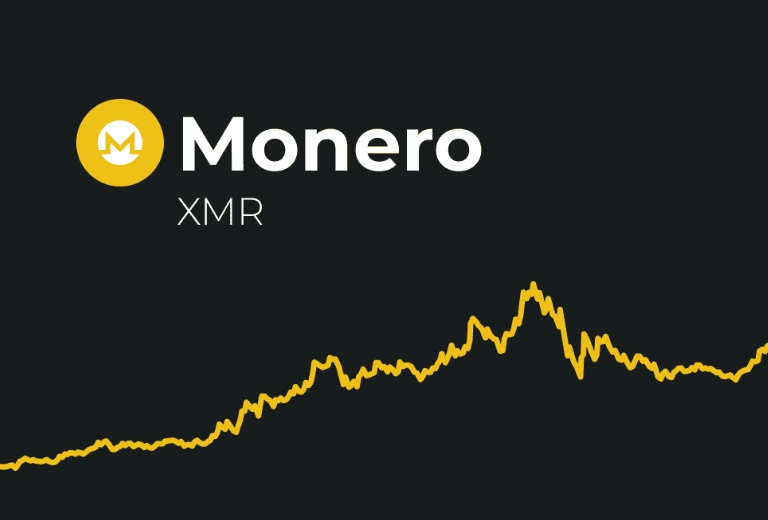
The Core Drivers of the Monero Price (It's Not Just Hype)
Forget the simple explanations. The Monero XMR price is a complex beast, influenced by a mix of universal crypto factors and elements that are unique to the privacy coin niche. It's this combination that creates its distinctive volatility and long-term trend.
Here's the thing: When Bitcoin sneezes, most of the crypto market catches a cold. Monero is no exception. General crypto market sentiment, Bitcoin's dominance, and macroeconomic factors (like interest rates and inflation) set the overall stage. But once that backdrop is set, Monero's own play begins.
1. The Privacy Narrative: Demand in a Surveilled World
This is Monero's raison d'être. Every high-profile data leak, every new surveillance law, every story about de-banking adds fuel to the Monero narrative. The price often reacts to these events. When people feel their financial privacy is under threat, they look for tools. Monero is arguably the most robust tool available.
But it's a double-edged sword. This same feature draws regulatory scrutiny, which we'll get to. The demand isn't just philosophical; it's practical. You can see it in on-chain metrics. Despite its opaque nature, analysts can estimate adoption through other means, and the network's consistent transaction volume suggests real, ongoing use—not just exchange trading.
2. Regulatory Pressure: The Constant Shadow
If you follow Monero, you know this is the big one. News of exchange delistings (like when several major exchanges removed XMR) can cause immediate and sharp price drops. The mere rumor of stricter regulations targeting privacy-enhancing technologies can spook investors.
I've seen it happen. The price tanks on delisting news. But then, sometimes, it slowly claws back. Why? Because the core users—those who need or deeply value the privacy—aren't necessarily trading on those exchanges anyway. They're using decentralized exchanges (DEXs) or peer-to-peer methods. This creates a kind of resilience, but also a ceiling, at least in terms of easy, mainstream investment. The Monero price prediction game is heavily weighted towards interpreting regulatory tea leaves.
3. Technological Development & Network Upgrades
Monero doesn't stand still. Regular network upgrades (hard forks) every 6 months or so introduce improvements to privacy, scalability, and security. Successful, smooth upgrades build confidence. They show an active, capable development community.
Key upgrades like Bulletproofs+ (which reduced transaction sizes and fees) and the ongoing work on Seraphis (a next-generation protocol) are not just tech talk. They have real implications for usability and efficiency, which in the long run supports value. A coin that's cheaper and faster to use privately is more valuable than one that isn't.
Personal observation: The market doesn't always immediately price in these upgrades. Sometimes there's a small bump, sometimes not. The real value accrues slowly, as the technology becomes more entrenched and superior to alternatives.
4. Mining Dynamics & Security
Monero uses a RandomX mining algorithm designed to be ASIC-resistant, favoring CPU mining. This aims to keep mining decentralized. The security of the network—its hash rate—is directly tied to this decentralized miner base.
A consistently high and growing hash rate signals a secure, healthy network, which is a fundamental price support. If the hash rate were to drop precipitously, it would raise security concerns and likely hurt the price. Conversely, watching the hash rate climb makes me feel more confident in the network's grassroots support, regardless of short-term price swings.
Monero Price History: A Rollercoaster of Ideology and Markets
Looking at a long-term Monero price chart is like reading a history book of crypto's evolving battle with regulation and its search for use cases. Let's break down some key eras.
The Early Days (2014-2016): Born from the Bytecoin fork, Monero established itself as the leading privacy coin. The price was minuscule, trading for pennies. The community was small, ideologically driven, and focused on building.
The 2017 Bull Run & Peak: Like everything else, XMR went parabolic. It wasn't just speculation; it was the peak of the "altcoin" discovery phase. Privacy was a hot narrative. Monero hit its all-time high in USD terms (around $517) in January 2018. I think a lot of people who bought at the top were just chasing the trend, not understanding the technology. That never ends well.
The Long Crypto Winter & Grind (2018-2020): This is where character was built. While the price fell over 90% from its peak, development didn't stop. The regular upgrades continued. This period separated the tourists from the true believers. The price action was boring, often depressing, but the project kept moving forward.
The 2021 Cycle & Regulatory Onslaught: Monero participated in the broader bull market but notably underperformed against many other major altcoins. Why? The regulatory noose was tightening. Major exchanges like Kraken delisted XMR for UK users, and Binance delisted it in several European countries. Each announcement was a blow. The Monero price became a tug-of-war between bullish crypto momentum and bearish regulatory news.
The Post-2022 Landscape: We're in a new phase. Monero has been largely purged from regulated, centralized exchanges in many key jurisdictions. You might think this would kill it. But the price didn't go to zero. Far from it. It found a floor. This suggests a maturation. Its price is now more directly linked to its utility and its dedicated user base, and less to the whims of speculative traders on Binance. It's a harder asset to value now, but perhaps a more honest one.
| Period | Key Price Event | Primary Driver | Lesson for Investors |
|---|---|---|---|
| Jan 2018 | All-Time High (~$517) | Speculative mania of 2017 bull run | Peaks are driven by emotion, not fundamentals |
| 2018-2020 | ~90% Drawdown from ATH | Broad crypto bear market | Monero is not immune to macro crypto cycles |
| 2021-2023 | Series of lower highs | Regulatory pressure & exchange delistings | External regulatory risk is a dominant factor |
| 2023-Present | Consolidation & relative stability | Decoupling from CEXs, core utility demand | Price may now reflect "real" use more closely |
See the pattern? It's not random. Each phase tells us something about what the market values at that time.
How to Analyze the Monero Price: Beyond the Simple Chart
If you just stare at the USD pair on CoinGecko, you're missing most of the picture. Here’s how I try to look at it.
This is crucial. Is Monero holding its own against Bitcoin, or is it slowly bleeding satoshis? A strengthening XMR/BTC ratio, even during a bear market, can be a powerful long-term bullish signal. It means Monero is outperforming the king of crypto. Recently, this ratio has been challenging, which tells its own story about relative market perception.
With major centralized exchanges (CEXs) out of the picture in many areas, where is the volume coming from? Decentralized exchanges (DEXs) on networks like Haveno (Monero's native DEX) and Thorchain, or peer-to-peer markets. Lower liquidity generally means higher volatility. A large buy or sell order on a DEX can move the price more than it would have on Binance. This makes technical analysis trickier, honestly.
Third, watch the broader "privacy coin" sector. How are Zcash, Dash, or newer entrants performing? Is Monero maintaining its dominance within this niche? Its market cap relative to others in the category is a health indicator. So far, it's still the undisputed leader, which is a major point in its favor.
"The Monero price isn't just a ticker. It's a constantly updating referendum on the demand for censorship-resistant, private, electronic cash in a world that's increasingly hostile to the concept."
Realistic Monero Price Predictions: Scenarios, Not Crystal Balls
Let's be clear: anyone giving you a precise Monero price prediction for 2025 or 2030 is guessing. The variables are too many. Instead, it's more useful to think in terms of scenarios based on how the key drivers evolve.
I dislike overly optimistic moon math. It's irresponsible. So let's ground this.
Bullish Scenario
- Regulatory Clarity (or Relief): Imagine a major jurisdiction takes a pragmatic, pro-innovation stance on privacy tech. Or, legal challenges to blanket bans succeed. This would be a massive positive shock. Exchanges might relist. Institutional curiosity could return.
- Breakthrough in User Experience: If using Monero becomes as easy as using Venmo—through slick wallets and seamless fiat on-ramps that navigate regulations—adoption could explode beyond the tech-savvy.
- Global Financial Stress: In a scenario of hyperinflation or severe capital controls in a major economy, the demand for a private, borderless, uncensorable asset would skyrocket. Monero is a prime candidate.
In this scenario, the Monero XMR price could see multiples of its current value, potentially challenging its previous all-time high in real terms. The path would be volatile, but the trend would be strongly up.
Bearish Scenario
- Intensifying Global Crackdown: More countries ban privacy coins outright. Remaining liquidity pools (DEXs) come under legal pressure. The network becomes harder to access for the average person.
- Technological Stagnation or Flaw: A critical, unpatchable vulnerability is found in Monero's cryptography (though this is considered extremely unlikely by experts). Or, development slows due to funding or community issues.
- A Superior Competitor Emerges: A new privacy coin solves the trilemma better—more private, more scalable, more regulatory-compliant in some clever way—and steals Monero's market share.
Here, the price could grind lower for years. It might not go to zero (the hardcore cypherpunk base would likely persist), but it could become a niche relic with a correspondingly small market cap.
The Middle Path (My Leaning)
This is the messy, realistic scenario. Regulation continues to be a headwind, not a death blow. Development continues steadily. Adoption grows slowly but surely among those who need it most. It remains "controversial" and excluded from mainstream finance.
In this case, the Monero price could see cyclical ups and downs with the broader crypto market, but with a slowly rising floor over the long term. Its performance would be modest compared to the hyped "next big things" but potentially more stable and grounded in actual use. It becomes a slow-burn, high-conviction hold rather than a quick trade.
Common Questions About Monero's Price (The Stuff You Actually Search)
Practical Steps: What to Do Before You Check the Monero Price Again
If you're serious about XMR, your focus should shift from the daily price ticker to these actions:
- Get Your Storage Right. Use the official Monero GUI or CLI wallet. Write down your seed phrase (mnemonic) on paper and store it securely. If you hold a significant amount, consider a hardware wallet that supports Monero, like a Ledger or Trezor. Self-custody is non-negotiable, especially for a privacy coin.
- Learn to Use Decentralized Exchanges (DEXs). Familiarize yourself with Haveno or cross-chain DEXs like Thorchain. Understand how to make a trade without a centralized intermediary. This is your new on-ramp and off-ramp.
- Follow Development, Not Just Influencers. The real news is in the GitHub repositories and the Monero Research Lab papers. Sites like CoinDesk provide good general crypto coverage, but for Monero-specific depth, the Monero Observer community site is invaluable. Understand what's coming in the next network upgrade.
- Diversify Your Information. Don't just read price predictions. Read about the cryptography (Ring Signatures, Confidential Transactions), the regulatory battles, and the ethical debates around privacy. Your conviction should be built on understanding, not hope.
Checking the price every hour will drive you mad. Trust me, I've been there. The swings are too sharp, the news too unpredictable. Instead, check the hash rate. Check the progress of the next upgrade. Check the transaction volume on the network. These are better health indicators.
Final Thought: The Monero price is a lagging indicator. It reflects what has already happened—a delisting, a tech upgrade, a market panic. The leading indicators are the ones mentioned above: developer activity, hash rate, regulatory developments, and the growing unease with financial surveillance in society. Watch those, form your own thesis, and let the price be a scorecard you check occasionally, not a compass you follow daily. Monero isn't a simple bet; it's a position on the future of digital human rights. That's a much heavier thing to carry, but it's also what makes it uniquely compelling in a sea of memecoins and vaporware.
So, next time you look at the Monero price chart, see if you can spot the story behind the candle. Is that dip a delisting? Is that slow rise a successful fork? It makes the whole experience less about gambling and more about watching history—and technology—unfold in real-time.
Reader Comments