Quick Navigation
Let's be honest. The first thing most of us do when we think about crypto is check the Bitcoin current price. It's like a reflex. You open an app, type in BTC, and there it is – a number that can make you feel like a genius or leave you scratching your head. But that number, the live Bitcoin price, is just the tip of a massive, churning iceberg. It's the final score in a game where the rules are always changing, played by millions across the globe.
I remember the first time I bought Bitcoin. I stared at the chart for hours, convinced I could see a pattern. The reality? I was just watching a very expensive line wiggle. I learned the hard way that understanding the Bitcoin current price isn't about predicting the next wiggle. It's about understanding the forces that make the whole line move.
This guide isn't about giving you a crystal ball. No one has that. Instead, I want to walk you through what that BTC live price actually represents, how to track it smartly, what really makes it jump around, and how to think about it if you're considering putting your own money on the line. We'll ditch the jargon and get to the stuff that matters.
Where and How to Find the *Real* Bitcoin Price
You'd think finding the Bitcoin price today would be simple. Google it, right? Well, yes and no. You'll get a number, but you might not get the full story. The price isn't uniform across the planet. It varies slightly from one exchange to another due to factors like liquidity and local demand.
So, where should you look? I rely on a mix of sources to get a balanced view.
Top-Tier Price Tracking Platforms
For a reliable, aggregated view, these are my go-tos. They pull data from multiple major exchanges to give you a volume-weighted average price, which is much more useful than the price from any single platform.
- CoinMarketCap: This is probably the most famous one. It's clean, shows the current Bitcoin price, market cap, 24h volume, and a simple chart. It's a great starting point. Their data is widely cited across the industry.
- CoinGecko: My personal favorite. I find their interface a bit more detailed, and they show additional metrics like developer activity and community growth, which can be interesting long-term indicators beyond just the price ticker.
- CoinDesk Price Index: Run by a major crypto news outlet, their Bitcoin Price Index (XBX) is a benchmark many institutional players look at. It's a rigorously calculated average from several liquid exchanges.
Major Exchanges: The Source of the Data
The aggregators get their data from these places. If you're serious about trading, you'll have an account on one or more. Their prices are the "real" trading prices.
| Exchange | Best For | Note on Price Display |
|---|---|---|
| Binance | High liquidity, vast range of trading pairs. | Shows the price for the specific trading pair you're viewing (e.g., BTC/USDT, BTC/USD). The Bitcoin current price can differ slightly between pairs. |
| Coinbase | User-friendliness, regulatory compliance. | Often has a slightly higher price (the "Coinbase premium") due to ease of use and its fiat on-ramps. A good gauge of mainstream retail investor activity. |
| Kraken | Security, advanced trading features. | Provides deep market data. Their price is respected for its accuracy and is less prone to manipulation due to strong security measures. |
See the point? The "price" is actually a spectrum. For a general sense, stick with CoinGecko or CoinMarketCap. For executing a trade, you care about the price on your specific exchange.
And then there are the charts themselves. Just looking at the live Bitcoin price is one thing. Understanding the context is another. Always look at multiple timeframes. That crazy 10% drop on the 5-minute chart might be just a blip on the weekly chart, sitting comfortably within a long-term uptrend. Zoom out. It's the best piece of advice for keeping your sanity.
What Actually Moves the Needle? The Key Drivers of Bitcoin's Price
Okay, so you know where to look. But why does the number change? Sometimes it feels random, I know. But over time, you start to see patterns and catalysts. Here’s a breakdown of the major forces that can send the Bitcoin price today soaring or plummeting.
The Macroeconomic Weather Report
This has become incredibly important in recent years. Bitcoin is no longer in its own little bubble. It now reacts, often sharply, to the same big-picture forces that move stock markets.
- Interest Rates & Central Bank Policy: This is the big one. When central banks, like the U.S. Federal Reserve, raise interest rates to fight inflation, it makes safe assets like bonds more attractive. Money tends to flow out of risky assets (like tech stocks and crypto). A hawkish Fed statement can crush the BTC live price in minutes. Conversely, talk of rate cuts can fuel rallies.
- Inflation: Bitcoin was originally pitched as "digital gold" – a hedge against inflation. The theory is that if governments print too much money, a hard-capped asset like BTC should hold its value. The reality has been messy. Sometimes it acts as a hedge, sometimes it doesn't. But high inflation data definitely gets the market talking about Bitcoin's potential role.
- U.S. Dollar Strength (DXY Index): Bitcoin often has an inverse relationship with the dollar. A strong dollar can pressure Bitcoin's price, as it makes USD-denominated assets more expensive for foreign investors.
The Bitcoin-Specific Catalysts
These are events within the crypto ecosystem that directly affect supply, demand, or perception.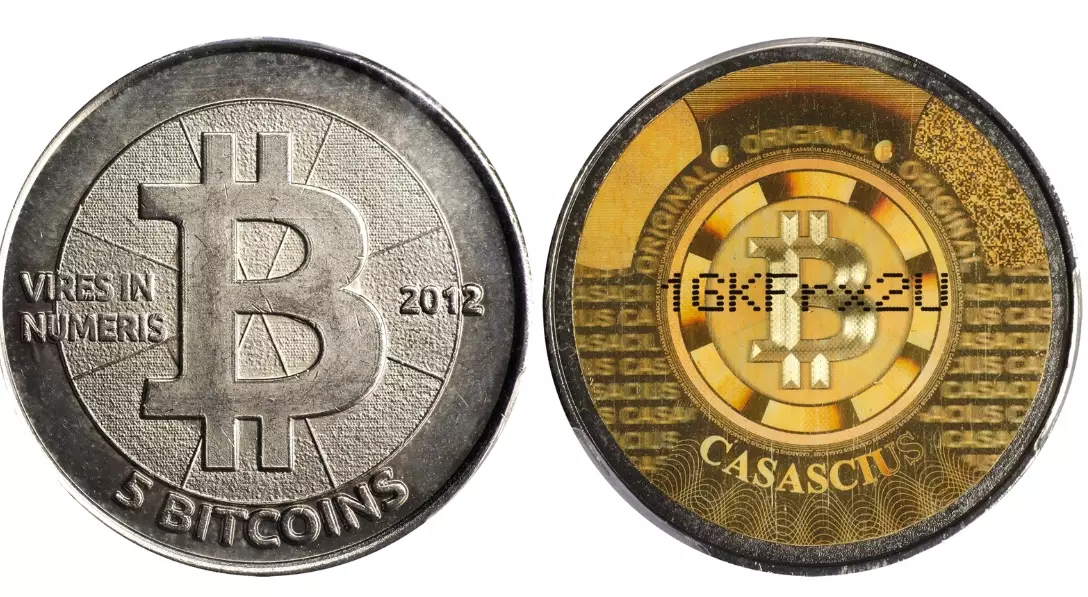
- The Halving: This is Bitcoin's built-in monetary policy. Roughly every four years, the reward given to miners for validating transactions is cut in half. This reduces the new supply of Bitcoin entering the market. Past halvings (2012, 2016, 2020) have been followed by significant bull markets, though with a lag. The next one is anticipated in 2024. The entire market obsesses over this cycle.
- Regulatory News: A major country announcing a crackdown, a ban, or (conversely) clear, friendly regulations can cause immediate and violent price swings. Positive regulatory clarity in a large market like the U.S., especially around ETFs, is a huge deal.
- Adoption Milestones: When a major company like Tesla (briefly) added Bitcoin to its treasury, or when a country like El Salvador made it legal tender, it sent powerful signals about utility and legitimacy, boosting prices.
- Network Activity & Metrics: While not immediate price drivers, metrics like the hash rate (the total computing power securing the network) and the number of active addresses can indicate the underlying health and security of the network, which influences long-term investor confidence.
The Greed, Fear, and Narrative Cycle
This is the messy, human part. It's not quantifiable, but it's incredibly powerful.
Markets are driven by narratives. "Digital gold," "inflation hedge," "uncorrelated asset," "Web3 foundation" – these are all stories that attract different types of investors at different times. When the story is compelling and believed, money flows in. When the narrative cracks (like during the 2022 collapses of Luna and FTX), fear takes over and money flees, regardless of the underlying technology.
Tools like the Crypto Fear & Greed Index try to quantify this sentiment. Extreme fear can be a contrarian buying opportunity. Extreme greed often signals a market top. It's not perfect, but it's a useful gauge of market psychology.
Practical Moves: What to Do With the Bitcoin Price Information
Knowing the Bitcoin current price and why it moves is step one. Step two is figuring out what, if anything, you should do about it. This isn't financial advice – just a sharing of perspectives and common strategies.
For the Curious Observer
Maybe you're not ready to invest, but you want to stay informed. That's smart.
- Set Up a Simple Watchlist: Use the CoinGecko or CoinMarketCap app. Add Bitcoin. You can set price alerts (e.g., "notify me if BTC crosses $70,000"). This lets you follow along without the stress of constant checking.
- Follow the Right News: Instead of clickbait headlines, follow a few quality sources. I read CoinDesk and The Block for daily news. They report on the macro and regulatory developments that actually matter.
- Understand Volatility: Watching the Bitcoin price chart will teach you that 5-10% daily swings are normal. 20% moves in a week happen. Don't let normal volatility shock you. It's part of the package.
For the Potential Investor
If you're thinking of allocating some capital, your relationship with the price changes.
Common approaches:
- Dollar-Cost Averaging (DCA): This is the most recommended strategy for beginners and even many pros. Instead of trying to time the market and buy one lump sum, you invest a fixed amount of money at regular intervals (e.g., $100 every Tuesday). Sometimes you'll buy high, sometimes low, but you average out your entry price over time. It removes emotion from the equation. You just execute the plan, regardless of the current Bitcoin price that day.
- Allocation, Not Speculation: Decide what percentage of your total investment portfolio you want in Bitcoin (e.g., 1%, 5%). Treat it like an allocation to a high-risk, high-potential-return asset class, not a lottery ticket. Rebalance periodically.
- Secure Your Investment: If you buy a meaningful amount, don't leave it on an exchange long-term. Research self-custody with a hardware wallet (like a Ledger or Trezor). "Not your keys, not your coins" is another critical lesson learned from exchange failures.
I made the mistake of buying a big chunk all at once near a peak in 2021. Watching it fall 50%+ was a brutal lesson in psychology. DCA would have saved me a lot of stress and likely resulted in a better average price.
Your Bitcoin Price Questions, Answered
Why is the Bitcoin price so volatile?
Several reasons combine: 1) It's a relatively young, still-discovering-its-value asset. 2) It trades 24/7, so news hits the price immediately, with no market close to cool off. 3) It has a lower market cap than major stocks or gold, so large trades can move the price more. 4) It's driven heavily by sentiment and narrative, which can flip quickly. Over time, as adoption grows and markets deepen, volatility *should* decrease, but it's a feature for the foreseeable future.
Is the current Bitcoin price a good time to buy?
This is the million-dollar question nobody can answer for you. The classic, unsatisfying but true answer is: "Time in the market often beats timing the market." If you believe in Bitcoin's long-term potential as a decentralized network and store of value, then focusing on a long-term strategy (like DCA) is more important than trying to catch the absolute bottom. Trying to time the perfect entry point based on the BTC live price is a recipe for stress and often missed opportunities.
How can I predict where the Bitcoin price is going?
You can't predict it with certainty. Full stop. What you can do is analyze probabilities. People use two main frameworks:
- Technical Analysis (TA): Studying past price charts and patterns to identify potential support/resistance levels and trends. It's useful for understanding market structure and setting risk levels (like stop-losses), but it's not a prophecy. Many patterns fail.
- Fundamental Analysis (FA): Looking at the underlying value drivers we discussed – adoption metrics, hash rate, regulatory developments, macroeconomic conditions. This is about assessing long-term value, not short-term price movements.
The best approach is often a combination, with a heavy dose of humility. The market will humble anyone who thinks they've figured it out.
What's the difference between Bitcoin's price and its value?
This is a crucial distinction. Price is what you pay right now, determined by the last trade on an exchange. It's momentary and emotional. Value is what you believe the underlying asset is worth over the very long term, based on its utility, security, scarcity, and network effects. Price fluctuates wildly around perceived value. Your investment thesis should be based on your assessment of Bitcoin's long-term value, not your reaction to its hourly price swings.
Will Bitcoin's price ever stabilize?
It likely will, but it will take time and scale. Think of it like a small boat vs. a massive ship. A small boat (low market cap) is tossed by every wave (large trade, news event). A massive ship (multi-trillion dollar market cap) is much harder to move. As Bitcoin's market cap grows into the trillions, as more long-term holders accumulate, and as derivatives markets mature, the volatility should dampen. But "stable" like a bond? Probably never. It will likely always be more volatile than established macro assets.
The Bitcoin current price is a real-time pulse check on a global experiment in money, technology, and human coordination. It's fascinating, infuriating, and full of lessons about economics, psychology, and risk.
So, the next time you check that number, take a breath. Remember it's not just a digit. It's the outcome of a trillion tiny data points – Fed meetings in Washington, mining rigs humming in Texas, a software upgrade being debated by developers, the fear or greed of millions of people like you and me. Understanding that context won't tell you what the price will do tomorrow, but it will make you a smarter, calmer, and more informed participant in this whole crazy, revolutionary space.
And maybe, just maybe, you'll spend less time staring at the wiggling line and more time thinking about the profound technology making it all possible.
Reader Comments