Quick Navigation
- What Actually Moves the Ethereum Price Against the Dollar?
- A Look Back: The ETH USD Price History Isn't Just a Line
- How Do People Try to Predict the ETH USD Price? (Spoiler: No One Knows)
- Common Questions About the ETH USD Price (The Stuff You Actually Google)
- Putting It All Together: A Realistic Framework
Let's be honest, checking the ETH USD price can feel like riding a rollercoaster blindfolded. One minute you're up, feeling like a genius, and the next, your portfolio is taking a dive that leaves your stomach somewhere near your knees. I've been there, refreshing charts every five minutes, trying to decode what makes Ethereum's value tick against the dollar. It's not just numbers on a screen; it's a complex story woven from technology, human psychology, and global economics.
This guide isn't about giving you a magic crystal ball. Anyone who promises that is selling something. Instead, I want to walk you through the real factors that move the ETH USD price, show you how to look at its history without getting dizzy, and share some practical ways people try to gauge where it might be headed. Think of it as getting the map and compass for that rollercoaster, so you at least know which way is up.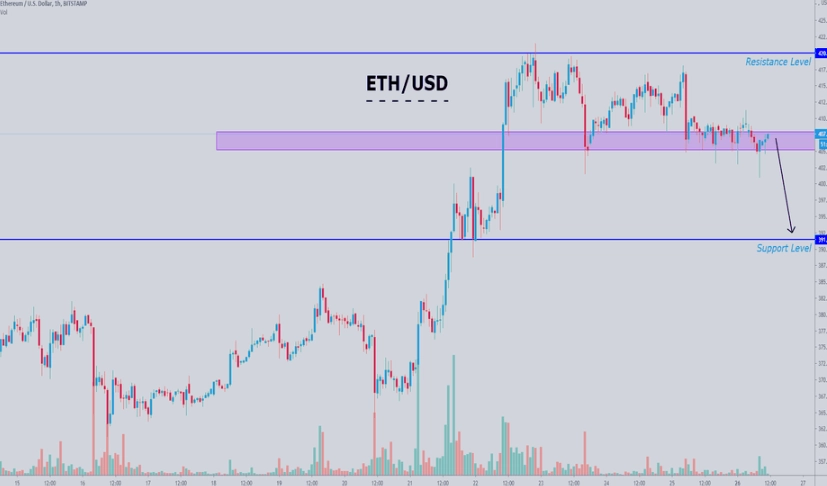
What Actually Moves the Ethereum Price Against the Dollar?
If you think the ETH to USD price is just about Bitcoin's mood swings, you're missing most of the picture. Ethereum has its own engine, and several hands are on the steering wheel.
The Core Drivers: At its heart, price is about supply, demand, and perceived value. For Ethereum, demand is fueled by its utility, not just speculation. When more people want to use the network, they need ETH to pay for transactions (gas), which directly creates buying pressure.
Network Activity & Utility: The Real Demand
This is Ethereum's secret sauce. The price isn't just about trading; it's about using. When DeFi (Decentralized Finance) booms and Total Value Locked (TVL) rises, all those applications need ETH for gas. When NFT markets are hot, minting and trading eats up ETH. I remember during the last major DeFi summer, the correlation between network congestion and the ETH USD price was almost palpable. You could feel the demand in the slow transaction times and high gas fees. Sites like Etherscan provide real-time charts on gas usage and transaction counts, which are fantastic leading indicators of organic, utility-driven demand.
The Macroeconomic Tides
Cryptocurrencies don't trade in a vacuum. When the U.S. Federal Reserve hikes interest rates to fight inflation, as they did aggressively in 2022-2023, risk assets like tech stocks and crypto often take a hit. Why? Higher rates make "safe" assets like bonds more attractive, and they also tighten liquidity. Investors pull money from risky bets. So, sometimes a drop in the ETH USD price has less to do with Ethereum and more to do with a speech from Jerome Powell. It's frustrating, but ignoring macro is a rookie mistake.
Bitcoin's Shadow and Market Sentiment
Okay, I said it wasn't just about Bitcoin, but let's not ignore the 800-pound gorilla. Bitcoin often sets the overall market sentiment—"risk-on" or "risk-off." When Bitcoin rallies hard, it tends to pull capital and attention into the entire crypto space, lifting Ethereum along with it. This correlation isn't constant, but it's a powerful short-term force. Sentiment gauges, like the Crypto Fear & Greed Index, can give you a feel for the market's emotional temperature. Is everyone euphoric and greedy? That's often a local top. Is everyone terrified? That might be a time to look closer.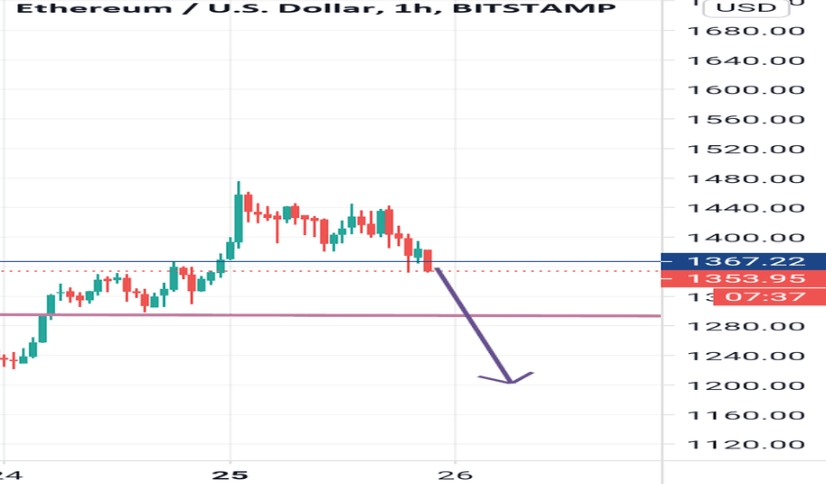
Ethereum's Own Upgrades: The Merge and Beyond
This is a huge one. Ethereum's transition from Proof-of-Work to Proof-of-Stake (The Merge) fundamentally changed its economics. It drastically reduced the issuance of new ETH (often called "ultrasound money" by proponents). Fewer new coins entering the market daily means less sell pressure from miners. Future upgrades, like proto-danksharding (EIP-4844), aim to drastically lower transaction fees for Layer 2s, which could spur another wave of adoption. Keeping an eye on the official Ethereum Roadmap is crucial. These aren't just technical details; they're direct injections into the value proposition.
And then there's regulation. A clear, supportive regulatory framework in a major market like the U.S. or the EU can be rocket fuel. Conversely, harsh crackdowns or hostile statements can send the ETH USD price tumbling overnight. It's the ultimate wild card.
A Look Back: The ETH USD Price History Isn't Just a Line
Staring at a multi-year chart can be overwhelming. Let's break down the story of the ETH to USD chart into chapters. It tells you about resilience, manias, and growing up.
| Period | Key Price Range (Approx. USD) | The Driving Narrative | Lasting Impact |
|---|---|---|---|
| The ICO Boom (2017) | $10 → ~$1,400 | Ethereum as the fundraising platform. Thousands of projects launched via ICOs, requiring ETH. | Proved network utility beyond currency. Created massive initial distribution and hype cycle. |
| The Crypto Winter (2018-2020) | $1,400 → ~$80 | Post-boom collapse. ICO projects failed, sentiment crashed. A long, brutal bear market. | Weeded out weak projects. Forced the core ecosystem to build real, usable products (DeFi, NFTs). |
| DeFi & Institutional Summer (2020-2021) | $80 → ~$4,800 | Explosion of decentralized finance (Compound, Aave, Uniswap) and the dawn of institutional interest. | Established Ethereum as the de facto world computer for finance. Brought in serious capital. |
| The Merge & Post-Merge Era (2022-Present) | $4,800 → ~$1,000 → (Variable Recovery) | Macro downturn, FTX collapse, followed by the successful Merge to Proof-of-Stake. | Fundamentally altered ETH issuance. Shifted focus to scalability (Layer 2s) and sustainability. |
What does this history teach us? First, cycles are real. Periods of explosive growth are almost always followed by deep retracements. The 2018 crash saw ETH lose over 90% of its value from its peak. That kind of volatility isn't for the faint of heart. Second, each cycle's peak has been driven by a new, tangible use case: first ICOs, then DeFi. The next peak will likely need a new narrative, perhaps mass adoption of tokenized real-world assets or a killer Web3 app.
Personally, holding through the 2018-2020 winter was one of the hardest things I've done financially. The silence was deafening. The ETH USD price seemed dead. But looking back, that's when the most important foundational work was being done. The price chart was flat, but developer activity wasn't.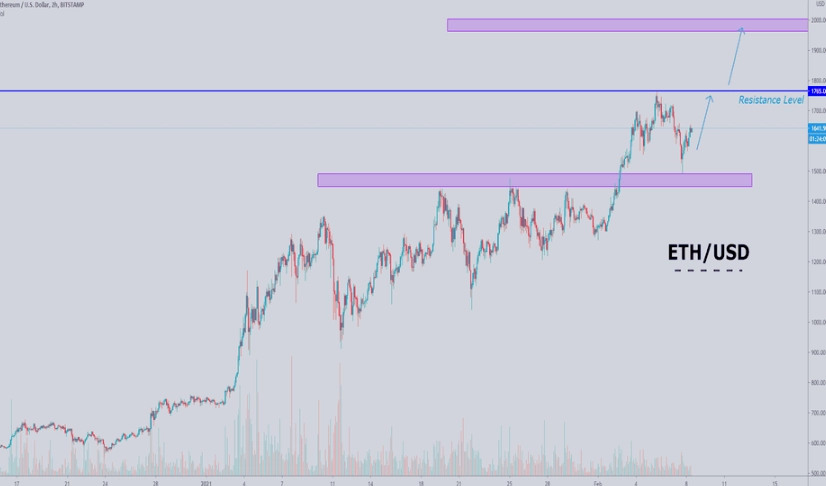
A crucial lesson: Past performance is absolutely not a guarantee of future results. Using historical patterns alone for Ethereum price prediction is like driving using only the rear-view mirror. Essential for context, dangerous for navigation.
How Do People Try to Predict the ETH USD Price? (Spoiler: No One Knows)
Let's get into the murky world of forecasting. Everyone wants to know the future ETH USD price, and a whole industry has sprung up to try and answer that. Their methods fall into a few buckets.
Technical Analysis (TA): Reading the Chart's Tea Leaves
TA practitioners believe price action reflects all known information and that history tends to rhyme. They use charts, patterns, and indicators to identify trends, support/resistance levels, and potential turning points.
- Common Tools: Moving Averages (like the 50-day and 200-day), Relative Strength Index (RSI), Fibonacci retracement levels, and trading volume.
- The Good: Can provide clear frameworks for entry/exit points and risk management (setting stop-losses). It helps remove emotion in the short-term.
- The Bad: It's often self-fulfilling. If enough people believe a certain level (like the 200-day MA) is important, they'll trade around it, making it important. It can also give wildly different signals depending on the timeframe and indicator used.
I've used TA, and my take is this: it's less about predicting the future and more about managing probability and your own psychology in the present. It's a tool, not a prophecy.
Fundamental Analysis (FA): Valuing the Network
This is where you try to value Ethereum like a company or a country. Instead of P/E ratios, you look at on-chain metrics.
- Key Metrics: Network Revenue (total gas fees paid), Daily Active Addresses, TVL in DeFi, Staking Ratio (amount of ETH staked), and Burn Rate (ETH permanently removed via EIP-1559).
- The Goal: To determine if the network is growing, becoming more useful, and therefore more valuable over the long term. A site like CoinMetrics is a treasure trove for this data.
FA feels more solid to me because it's grounded in real usage. If active addresses are climbing while the ETH USD price is stagnant, it might signal an undervalued network primed for a move. But it's slow-moving and doesn't help much with timing.
The Hybrid Approach & Sentiment Gauges
Most seasoned folks use a mix. They use FA to build a long-term conviction ("Ethereum is the leading smart contract platform") and TA to fine-tune entry points or trim positions. They then layer in sentiment analysis.
My own rule of thumb? When crypto is the main topic at family dinners and barbershops, and your Uber driver gives you a hot Ethereum price prediction, it's probably time to be cautious. When no one wants to hear the word "crypto" anymore, that's often when you find the best opportunities for long-term accumulation. It's counterintuitive and brutally hard to execute.
Common Questions About the ETH USD Price (The Stuff You Actually Google)
It's possible, but it's a big "if." It would require a massive new wave of adoption, likely involving institutional products like spot ETH ETFs (which are pending regulatory approval), significant scaling improvements making transactions cheap for billions, and a favorable macro environment. Simple market cap math shows it's feasible, but the journey would be volatile. Don't bet your life on any specific price target.
Usually just a few dollars, and it's due to liquidity and local supply/demand on each exchange. This creates arbitrage opportunities where traders buy low on one and sell high on the other, which quickly closes the gap. For the average person, the difference is negligible. Always check the price on the exchange you're actually using.
Both tell different stories. ETH/USD tells you its absolute dollar value. ETH/BTC tells you Ethereum's strength relative to Bitcoin. If ETH/USD is flat but ETH/BTC is rising, it means Ethereum is outperforming Bitcoin, which can be a strong bullish signal for the altcoin market. I watch both.
In a few ways. First, it locks up supply, reducing the liquid ETH available for trading, which can be price supportive (basic supply/demand). Second, it turns ETH into a yield-generating asset, which may attract a different class of long-term investors. However, it also creates potential future sell pressure from staking rewards, though much of that is often re-staked. The net effect since The Merge has generally been seen as positive for price stability.
Ah, the classic "buy the rumor, sell the news" event. It happens when an anticipated positive event (like a major upgrade) is already "priced in" by the market during the run-up. When the event finally happens, traders who bought the rumor sell to take profits, causing a drop. It's a painful lesson in market psychology.
Putting It All Together: A Realistic Framework
So, after all this, how should you actually think about the ETH USD price?
First, define your own time horizon and goal. Are you a day trader, a swing trader, or a long-term believer accumulating for a 5+ year horizon? Your approach to the price will be completely different. The day trader lives and dies by the minute chart; the long-term holder might only check the weekly.
Second, build your own dashboard.
Don't rely on one source. Have a few key bookmarks: a reliable charting site (like TradingView), an on-chain analytics site (like Glassnode or IntoTheBlock), the Ethereum Foundation's official channels, and a major news aggregator. Cross-reference.
Third, and this is the hardest part, develop a process and stick to it. This could be: "I will DCA (Dollar-Cost Average) $X every month regardless of price." Or "I will only buy more if the 200-week moving average holds as support and the NVT ratio is below Y." The process saves you from yourself—from buying FOMO tops and selling panic bottoms.
The ETH to USD price is a fascinating, multi-layered puzzle. It's part tech stock, part commodity, part currency, and part digital oil. Understanding it requires looking under the hood of the network, out the window at the global economy, and in the mirror at your own emotions.
There's no single answer, no guru with all the keys. But by understanding the drivers, respecting the history, and using a disciplined mix of analysis, you can move from being a passive passenger on the rollercoaster to someone who at least understands the mechanics of the track. You'll still get the thrills and spills, but hopefully with fewer stomach-dropping surprises.
The future of the ETH USD price will be written by developers building the next killer app, by regulators drawing new lines, and by millions of individual decisions to use, hold, or sell. Your job is to gather the best information you can, make a plan you're comfortable with, and always, always manage your risk. Never invest more than you can afford to lose on this wild ride.
Because in the end, the chart is just a record of the past. Your strategy is what builds your future.
Reader Comments