Quick Navigation
- Where Did This Frog Even Come From? The History of Pepecoin
- How Does Pepecoin Actually Work? (The Techy Bit, Simplified)
- Buying and Storing Pepecoin: A Step-by-Step Reality Check
- Pepecoin vs. The Meme Coin Arena: How Does It Stack Up?
- The Future of Pepecoin: Speculation, Scenarios, and Reality
- The Pepecoin Controversy You Can't Ignore
Let's talk about Pepecoin. You've probably seen the green frog popping up everywhere, from Twitter memes to financial news headlines with some wild price swings. I remember first hearing about it and thinking, "Seriously? A meme coin based on that internet frog?" But here we are. It's a real thing that's captured a massive amount of attention (and money) in the crypto world. This isn't your typical dry financial guide. We're going to dig into what Pepecoin actually is, why it exploded, and whether there's anything more to it than just a viral joke. I'll also share some of the practical stuff, like how you'd even go about buying it, which is trickier than you might think, and the very real reasons you should think twice before putting any serious cash into it.
The story of Pepecoin is, honestly, a perfect snapshot of crypto in the 2020s. It's about community, internet culture clashing with finance, and the relentless hunt for the next big, life-changing moonshot. But under the surface, there are some interesting questions about value, speculation, and what we even want from digital assets. We'll get to all of that.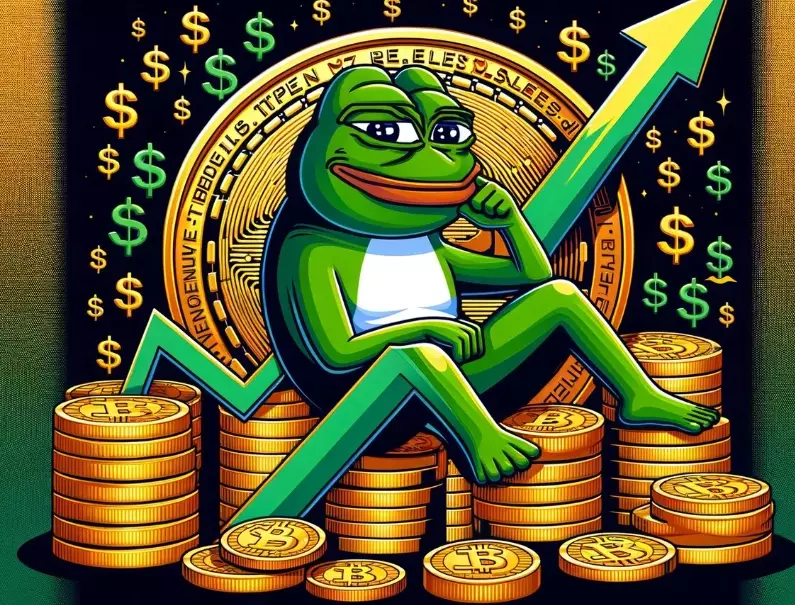
At its core, Pepecoin (PEPE) is a cryptocurrency token launched on the Ethereum blockchain. It's what's known as a "meme coin," meaning its primary value driver isn't a complex technological innovation or a business product, but a shared cultural idea—in this case, the iconic "Pepe the Frog" internet meme. It positions itself as "the most memeable memecoin in existence," a tribute to the original internet culture.
Where Did This Frog Even Come From? The History of Pepecoin
Unlike Bitcoin with its mysterious Satoshi or even Dogecoin with its clearer founding story, Pepecoin's origins are deliberately murky and anonymous. It launched in April 2023, not with a corporate white paper, but with a simple website and a presence on social media platforms like Twitter and Telegram. The developers explicitly stated there was no formal team, no roadmap, and no utility. It was, in their own words, "a meme coin with no intrinsic value or expectation of financial return." A refreshingly honest—or terrifyingly blunt—disclaimer, depending on how you look at it.
I think its timing was perfect. The crypto market was in a bit of a lull after the 2022 downturn, and people were hungry for something new and fun. It rode a wave of nostalgia for earlier, simpler internet memes and tapped into a community tired of overly serious, promise-heavy crypto projects. The tokenomics were simple: a massive total supply (420.69 trillion, a nod to meme numbers), with a significant portion sent to a liquidity pool and the rest supposedly "burned" (sent to a dead wallet). No presale, no allocations for developers. This "fair launch" narrative was a big part of its initial appeal.
And then it went parabolic. Within weeks, the price of Pepecoin skyrocketed by tens of thousands of percent. Early buyers became millionaires on paper. This created a frenzy, drawing in everyone from crypto degens to curious normies. Major exchanges like Binance and Coinbase eventually listed it, providing a huge legitimacy boost (or maybe just caving to demand, depending on your view).
The Pepecoin Controversy You Can't Ignore
Here's where we have to pause. The Pepe the Frog meme itself has a complicated history. While created by artist Matt Furie as a harmless, chill character, the image was co-opted by certain online extremist groups years ago. The Pepecoin project has tried to distance itself from this, branding itself as a reclaiming of the "rare Pepe" wholesome meme tradition. But it's a shadow that lingers, and it's something any potential investor should be aware of. It adds a layer of reputational risk that other meme coins like Dogecoin or Shiba Inu don't really have.
Furthermore, the anonymous team raised red flags. In August 2023, a significant portion of the multi-sig wallet's tokens were moved and sold on exchanges, crashing the price. The team claimed it was to pay for expenses and listed new team members, but the damage to trust was done. It was a stark reminder of the absolute power anonymous founders wield in these projects.
This incident is the clearest example of the extreme risk in Pepecoin. You are trusting your money to completely unknown individuals who face no legal accountability. They can change the rules, sell their holdings, or disappear at any moment. Never forget that.
How Does Pepecoin Actually Work? (The Techy Bit, Simplified)
Okay, so it's a meme. But how does the token function? Pepecoin isn't its own blockchain. It's an ERC-20 token, which means it's a smart contract living on the Ethereum network. Think of Ethereum as a massive global computer, and PEPE is one of the many programs (tokens) running on it.
- It's a Token, Not a Coin: This is a key distinction. Bitcoin and Ethereum are "coins" with their own blockchains. PEPE is a "token" that relies on Ethereum's security and infrastructure. You need ETH to pay for the gas fees (transaction costs) when you move PEPE around.
- The Smart Contract: The rules of Pepecoin—its name, symbol, total supply, and how it can be transferred—are all written into an immutable piece of code on Ethereum. You can view this contract yourself on a block explorer like Etherscan. This transparency is a pro of being on Ethereum.
- What It Doesn't Do: Here's the critical part. The Pepecoin smart contract, as of now, doesn't enable staking, voting, or any complex decentralized finance (DeFi) functions by itself. Its utility is purely as a transferable, tradeable digital asset. Any additional features, like staking pools, are built by other, separate protocols that choose to support PEPE.
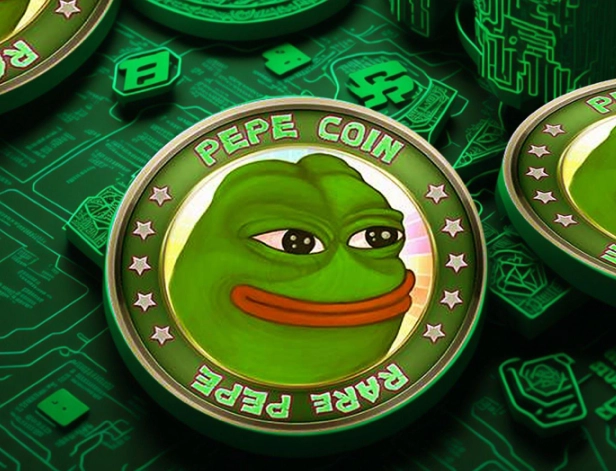
So technically, it's very simple. Its complexity lies in its economics and community, not its code.
Buying and Storing Pepecoin: A Step-by-Step Reality Check
If you've read this far and are still curious about getting some PEPE, here's the real-world process. It's not as simple as buying stock on Robinhood, and that friction is intentional in crypto.
Before you start: Only use money you are 100% prepared to lose. Treat this as a speculative gamble, not an investment. The chances of losing most or all of your capital are high.
Where to Buy Pepecoin
You have two main avenues: centralized exchanges (CEXs) and decentralized exchanges (DEXs).
Centralized Exchanges (The Easier Way): These are companies like Binance, Coinbase, Kraken, or Crypto.com. After the initial frenzy, many of these major players listed PEPE. The process is straightforward:
- Create and verify an account on the exchange (requires ID).
- Deposit fiat currency (like USD) via bank transfer or card.
- Search for the PEPE trading pair (e.g., PEPE/USD or PEPE/USDT).
- Place a market or limit order to buy.
The PEPE tokens you "own" here are actually held by the exchange in their wallet. You're relying on them to be honest and secure.
Decentralized Exchanges (The Purist's Way): This is where you interact directly with the blockchain. The most common place to buy new tokens like PEPE was, and still is, Uniswap—a massive DEX on Ethereum.
- You need a self-custody crypto wallet first, like MetaMask or Trust Wallet. This is software that holds your private keys.
- Fund that wallet with Ethereum (ETH) to cover gas fees and for swapping.
- Connect your wallet to the Uniswap website.
- Select ETH as the "from" currency and PEPE as the "to" currency. Make sure you have the correct contract address! Scammers create fake tokens with similar names. Always verify the contract address on sites like CoinMarketCap or CoinGecko.
- Confirm the swap and pay the gas fee. The PEPE tokens arrive directly in your personal wallet.
This method is more complex and risky for beginners (one wrong address and your money is gone forever), but it gives you true ownership.
How to Store Your PEPE Safely(ish)
If you buy on a CEX, leaving it there is convenient but risky (remember the FTX collapse?). For any significant amount, moving to self-custody is advised.
- Software Wallets (Hot Wallets): MetaMask, Trust Wallet, etc. Free and convenient for active trading or interacting with DeFi apps. They are connected to the internet, so they are vulnerable to malware or phishing attacks. Good for smaller amounts.
- Hardware Wallets (Cold Wallets): Devices like Ledger or Trezor. Your private keys are stored offline on the physical device. This is the gold standard for security. You connect it to your computer only when you need to approve a transaction. For holding meme coins you hope will moon in the long term, this is the safest method, even if it feels like overkill for a joke token.
Never, ever share your seed phrase (the 12 or 24 recovery words) with anyone. No legitimate support person will ever ask for it.
Pepecoin vs. The Meme Coin Arena: How Does It Stack Up?
Pepecoin didn't appear in a vacuum. It entered a ring dominated by heavyweights like Dogecoin (DOGE) and Shiba Inu (SHIB). Here’s a blunt comparison.
| Feature | Dogecoin (DOGE) | Shiba Inu (SHIB) | Pepecoin (PEPE) |
|---|---|---|---|
| Origin & Vibe | The original "fun" meme coin (2013). The "friendly" crypto. | The self-proclaimed "Dogecoin Killer" (2020). Built an entire ecosystem (Shibarium, DeFi). | The "pure" culture meme coin (2023). No pretense of utility. |
| Blockchain | Its own, simpler blockchain (fork of Litecoin). | Ethereum ERC-20 token, now with its own L2 chain (Shibarium). | Ethereum ERC-20 token only. |
| Community & Celebrity Backing | Massive, long-standing. Heavily boosted by Elon Musk. | Extremely strong, "Shib Army." Less reliant on one celebrity. | Strong, fast-growing, but more niche and online-culture focused. |
| Perceived "Utility" | Low. Tipping, some merchant adoption. It's just DOGE. | High aspirations. Swap, staking, NFT metaverse, layer-2 chain. | Virtually zero. Its purpose is to be a meme and be traded. |
| Biggest Risk Factor | Price heavily influenced by Musk tweets. Centralized mining. | Complex ecosystem execution risk. Can it deliver on promises? | Anonymous team with proven history of moving funds. Pure speculation. |
My take? Dogecoin has first-mover advantage and celebrity power. Shiba Inu is trying to build a real, utility-driven project around the meme. Pepecoin is the most philosophically pure—and therefore the most fragile. It's betting everything on the meme's staying power and the community's willingness to keep trading it. There's no fallback plan of "but we're building a metaverse." It's all or nothing.
That purity is both its biggest weakness and, in the eyes of its holders, its greatest strength.
The Future of Pepecoin: Speculation, Scenarios, and Reality
Trying to predict the future of something like PEPE is a fool's errand, but we can outline possible scenarios based on crypto history.
Bullish Scenarios (The Hopium)
- The Cultural Staple: PEPE cements itself as the definitive "internet culture" token, surviving beyond hype cycles. It becomes a digital badge for being online, traded for nostalgia and community feels rather than get-rich dreams.
- Exchange Adoption Continues: More tier-1 exchanges list it, providing constant liquidity and access for new waves of retail investors.
- The Ecosystem Play: Despite the "no utility" claim, third-party developers build fun, meme-centric applications around PEPE—perhaps in gaming, social media, or digital art—giving it organic use cases it never intended to have.
Bearish Scenarios (The Likely Reality for Most)
- The Slow Fade: This is the most common fate for meme coins. Interest wanes, trading volume dries up, the community moves to the next new thing, and the price drifts towards zero. It remains tradeable but irrelevant.
- Another Team Meltdown: The anonymous founders make another move that destroys community trust, leading to a permanent crash.
- Regulatory Crackdown: If regulators decide to come down hard on meme coins or anonymous dev teams, PEPE could be a prime target, leading to delistings from major exchanges.
- The Meme Dies: Internet culture is fickle. If the "Pepe" meme itself falls out of favor with the next generation, the token's entire raison d'être vanishes.
Personally, I lean towards the bearish scenarios for the long term. The crypto market has a nasty habit of chewing up and spitting out trendy tokens once the hype cycle turns. The lack of any fundamental anchor makes Pepecoin exceptionally vulnerable.
Frequently Asked Questions About Pepecoin
Let's tackle some of the specific questions people are typing into Google.
Is Pepecoin a good investment?
In the traditional sense of the word "investment"—allocating capital to an asset with the expectation of generating income or appreciation through fundamental growth—no, Pepecoin is not a good investment. It produces no cash flow, owns no assets, and provides no service. It is a highly speculative digital collectible whose price is driven almost entirely by sentiment and market momentum. You are not investing; you are speculating or gambling on crowd psychology.
Can Pepecoin reach $1?
Mathematically, it's virtually impossible and here's why. Let's do the quick math. With a circulating supply in the hundreds of trillions, for PEPE to reach $1, its market capitalization would need to be in the hundreds of trillions of dollars. For context, the entire global stock market is worth about $100 trillion. The total value of all gold ever mined is about $12 trillion. So, no, Pepecoin will not reach $1. Price targets should be discussed in fractions of a cent.
How is Pepecoin different from Bitcoin?
This is like asking how a bumper sticker is different from a car. Bitcoin was designed as a decentralized, peer-to-peer digital currency and store of value with a fixed supply (21 million), robust security (proof-of-work), and a clear (if debated) monetary policy. Pepecoin is an ERC-20 token on Ethereum with an inflationary, meme-based supply, no monetary policy, and is primarily a cultural token. Their purposes, technologies, and communities are worlds apart.
What gives Pepecoin value?
This is the million-dollar (or billion-dollar) question for all meme coins. Its value is purely subjective and derived from three things: 1) Perceived Scarcity: While the supply is huge, it's finite, and people hold specific, indivisible tokens. 2) Community Belief: The shared belief among holders that others will want to buy it from them later at a higher price. 3) Cultural Significance: Its status as a symbol of a specific online moment and community. In short, its value is whatever the next person is willing to pay for it, based on feelings and trends, not fundamentals.
Is it too late to buy Pepecoin?
This depends entirely on your goals. If you missed the initial 100,000% pump and are hoping for a repeat, yes, you are almost certainly too late for that kind of move. The easy, explosive money has been made. If you view it as buying a small piece of internet history and are okay with the high probability of losing what you put in for the small chance of another speculative run, then "late" is relative. In crypto, there's always another pump, but there's also always another crash.
A final, personal word of caution: I've been around crypto for a while, and I've seen this movie before. The excitement, the life-changing stories from early buyers, the fear of missing out (FOMO)—it's incredibly powerful. I've felt it myself. But for every person who bought Pepecoin early and made money, there are thousands who bought near the top and are sitting on significant losses. The charts don't show their stories. If you choose to get involved, do so with extreme caution, do your own research (DYOR is the oldest and best crypto advice), and never let the green frog meme cloud your judgment about risk management. The internet doesn't care if you lose your money.
So, that's Pepecoin. A fascinating, risky, chaotic, and utterly modern financial phenomenon. It's a testament to the power of online communities and a stark reminder of how speculative markets can become detached from traditional notions of value. Whether it's a lasting piece of digital culture or a flash in the pan, its story is one of the most interesting chapters in the weird and wonderful world of cryptocurrency.
Reader Comments