Quick Guide to Bitcoin Gold
- What Exactly Is Bitcoin Gold? The Fork in the Road
- Bitcoin Gold vs. Bitcoin: A Side-by-Side Reality Check
- How to Actually Get and Use Bitcoin Gold
- The Investment Perspective: Is Bitcoin Gold a Good Bet?
- Frequently Asked Questions (The Stuff You Actually Google)
- The Road Ahead: What's Next for Bitcoin Gold?
So you've heard about Bitcoin, right? Everyone has. But then someone mentions "Bitcoin Gold" and your brain does a little stutter. Is it gold-backed Bitcoin? A shiny new version? Another scam coin? Let's clear the air right now. Bitcoin Gold (often abbreviated as BTG) is a separate cryptocurrency that forked from the original Bitcoin blockchain back in 2017. It's not an update to Bitcoin. It's not a side project. It's its own thing, with its own community, goals, and frankly, its own set of dramas.
I remember when it first launched. The crypto Twitter sphere was a mess of hot takes. Some called it a necessary revolution for decentralization. Others dismissed it as a pointless cash grab. After spending a lot of time digging into it, using it, and even trying to mine it on an old gaming rig, I've got some thoughts. It's more interesting than its critics say, but also way more complicated than its promoters let on.
What Exactly Is Bitcoin Gold? The Fork in the Road
Let's rewind to October 2017. The Bitcoin community was fractured over scaling debates (remember the SegWit and Bitcoin Cash drama?). Into this chaos, a group of developers led by Jack Liao announced the Bitcoin Gold fork. It wasn't a hostile takeover. It was a "hard fork," meaning at a specific block height (block 491,407, to be precise), the blockchain copied itself. If you held Bitcoin in a wallet you controlled at that moment, you magically had an equal amount of Bitcoin Gold. Free money? Kind of. It was an airdrop of sorts to Bitcoin holders.
But this new chain had one critical technical difference baked into its code: the Equihash proof-of-work algorithm. Why does that matter? Because Equihash is famously resistant to ASIC miners. It's designed to be mined efficiently on the graphics processing units (GPUs) found in consumer gaming computers. The goal was to hand the mining power back to the people with rigs in their basements and bedrooms, not just to million-dollar warehouses in Siberia.
That's the elevator pitch. But as with anything in crypto, the devil is in the details, and Bitcoin Gold has had its fair share of devils.
The Technical Heart: Equihash and GPU Mining
This is where Bitcoin Gold either wins you over or loses you completely. The switch to Equihash (specifically, Equihash-BTG, a modified version) was the entire raison d'être. Let's break down what that means for you, whether you're a miner, an investor, or just a curious cat.
ASIC miners are like Olympic sprinters bred for one event—they are unbelievably fast and efficient at solving Bitcoin's SHA-256 puzzles, but they can't do anything else. They're expensive paperweights once they're obsolete. GPUs, on the other hand, are all-rounders. They're the decathletes of computing. You can mine with them, play Cyberpunk 2077, render video, and then go back to mining. This accessibility is key.
When Bitcoin Gold launched, you could actually mine it with a decent gaming card and see a return. It felt… democratic. I plugged in my GTX 1070, pointed it at a BTG pool, and watched the (very small) rewards trickle in. It was educational. It made the concept of securing a network tangible. But—and this is a big but—the economics of GPU mining are brutal. When the price of BTG drops, or when network difficulty climbs, your profit margin evaporates faster than a puddle in the desert. The dream of decentralized mining bumps hard against the reality of electricity bills.
So, is GPU mining for Bitcoin Gold still viable today? It's niche. You need cheap power, efficient modern cards (think RTX 3000/4000 or RX 6000/7000 series), and you have to really believe in the project to not just switch to mining something more profitable. It's more of a hobbyist or ideological pursuit now than a get-rich-quick scheme.
Bitcoin Gold vs. Bitcoin: A Side-by-Side Reality Check
It's tempting to see Bitcoin Gold as just a copycat, but that misses the point. They share a transaction history up to 2017, but their philosophies and technical paths diverged sharply. This table should lay it out clearly.
| Feature | Bitcoin (BTC) | Bitcoin Gold (BTG) |
|---|---|---|
| Primary Goal | Digital gold; a decentralized store of value and settlement layer. | A decentralized, ASIC-resistant digital currency for everyday use. |
| Consensus Algorithm | SHA-256 Proof-of-Work | Equihash-BTG Proof-of-Work (ASIC-resistant) |
| Mining Hardware | Dominantly ASIC miners (specialized, expensive). | GPU miners (general-purpose, more accessible). |
| Block Time | ~10 minutes | ~10 minutes (target) |
| Total Supply | 21 million | 21 million |
| Key Differentiator | Network security, brand recognition, first-mover advantage. | Mining decentralization, replay protection, unique address format. |
| Replay Protection | N/A (original chain) | Yes. A critical safety feature post-fork to prevent cross-chain transaction replay. |
| Community & Development | Massive, fragmented, with multiple client implementations. | Smaller, dedicated core team and community. |
Looking at that, the trade-offs become obvious. Bitcoin traded pure mining decentralization for immense, competitive security (all those ASICs make attacking the network astronomically expensive). Bitcoin Gold chose a path it hoped would keep mining distributed, accepting that the overall network hash rate would be lower and potentially more vulnerable to a specific kind of attack—which, unfortunately, it experienced.
How to Actually Get and Use Bitcoin Gold
Alright, theory is fine, but how do you actually interact with this thing? Let's get practical.
Getting BTG: Exchanges, Wallets, and That Old Fork
If you're starting from zero today, you buy Bitcoin Gold on a cryptocurrency exchange. It's not on Coinbase, but it's listed on several other major platforms like KuCoin, Gate.io, and Huobi. Always, always check the trading pair (like BTG/USDT) and the liquidity before you dive in. The volume can be thin sometimes, which means price swings can be sharp.
Now, what if you held Bitcoin back in October 2017? You might have a claim to free Bitcoin Gold. This process is called "claiming your fork coins," and it can be tricky and risky. Warning: This often involves importing the private keys from your 2017 Bitcoin wallet into a Bitcoin Gold wallet. If you don't know what you're doing, you could lose your Bitcoin. If your Bitcoin was on an exchange like Coinbase in 2017, you got nothing—the exchange kept it. The official Bitcoin Gold website has guides, but please, do immense research or consult someone knowledgeable before attempting this.
Storing BTG Securely
Never leave coins on an exchange long-term. Use a wallet where you control the keys. Here are your main options:
- Official Wallets: The Bitcoin Gold team offers a core desktop wallet (a full node) and the BTG Pocket Wallet for mobile (iOS/Android). The mobile wallet is surprisingly slick and is my go-to for small amounts. It's simple and built specifically for BTG.
- Hardware Wallets: This is the gold standard for security. Both Ledger and Trezor support Bitcoin Gold through their respective software interfaces (Ledger Live & Trezor Suite). Your private keys never leave the device. For any significant amount, this is the only way to fly.
- Software Wallets: Multi-asset wallets like Exodus or Atomic Wallet also support BTG. They're convenient for managing a portfolio, but remember, they are "hot wallets" connected to the internet, making them less secure than hardware options.
The bottom line? If it's more than you're willing to lose, get a Ledger or Trezor.
Spending and Using Bitcoin Gold
Here's where the "digital currency for everyday use" vision gets tested. You won't be buying coffee with BTG at your local Starbucks. The merchant adoption is tiny compared to Bitcoin or even Litecoin. However, you can use it:
- Peer-to-Peer (P2P) Transactions: Sending value to anyone, anywhere, with relatively low fees (usually a few cents). It's fast because blocks aren't congested.
- Online Merchants via Processors: A handful of payment gateways like NOWPayments support BTG, allowing online shops to accept it.
- Trading: Its primary use case right now is as a tradable asset on crypto exchanges.
The reality is, as a payment tool, it's still in the early adopter phase. The utility argument hinges more on its technical properties (decentralized mining, low fees) than on widespread real-world use… for now.
The Investment Perspective: Is Bitcoin Gold a Good Bet?
I'm not a financial advisor. Let's get that out of the way. But I can break down the arguments so you can make your own mess of a decision.
The Bull Case (Reasons People Are Optimistic)
- The Decentralization Narrative: If you believe ASIC-dominated mining is a fatal flaw for Bitcoin's original vision, then Bitcoin Gold represents a pure play on that ideology. It's a bet on the idea itself.
- Undervalued Fork: Compared to other major Bitcoin forks (looking at you, Bitcoin Cash and Bitcoin SV), BTG has a relatively low market cap. Some traders see it as having more room to run if the narrative catches fire.
- Technical Improvements: The team has continued development, implementing features like Schnorr signatures and the Lightning Network (in development) to improve scalability and privacy.
- Brand Recognition: The "Bitcoin" in the name is a double-edged sword, but it does grant instant recognition that a completely new coin would kill for.
The Bear Case (The Risks and Criticisms)
- Security History: The 51% attacks are a massive red flag for any "store of value." Trust in a blockchain's immutability is everything.
- Niche Appeal: The GPU mining focus is a specific, somewhat technical niche. It hasn't captured the mainstream imagination.
- Development Centralization: Ironically, for a project about decentralization, development is largely driven by a single core team and the Bitcoin Gold Foundation. This is a common critique.
- Market Volatility & Liquidity: It's a smaller-cap altcoin. It can be highly volatile and illiquid, meaning you might struggle to buy or sell large amounts without moving the price.
My personal, totally non-advice view? It's a high-risk, speculative asset. It shouldn't be the cornerstone of anyone's portfolio. If you invest, it should be with money you can afford to lose, and it should be because you genuinely believe in and want to support the mission of ASIC-resistant mining, not because you think it'll "flip Bitcoin." That's almost certainly not happening.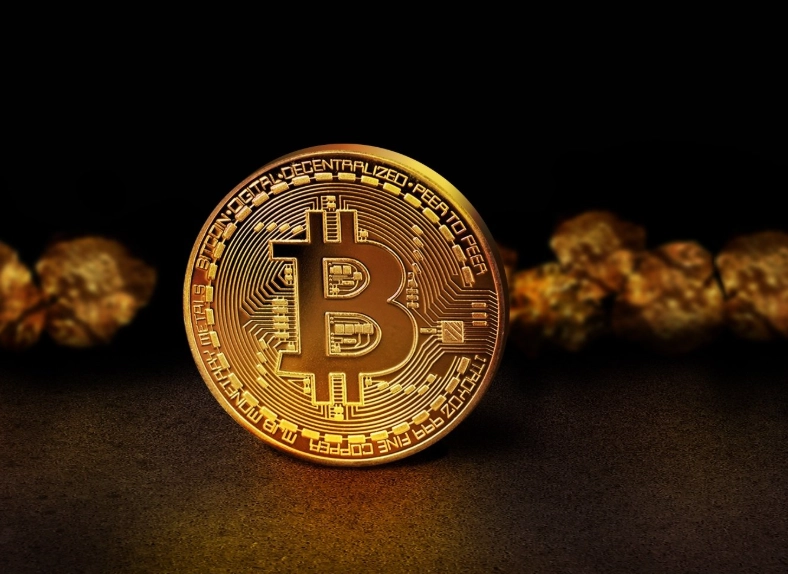
Frequently Asked Questions (The Stuff You Actually Google)
Is Bitcoin Gold a scam?
This is the biggest one. Based on its ongoing development, transparent team, listed exchanges, and functional blockchain, it does not meet the definition of a scam (a project with no product designed solely to steal money). However, it is a high-risk cryptocurrency project that has suffered major security breaches. Many have called it pointless or misguided. Do your own extensive research before getting involved.
Can I still claim Bitcoin Gold from 2017?
Technically, yes. If you held the private keys to Bitcoin in a non-custodial wallet (like a paper wallet, hardware wallet, or desktop wallet like Bitcoin Core) before block 491,407, the associated BTG is still on that blockchain waiting to be claimed with those keys. The process is complex and risky. If your Bitcoin was on an exchange in 2017, you cannot claim it.
What's the current price and market status of Bitcoin Gold?
I can't give live prices here, as they change by the second. For real-time price, market cap, and supply data, you should check a reliable aggregator like CoinMarketCap or CoinGecko. These sites provide the authoritative, up-to-date metrics you need.
How is Bitcoin Gold different from Bitcoin Cash?
Great question. Both forked from Bitcoin in 2017, but for completely different reasons. Bitcoin Cash (BCH) forked to increase the block size limit (a scaling solution), keeping the SHA-256 algorithm. Bitcoin Gold forked to change the mining algorithm to Equihash (a decentralization solution). They are siblings with different DNA.
Is Bitcoin Gold mining still profitable in 2024?
It depends entirely on your electricity cost, your GPU's efficiency, and the market price of BTG. You cannot give a simple yes/no. You need to use a mining profitability calculator (like WhatToMine), plug in your hardware and power costs, and see the estimate. Generally, for most people with retail electricity rates, it's a marginal activity at best unless the price surges significantly.
The Road Ahead: What's Next for Bitcoin Gold?
The project isn't static. The development roadmap, which you can find on their GitHub, points to a few key areas:
- Further Security Hardening: Continuing to make 51% attacks economically unfeasible is job number one.
- Scalability Work: Continued exploration of layer-2 solutions like the Lightning Network to enable faster, cheaper micro-transactions.
- Ecosystem Growth: Encouraging more wallets, exchanges, and merchants to integrate BTG. This is the hardest part—building network effect from a smaller base.
- Community Governance: Exploring more decentralized ways to fund development and make decisions.
The future of Bitcoin Gold is inextricably linked to the value people place on its core ideal of mining decentralization. If that ideal grows in importance within the broader crypto ethos, BTG could find a renewed purpose. If the market continues to prioritize sheer security and network effect above all else, it may remain a niche player.
It's a fascinating experiment, if nothing else.
Look, Bitcoin Gold won't replace Bitcoin. It was never supposed to. It asked a provocative question in 2017: "Has Bitcoin lost its way by allowing mining to centralize?" It provided one possible answer. Whether that answer is correct, viable, or valuable is something the market—and you—have to decide. It's got a messy history, a dedicated crew, and a very specific hill it's chosen to fight on. Before you buy any, mine any, or even spend time thinking about it, understand exactly what that hill represents. Is decentralized mining through GPUs a hill worth dying on in the crypto wars? Your call.
Reader Comments