What I’d Check First
Most recipes say 350°F (175°C). I used to follow that blindly. Then I bought a $12 oven thermometer and found my oven running 32 degrees hot. That one purchase explained every sunken center I’d blamed on the recipe. Cake baking temperature isn’t a number on a page. It’s whatever your oven is actually doing, plus what your batter and pan are doing inside it.
Here’s what I’ve learned after years of testing and a few trays of burned edges.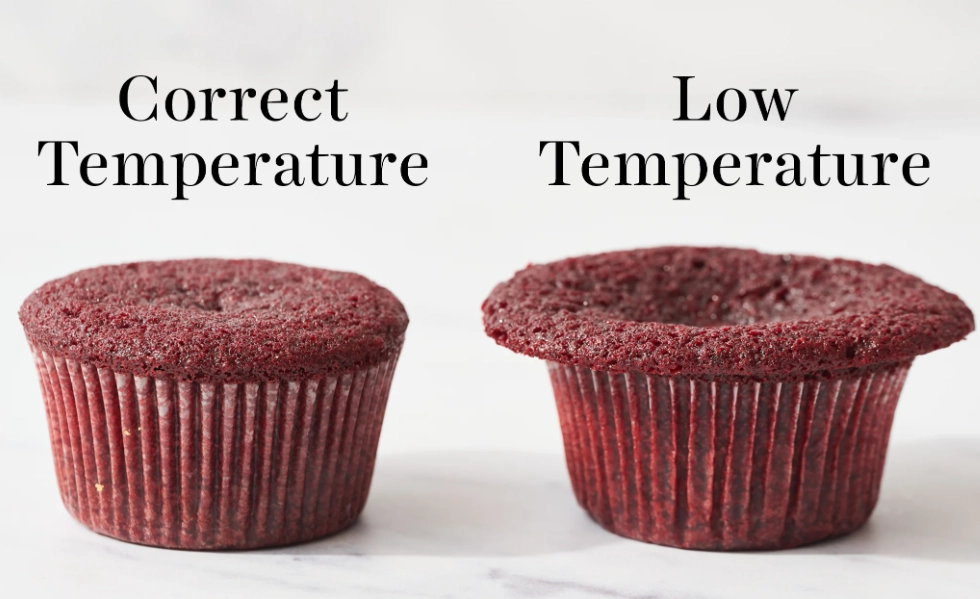
What Temperature Should You Actually Bake a Cake At?
For most butter and oil cakes, the sweet spot is 325°F to 350°F (163°C to 175°C). But that range hides a lot.
I bake standard 9-inch round butter cakes at 325°F if the pan is dark metal. Dark pans absorb heat faster, and 350°F gives me a crust that browns before the center sets. For shiny aluminum pans, 350°F works fine. For a loaf pan or a dense pound cake, I drop to 325°F and add time. Slow and steady gives a tight crumb instead of a gummy middle.
One detail most recipes skip: batter temperature matters as much as oven temperature. If your butter and eggs are cold, the batter hits the oven at 65°F instead of 70°F to 72°F. That colder start means the center sets later, while the outside overbakes. I leave eggs and butter on the counter for 45 minutes before mixing. When I’m in a hurry, I put the eggs in a bowl of warm water for five minutes. It sounds fussy. It changes the bake.
For chocolate cakes, I often go to 350°F even in a dark pan. Cocoa-heavy batter needs a faster set to keep the crumb moist and prevent a raw center. Vanilla cakes are more forgiving. The takeaway: cake baking temperature is not one universal number.
Why Your Oven Is Lying to You
This is the part that surprised me most. In my first apartment oven, I set 350°F. I put in a thermometer. It read 382°F. I checked again a week later. Same story. The dial was off by roughly 30 degrees, and the oven cycled up and down by another 15 to 25 degrees.
Even expensive ovens swing. The difference is how much. A cheap oven thermometer costs less than a box of cake flour. Hang it on the center rack. Every oven has hot spots — usually the back and near the door. I rotate my pans halfway through baking. Not once. Once is enough.
Another quiet culprit: the oven takes 20 to 30 minutes to stabilize after you turn it on. The preheat beep doesn’t mean it’s ready. I wait another 10 minutes before loading a cake. That single habit fixed a lot of uneven domes.
There’s one more sneaky thing. Opening the door early for a “quick peek” drops the temperature 40 to 60 degrees. I don’t open the door before 75 percent of the bake time has passed. If I need to check, I use the oven light and look through the glass.
How Pan Size and Batter Temperature Change Everything
I’ve seen a recipe say “bake at 350°F for 25 minutes.” Then I make it in a different pan and end up with a cake that’s liquid in the middle and burned on the edges. Pan size changes cake baking temperature logic because heat travels through the batter at different rates.
Here’s a quick reference I keep taped inside a cabinet door:
| Pan Size | Typical Temperature | Time Range | Doneness Sign |
|---|---|---|---|
| 8-inch round | 325°F (163°C) | 28–34 minutes | Toothpick comes out clean, edges pull away slightly |
| 9-inch round | 350°F (175°C) | 24–28 minutes | Center springs back when pressed |
| Loaf pan 8.5 x 4.5 | 325°F (163°C) | 50–60 minutes | Thin crack down center, tester comes out with dry crumbs |
| Bundt pan | 325°F (163°C) | 40–50 minutes | Top looks set and edges release easily |
| Sheet pan 9 x 13 | 350°F (175°C) | 30–35 minutes | Toothpick in center has moist crumbs, not wet batter |
I bake cupcakes at 350°F for 18 to 22 minutes in a light metal pan. In a dark pan, 325°F for 20 to 24 minutes. That’s the kind of adjustment packet instructions never give you.
Batter temperature can be the difference between flat and fluffy too. Cold batter means the leavening reacts more slowly. I let my butter and eggs sit out for 45 minutes, but I don’t warm the milk or buttermilk. If I use a cold liquid, I expect an extra 3 to 5 minutes of bake time.
Cake Baking Temperature Chart by Cake Style
Different cakes need different heat. A chiffon cake at 350°F in a shiny tube pan is fine. A dense fruit cake at 350°F will scorch the raisins before the center firms up. Here’s a working guide based on my own bakes and a handful of well-tested sources.
| Cake Style | Temperature | Key Reason |
|---|---|---|
| Sponge / genoise | 350°F (175°C) | Fast set to hold air |
| Butter cake (standard) | 325°F–350°F (163°C–175°C) | Even crumb, no domed top |
| Pound cake | 325°F (163°C) | Prevents cracking and raw center |
| Chocolate cake | 350°F (175°C) | Slightly hotter keeps cocoa from drying |
| Angel food cake | 325°F (163°C) | Slow bake keeps the crumb snow-white |
| Carrot cake | 350°F (175°C) | Oil-based batter needs stable heat |
I rarely bake a standard butter cake below 325°F or above 375°F. Those extremes are for specific cases, like a very large pan or a very dense loaf.
Why Your Cake Sinks or Domes (and What to Change)
A domed cake usually means the oven is too hot on top, or the pan is too close to the top element. I had a batch of vanilla cupcakes dome like golf balls because I set the rack one level too high. Moving it to the center fixed it. A sunken center is trickier. It often comes from opening the oven too early, or from batter that was too warm to begin with.
Here’s a guess-check-fix loop I use:
- If the cake domes hard and cracks: move the pan to the center rack and lower the temperature by 25°F.
- If the center sinks: wait until the 25-minute mark before opening the door, and don’t trust the oven dial. Use a thermometer.
- If the cake is dry at the edges but raw in the middle: your pan is too small for the batter volume, or your oven is running hot. Put an oven thermometer in the middle and check again.
One non-obvious trick I learned from a pastry chef: wrap a wet cloth around your cake pan before placing it in the oven if you’re baking a moist cake in a dark pan. The cloth insulates the sides while the center catches up. It sounds strange. It works. I’ve used it for a banana cake that kept scorching before the middle set.
Sinking, Dense, or Dry: Real Questions from My Kitchen
My cake sinks in the center even at 350°F. What’s the first thing to change?
Check the oven temperature with an independent thermometer. Then check how soon you open the door. A 20-second peek at the 15-minute mark can cause a sink. I set a timer and don’t open the door before the 20-minute mark for a 30-minute bake.
Why is my cake dense at 325°F but fine at 350°F?
Your leavening might be finishing before the crumb sets at the lower temperature. I add 1/8 teaspoon of baking soda per cup of flour if I bake a butter cake at 325°F. That small nudge keeps the texture airy without changing flavor.
Does cake baking temperature change for a convection oven?
Drop the temperature by 25°F and start checking 5 minutes earlier. Convection moves heat faster and drier. I use 325°F for a 350°F conventional recipe and reduce the bake time by about 10 percent.
What should I do if my cake is browning too fast on top?
Tent it with foil after the first 20 minutes if the top is dark brown. Don’t lower the oven temperature mid-bake unless the center is still raw and the top is burning. At that point, lower by 25°F and add 5 minutes.
My rule of thumb after all these years: pick a temperature, test your oven, write down what happened, and adjust next time. The cake baking temperature that works in your kitchen is the one your own notes say works. Trust the thermometer, not the dial.
This article was fact-checked against the FDA’s guidance on safe baking and several baker’s reference guides, including King Arthur Baking’s oven temperature notes, for accuracy on oven calibration and internal doneness signs.

Leave a Comment