Key Insights
- The Core Drivers: What Actually Moves the Litecoin Price?
- How to Analyze Litecoin Price: Beyond the Basic Chart
- Litecoin vs. Bitcoin vs. Others: A Quick Reality Check
- Common Questions About Litecoin Price (The Stuff People Really Search)
- The Future: What Could Change the Litecoin Price Game?
- Final Thoughts: Keeping Your Sanity While Watching the Charts
You see it on CoinMarketCap, you hear about it on crypto Twitter, you might even own some—the Litecoin price. It's a number that flashes green or red, dictating moods and fortunes in the crypto world. But what's behind that number? Is it just random noise, or is there a method to the madness? I've spent more hours than I'd care to admit staring at charts, digging into on-chain data, and trying to connect the dots between news headlines and price swings. Let me tell you, it's rarely as simple as "good news up, bad news down." The real story of Litecoin's value is a tangled web of technology, market psychology, and its big brother, Bitcoin.
For years, people called Litecoin the silver to Bitcoin's gold. That comparison is both helpful and a bit of a burden. It gives LTC an identity, but it also means the Litecoin price often lives in Bitcoin's shadow. When Bitcoin sneezes, Litecoin gets a cold. But it's not just a copycat. It has its own quirks, its own community, and its own use cases that subtly influence where its price settles.
Quick Reality Check: Before we dive deep, remember this—no one, and I mean no one, can consistently predict the short-term Litecoin price with perfect accuracy. Anyone who says they can is probably trying to sell you something. What we can do is understand the forces at play. That knowledge won't make you a prophet, but it might stop you from making panic-driven mistakes.
The Core Drivers: What Actually Moves the Litecoin Price?
Forget the hype for a minute. The Litecoin price isn't moved by magic. It's moved by a combination of tangible and intangible factors. Some are obvious, others are hidden in plain sight. Let's unpack them.
1. The Bitcoin Factor (It's Inescapable)
This is the elephant in the room. Litecoin's correlation with Bitcoin is strong, especially during major market cycles. When Bitcoin rallies hard, capital flows into the broader market, and Litecoin often rides that wave. When Bitcoin crashes, fear spreads, and LTC usually drops too, sometimes even harder. It's a liquidity thing. But here's a nuance I've noticed: during periods of sideways or slightly bullish sentiment for Bitcoin, Litecoin sometimes has its own mini-cycles. Traders looking for "altcoin season" action often turn to LTC as a first port of call because of its name recognition and liquidity.
So, the first rule of understanding the Litecoin price? Keep one eye on Bitcoin's chart. It's not the whole story, but it sets the stage.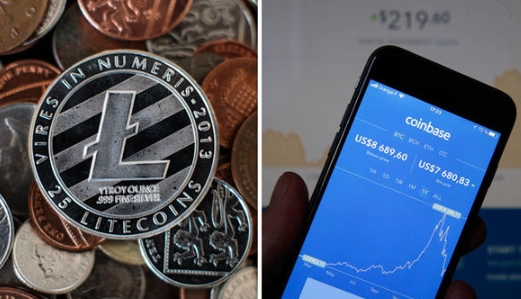
2. Network Health and On-Chain Data
This is where it gets interesting for the fundamentals crowd. The health of the Litecoin network itself sends signals. You can't fake on-chain data. I like to check a few key metrics:
- Hash Rate: This measures the total computational power securing the network. A rising hash rate suggests miners are confident and investing in the network's future. A plummeting hash rate can be a red flag. You can track this on sites like BitInfoCharts.
- Active Addresses: How many unique addresses are transacting? More activity can indicate growing utility or speculation.
- Transaction Volume & Value: Not just the number of transactions, but the total value being moved on-chain. Large movements can signal whale activity.
I remember a period last year where the Litecoin price was stagnant, but the hash rate kept hitting new all-time highs. It was a weird disconnect. That kind of divergence can sometimes foreshadow a move, as it suggests underlying strength (or weakness) that the spot market hasn't priced in yet.
3. Adoption and Real-World Use
Charlie Lee, Litecoin's creator, has always pushed for Litecoin as a medium of exchange—a currency for spending. This is a different focus from Bitcoin's "digital gold" narrative. So, when a new merchant announces they accept Litecoin, or a payment processor like BitPay integrates it more deeply, it matters. It's not always an immediate price pump, but it builds the long-term case.
The Litecoin Foundation also plays a role here. Their partnerships and marketing efforts, while sometimes quiet, aim to increase utility. Utility creates demand, and demand, in theory, supports price. The key word is "supports." In a speculative market, utility often takes a backseat to sentiment in the short term, but it provides a foundation.
A Personal Gripe: The crypto space talks a big game about "adoption," but sometimes the connection between a new partnership and the Litecoin price is tenuous at best. The market might ignore positive news for weeks, then suddenly remember it. It's frustrating to analyze, honestly.
4. Market Sentiment and The News Cycle
This is the wildcard. A tweet from a prominent figure, a regulatory headline from the SEC, or a mention on a mainstream financial news network can cause volatility. Social media sentiment, tracked by tools analyzing Twitter or Reddit, can create self-fulfilling prophecies. Fear, Uncertainty, and Doubt (FUD) can drive the Litecoin price down quickly, even if the news isn't directly about Litecoin.
Conversely, overly optimistic hype can create bubbles. Remember, the price is ultimately set by the last trade, and that trade is made by a person (or bot) reacting to information and emotion.
| Factor | How It Influences Litecoin Price | Timeframe of Impact |
|---|---|---|
| Bitcoin Price Movement | High correlation; sets general market direction. | Short to Medium-term |
| Network Hash Rate | Indicator of miner security and confidence. | Medium to Long-term |
| Regulatory News | Can cause sharp fear-based sell-offs or relief rallies. | Short-term (often volatile) |
| Merchant Adoption | Increases utility and long-term demand thesis. | Long-term |
| Macro-Economics (Interest Rates, Inflation) | Impacts risk appetite for all speculative assets. | Medium to Long-term |
How to Analyze Litecoin Price: Beyond the Basic Chart
Looking at the price on an exchange is just step one. The real analysis starts when you layer information. Here's a framework I use, moving from the big picture down to the specifics.
Start with the Macro View
Is the overall crypto market in a bull or bear phase? What's happening in traditional markets? If the S&P 500 is tanking and the Fed is hiking rates, it's usually a hostile environment for risk assets like crypto. The Litecoin price will struggle to rise in that climate, no matter how good its tech is. I often check financial news from sources like Bloomberg Crypto to gauge this broader sentiment.
Dive into On-Chain Analysis
This is like checking the vital signs of the network. Sites like Glassnode (some features are paid) or the free charts on CoinMetrics are invaluable. I look for:
- MVRV Ratio: Compares market cap to realized cap. A very high MVRV suggests the asset might be overvalued (holders have large unrealized profits). A low or negative one can indicate undervaluation.
- Exchange Flows: Are coins moving to exchanges (potential selling pressure) or from exchanges (potential holding/withdrawing)? A large inflow to an exchange like Binance or Coinbase can precede a drop.
- Holder Composition: How many addresses hold LTC for the long term (HODLers) vs. short-term traders?
On-chain data doesn't tell you what will happen tomorrow, but it tells you what is happening right now on the blockchain. That's powerful context.
Apply Technical Analysis (With a Grain of Salt)
I'm not a TA purist. Charts are more about psychology and key levels than mystical patterns. But they are a tool. Many traders watch these levels, so they can become self-reinforcing.
- Key Support and Resistance: Where has the Litecoin price historically bounced or reversed? These are areas of heightened buying or selling interest.
- Moving Averages: The 50-day and 200-day simple moving averages (SMAs) are widely watched. A price above both is considered bullish by trend followers. The "death cross" (50-day below 200-day) and "golden cross" (50-day above 200-day) get a lot of attention, though they are lagging indicators.
- Relative Strength Index (RSI): Measures whether an asset is overbought (RSI >70) or oversold (RSI
My Take on TA: I use it to identify areas of interest and manage risk (e.g., "if it breaks below this level, my thesis is wrong"), not to predict the future. The worst thing you can do is see a "bullish pennant" on a 15-minute chart and bet your savings on it. The higher the time frame (daily, weekly charts), the more weight the analysis generally holds.
Litecoin vs. Bitcoin vs. Others: A Quick Reality Check
It's impossible to talk about the Litecoin price without comparing it. This table sums up the key differences that ultimately affect their value propositions and, by extension, their price behavior.
| Feature | Litecoin (LTC) | Bitcoin (BTC) |
|---|---|---|
| Block Time | ~2.5 minutes | ~10 minutes |
| Transaction Speed/Cost | Generally faster and cheaper | Slower, can be more expensive during congestion |
| Consensus Algorithm | Scrypt (ASIC-resistant design, now ASIC-mined) | SHA-256 |
| Total Supply Cap | 84 million | 21 million |
| Market Narrative | Digital Silver / Medium of Exchange | Digital Gold / Store of Value |
| Price Volatility | High, but often slightly less than smaller alts | High (sets the benchmark) |
The takeaway? Litecoin aims to be better at everyday transactions. This focus on utility should, in a rational world, give its price a different driver mix than Bitcoin's. But the market isn't always rational, and the narratives often blur together.
Common Questions About Litecoin Price (The Stuff People Really Search)
The Future: What Could Change the Litecoin Price Game?
Looking ahead, the Litecoin price won't be driven by the same factors forever. Here are a few things that could shift the landscape.
Privacy Upgrades: The MimbleWimble Extension Block (MWEB) upgrade was a big deal, offering optional privacy features. If privacy becomes a bigger regulatory or user priority, this could differentiate LTC.
Real-World Payment Rails: If a major retail bank or a company like PayPal or Stripe integrates Litecoin payments seamlessly for millions of users, that's a game-changer for utility-driven demand.
Regulatory Clarity: Clear, sensible regulation (as opposed to hostile crackdowns) could bring institutional investors into the space. Litecoin, as a top-tier, older asset, could benefit from that inflow.
The Competition: This is the biggest threat. Newer blockchains are faster and have more features built-in. Litecoin's advantage is its simplicity, security, and track record. It needs to keep proving its relevance. The ongoing development work tracked on its official GitHub repository is a good sign of life.
In the end, the Litecoin price is a story still being written.
Final Thoughts: Keeping Your Sanity While Watching the Charts
I'll leave you with this. Obsessing over the daily Litecoin price movement is a recipe for stress and bad decisions. The noise is overwhelming. The key is to zoom out.
Understand the drivers we discussed. Have a thesis for why you believe in the asset (or why you don't). Then, build a strategy around that thesis—whether it's dollar-cost averaging, setting buy orders at key support levels you've identified, or simply holding for the long term. Use tools like TradingView for charts and set price alerts so you're not glued to the screen.
The Litecoin price will go up, and it will go down. Sometimes violently. If you've done your homework on the network, the technology, and the market structure, you'll be better equipped to understand the *why* behind the moves. And understanding the why is the only thing that gives you an edge in a market driven as much by fear and greed as by logic.
Don't chase. Don't panic. Just try to understand the game being played. That's the best any of us can do.
Reader Comments