Quick Guide
- What Is Market Cap, and Why Should You Care About Dogecoin's?
- The Rollercoaster: A History of Dogecoin's Market Cap Swings
- What Actually Moves the Needle on Dogecoin's Valuation?
- How Does Dogecoin's Market Cap Stack Up? The Competitive Landscape
- Finding the Real-Time Dogecoin Market Cap (And Why Sources Differ)
- The Million-Dollar Question: What Does the Future Hold for Dogecoin's Valuation?
- Your Dogecoin Market Cap FAQ (Real Questions I Get Asked)
- Final Thoughts: Using Market Cap as a Tool, Not a Gospel
Let's be honest. When you first heard about Dogecoin, you probably thought it was a joke. I know I did. A cryptocurrency based on a Shiba Inu meme? Seriously? But then you see headlines about its market cap hitting tens of billions, and suddenly it's not so funny anymore. Or maybe it still is, but now there's real money involved.
The thing about Dogecoin's market cap is that it tells a wild story. One day it's up there with the "serious" coins, the next it's taking a nosedive because of a single tweet. It's frustrating, exciting, and completely unpredictable all at once.
I remember checking the Dogecoin market cap during the 2021 frenzy. It was like watching a rocket ship with questionable navigation. One minute you're thinking "this is genius," the next you're wondering if you've lost your mind. That volatility is baked into its DNA.
So what are we really looking at when we talk about Dogecoin's market capitalization? It's not just a big number. It's a pulse check on the world's most famous joke that decided to get into finance.
What Is Market Cap, and Why Should You Care About Dogecoin's?
Okay, basics first. Market capitalization, or market cap, for any crypto (or stock) is stupidly simple to calculate. You take the current price of one unit and multiply it by the total number of units in existence. For Dogecoin, that's a lot of units—over 144 billion DOGE and counting, because it has an inflationary supply.
Price x Circulating Supply = Market Cap.
But here's where it gets interesting for Doge. That formula hides more than it reveals.
You see, the Dogecoin market cap is a popularity contest metric. It measures collective belief, hype, and online momentum as much as it measures "value" in a traditional sense. When Elon Musk tweets a meme, the market cap reacts. When a major exchange lists it, the market cap reacts. It's a direct line to the crowd's psychology.
Why should you care? Because in the crypto world, market cap is the primary ranking system. It's how we separate the Bitcoin and Ethereum heavyweights from the smaller altcoins. Dogecoin's position in that ranking—whether it's in the top 10 or has slipped to 15th—dictates its visibility, its credibility (as much as a meme coin can have), and the kind of institutional attention it might get.
Think of it this way: A high market cap means more liquidity (easier to buy and sell), more developer interest, and a stronger network effect. A low or falling market cap can signal waning interest or a loss of confidence. For an investor, even a casual one, it's the first number you need to understand.
But—and this is a big but—the Dogecoin market cap is uniquely slippery. Its supply isn't fixed. New DOGE are created every minute through mining rewards. This constant, small inflation means that for the price to stay stable, new demand must constantly meet that new supply. For the market cap to grow, demand has to outpace it. It's a treadmill, not a parked car.
The Rollercoaster: A History of Dogecoin's Market Cap Swings
To understand where Dogecoin's valuation might go, you have to look at where it's been. The chart isn't a smooth line; it's a seismograph during an earthquake.
For years after its 2013 creation, the total Dogecoin market capitalization was a rounding error—a few million dollars. It was a fun community tipping currency. Then came the retail trading boom of 2020-2021 and, of course, Elon.
The peak was something to behold. In May 2021, Dogecoin's market cap blasted past $88 billion. Let that sink in. Eighty-eight billion dollars for the dog meme coin. At that point, it was briefly a top 5 cryptocurrency, ahead of established giants like Cardano and Polkadot. It was utterly surreal.
I talked to friends who bought in at the peak. The excitement was palpable, but so was the complete detachment from any fundamental metric. It was pure, unadulterated momentum.
Then it crashed. Hard. Like most hype cycles, it couldn't sustain itself. The market cap of Dogecoin fell by over 80% from that peak. People who bought high were left holding bags, a classic crypto story. But even after that brutal correction, it stabilized at a level that was still orders of magnitude above its pre-hype life. The genie was out of the bottle.
| Period | Approx. Dogecoin Market Cap | Key Driver / Event | My Takeaway |
|---|---|---|---|
| Pre-2020 | < $500 Million | Niche community, tipping culture | Stable, fun, no one expected riches. |
| Early 2021 | $5 - $10 Billion | Reddit/Twitter hype, GameStop spillover | The first taste of viral mania. It felt different. |
| May 2021 (Peak) | > $88 Billion | Elon Musk on SNL, peak retail FOMO | Pure speculation. A number divorced from reality. |
| 2022 Crypto Winter | $7 - $12 Billion | Broader market crash, risk-off sentiment | The "new normal" floor was established far above the old one. |
| 2023-2024 Range | $10 - $25 Billion | Broader crypto cycles, sporadic Elon tweets | Settled into a volatile but recognized altcoin role. |
Looking at this table, the volatility is the main character. The Dogecoin market cap doesn't do "steady." It's a creature of narratives and social media trends. If you're looking for a stable store of value, you're in the wrong place. If you're trying to gauge social sentiment in the crypto space, however, it's a fantastic (if stressful) indicator.
What Actually Moves the Needle on Dogecoin's Valuation?
Forget complex financial models. The drivers of Dogecoin's market cap are a unique blend of crypto economics and internet culture.
The Elon Musk Factor (The "Dogefather" Effect)
This is the big one, and it's a double-edged sword. A single tweet from Elon Musk can add or subtract billions from the Dogecoin market cap in hours. When he calls it "the people's crypto" or hints at Twitter/X integration, it pumps. When he doesn't mention it for a while, or makes a joke that's misinterpreted, it can dump.
This creates a massive dependency. The health of the Dogecoin market capitalization is tied to the whims of one billionaire. That's terrifying from an investment standpoint, but it's the reality. It centralizes what's supposed to be a decentralized asset. Personally, I find this aspect exhausting. It turns investing into a game of "what will Elon say next?"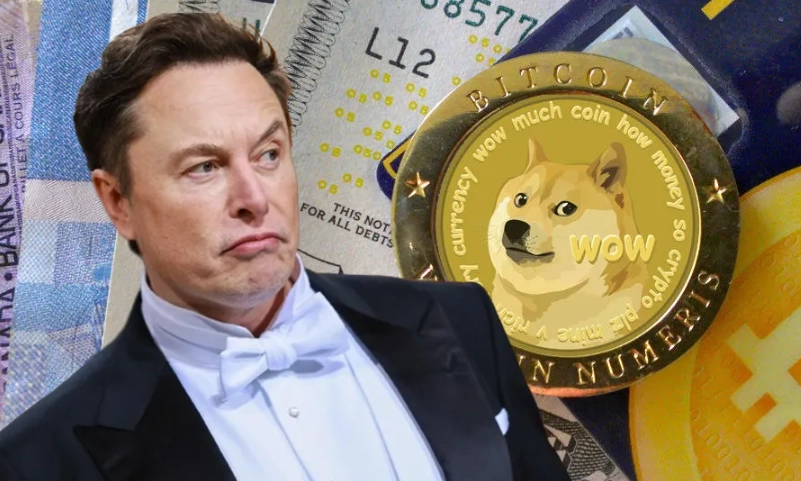
The Broader Crypto Tide
Dogecoin rarely swims against the current. When Bitcoin and Ethereum are in a bull market, money flows into riskier assets like DOGE. Its market cap rises. When the market turns bearish, DOGE often falls harder. It's a high-beta crypto, meaning it amplifies the market's movements.
So, watching Bitcoin's dominance and overall market sentiment is often more important than any Dogecoin-specific news.
Adoption and Utility (The Slow Burn)
This is the less sexy, but more important, long-term driver. Every time a new business announces it accepts Dogecoin, it's a small boost. The development of the Dogecoin core protocol (yes, it has active developers) matters. Proposals for layer-2 solutions or bridges to other chains could matter more in the future.
The dream for many holders is that Dogecoin transitions from a pure meme to a genuinely used medium of exchange for online transactions and tips. Every step in that direction adds a slightly more stable foundation to its market cap.
A word of caution: The inflationary supply is a constant, subtle downward pressure on price. For the Dogecoin market cap to maintain a level, new buyers must constantly appear to absorb the ~5 billion new DOGE minted each year. It's a built-in headwind that deflationary coins like Bitcoin don't face.
Social Media Sentiment and Meme Magic
Never underestimate this. Trends on TikTok, viral posts on Reddit's r/dogecoin, and celebrity endorsements can trigger mini-cycles. The market cap of Dogecoin is perhaps the most socially responsive of any major asset. It's a direct reflection of the online crowd's mood.
How Does Dogecoin's Market Cap Stack Up? The Competitive Landscape
Rankings change daily, but looking at Dogecoin's position relative to others tells you about its staying power. As of my last deep dive into the data, Dogecoin consistently hangs around the edges of the top 10. It's often battling with the likes of Toncoin, Cardano, and Avalanche for position.
What's fascinating is who it's ahead of. It has a larger market cap than projects with massive developer ecosystems and complex smart contract platforms. Why? Because brand recognition and community size count for a lot in crypto's early stages. Everyone knows the Doge meme. Far fewer people understand sharding or zero-knowledge proofs.
Here’s a mental model I use:
- Top 3 (BTC, ETH, USDT): The bedrock. Their market caps are in a different league, driven by store-of-value, platform utility, and stability.
- Top 4-10: The established altcoin contenders. Solana, XRP, BNB. Dogecoin crashes this party based purely on brand power, not technical superiority.
- Just outside Top 10: This is where Dogecoin often sits. It's the gatekeeper. Its Dogecoin market cap is the barrier that serious, tech-focused projects must overcome to claim a top spot. This creates a fascinating dynamic.
Compared to other "meme coins," Dogecoin is the undisputed king. Shiba Inu (SHIB) sometimes comes close in headlines, but Dogecoin's lead in market cap, recognition, and (crucially) liquidity is vast. It's the original, and that first-mover advantage is powerful.
Finding the Real-Time Dogecoin Market Cap (And Why Sources Differ)
You'd think this would be simple. Just go to a website and look. But slight differences in how sites track data can lead to different numbers. Here are the go-to sources and what to watch for:
- CoinMarketCap: The industry standard. Their Dogecoin market cap figure is what most news articles quote. They have robust methods for tracking circulating supply.
- CoinGecko: Another excellent, trusted source. Sometimes their circulating supply estimate varies by a tiny fraction from CMC, leading to a small difference in the calculated market cap. It's nothing to worry about.
- TradingView Charts: Great for seeing the market cap plotted over time. You can visually compare its growth against Bitcoin or others.
Key tip: Don't obsess over the exact billion.
Is it $18.4 billion or $18.5 billion? It doesn't matter. What matters is the order of magnitude (tens of billions) and the trend (is it rising or falling over weeks/months?). The precise number is a snapshot of a moving target.
The Million-Dollar Question: What Does the Future Hold for Dogecoin's Valuation?
Predicting the future of the Dogecoin market cap is a fool's errand, but we can look at scenarios. I'm not a financial advisor, but here's how I frame the possibilities.
The Bull Case (The "To the Moon" Scenario):
This requires a "perfect storm." A massive crypto bull run led by Bitcoin ETF inflows, combined with a major, tangible adoption win for Dogecoin (think: becoming a primary payment option on a platform like X, or a major e-commerce player). Another wave of intense retail FOMO, amplified by social media, could send its market cap soaring past its previous all-time high. In this scenario, $100B+ is back on the table.
The Bear Case (The "Slow Fade" Scenario):
The meme fatigue sets in. New, more technologically advanced meme coins capture the community's attention. Elon Musk moves on. The inflationary supply slowly dilutes holders without enough new demand. The Dogecoin market capitalization gradually erodes, and it slides down the rankings, becoming a nostalgic relic rather than a market force.
The Most Likely Case (The "Volatile Staple" Scenario):
This is my personal, non-expectation. Dogecoin remains a crypto market staple. Its market cap will continue to swing wildly with market cycles and Elon's tweetstorms, but it maintains a strong, loyal community. It won't "go to zero" because the brand is too strong. It will consistently sit in the 8th-15th rank range, a perpetual reminder that in crypto, culture is sometimes as valuable as code. It will have explosive rallies and painful corrections, over and over.
Your Dogecoin Market Cap FAQ (Real Questions I Get Asked)
Final Thoughts: Using Market Cap as a Tool, Not a Gospel
After all this, my main piece of advice is this: don't worship the Dogecoin market cap number. Use it as one tool among many.
Check it to understand Dogecoin's relative size and clout in the crypto world. Watch its trend to gauge whether sentiment is heating up or cooling down. But never, ever make an investment decision based solely on this one metric.
Look at the community activity on Dogecoin's Wikipedia page and social channels. Look at development activity on its GitHub. Look at real-world adoption news. And for heaven's sake, manage your risk. The history of Dogecoin's market cap is a history of violent ups and downs.
It started as a joke. It became a cultural phenomenon. Its market cap is the financial scorecard of that bizarre journey. Whether that number goes up or down from here depends on whether the world keeps laughing with it, or eventually just moves on.
Me? I'll be watching, probably with a mix of amusement and anxiety, like everyone else.
Reader Comments