Quick Navigation
Let's be honest. Most of us first got interested in Bitcoin because of the price. The headlines screaming about new all-time highs, the stories of early investors becoming millionaires – it's hard to ignore. But staring at a chart showing the Bitcoin price in USD can feel like trying to read ancient hieroglyphics. One minute it's up 10%, the next it's crashing. What gives?
I remember back in 2017, I kept refreshing my screen, watching the Bitcoin price in USD climb past $10,000, then $15,000. The excitement was real, but so was the confusion. Why was it moving so fast? I had no idea. I was just following the crowd. That experience taught me a hard lesson: if you don't understand why the price moves, you're just gambling.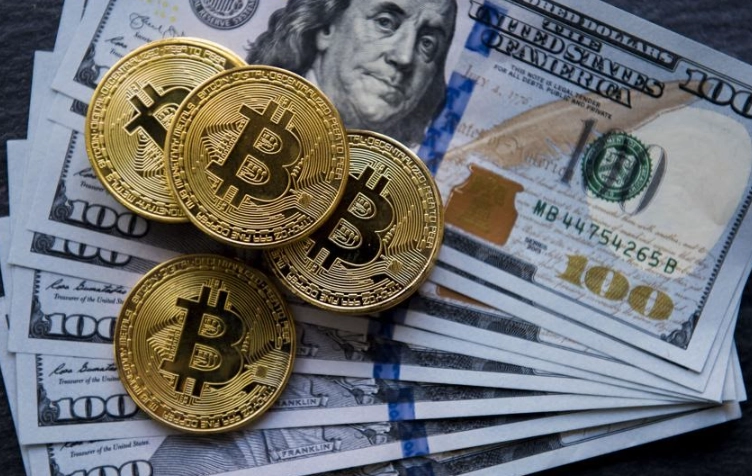
So, let's cut through the noise. This isn't about shilling Bitcoin or predicting the moon. It's about understanding the machine. We're going to look under the hood of the Bitcoin price in USD, figure out what makes it tick, and give you the tools to make sense of it all yourself.
What Actually Moves the Bitcoin Price?
Forget the idea of a single cause. The Bitcoin price in USD is a complex beast, pulled in different directions by a mix of factors. I like to break them down into two main buckets: the fundamental stuff built into Bitcoin's code and the messy, emotional world of human markets.
The Core Engine: Bitcoin's Built-In Mechanics
This is the part a lot of new folks miss. Bitcoin isn't just a digital token; it's a protocol with rules. These rules create economic forces that directly influence the Bitcoin price in USD.
First, you have the halving. Roughly every four years, the reward that miners get for securing the network gets cut in half. It's like a scheduled supply shock. The most recent one happened in April 2024. Suddenly, the number of new bitcoins hitting the market each day was slashed. Basic economics tells you that if demand stays the same or grows while new supply drops, price pressure goes up. History shows that halvings have often (but not always!) preceded major bull runs. It's a slow-burn factor, but a powerful one.
Then there's the absolute cap of 21 million bitcoins. There will never be more. This scarcity is hard-coded. As more people and institutions decide they want a piece of this finite asset, the competition for the available coins intensifies. This fundamental scarcity is the bedrock for the long-term thesis around the Bitcoin price in USD.
Mining difficulty and hash rate matter too. A high and rising hash rate means the network is more secure and expensive to attack. That boosts confidence. If miners are investing billions in hardware and electricity, they believe in the long-term value proposition. That confidence can, in turn, support the Bitcoin price in USD.
The Human Factor: Sentiment, News, and Big Money
Here's where it gets wild. Fundamentals set the stage, but sentiment drives the daily drama.
Macroeconomic winds are a huge deal now. Since Bitcoin got labeled a "risk-on" asset, it often moves with the stock market, especially tech stocks (NASDAQ). When the Federal Reserve hints at raising interest rates to fight inflation, money gets more expensive. Investors might sell risky assets like Bitcoin and move to cash or bonds. Checking the Fed's statements on their official website has become as important as reading crypto news for many traders. Conversely, when rates are low and money is cheap, speculative assets look more attractive.
Regulation is a constant swing factor. A positive statement from a regulator in a major economy like the US or the EU can send the Bitcoin price in USD soaring. A crackdown or threatening language from a big player like the SEC can trigger a sell-off. The uncertainty is a killer.
Institutional adoption is the new game. When a company like MicroStrategy buys billions worth of Bitcoin for its treasury, or a giant asset manager like BlackRock files for a spot Bitcoin ETF, it's a massive signal. It brings legitimacy and, more importantly, a tidal wave of new capital that can move the market. This isn't retail FOMO anymore; it's corporate balance sheet strategy.
And we can't ignore the media cycle. A Elon Musk tweet, a mention on CNBC, a scary headline about a hack – these can cause violent, short-term swings. The key is to learn which news is noise and which signals a real shift.
How to Track the Bitcoin Price in USD Like a Pro
You don't need a Bloomberg terminal. But you do need to know where to look for clean, reliable data. Relying on just one source is a mistake.
For the most accurate global Bitcoin price in USD, you want an aggregator. These sites pull prices from hundreds of exchanges, weigh them by volume, and spit out a global average. It's the closest thing to a "true" price.
- CoinMarketCap and CoinGecko are the industry standards. Their front page literally shows you the dominant Bitcoin price in USD. They also show trading volume, market cap, and have decent charts. Bookmark one of them.
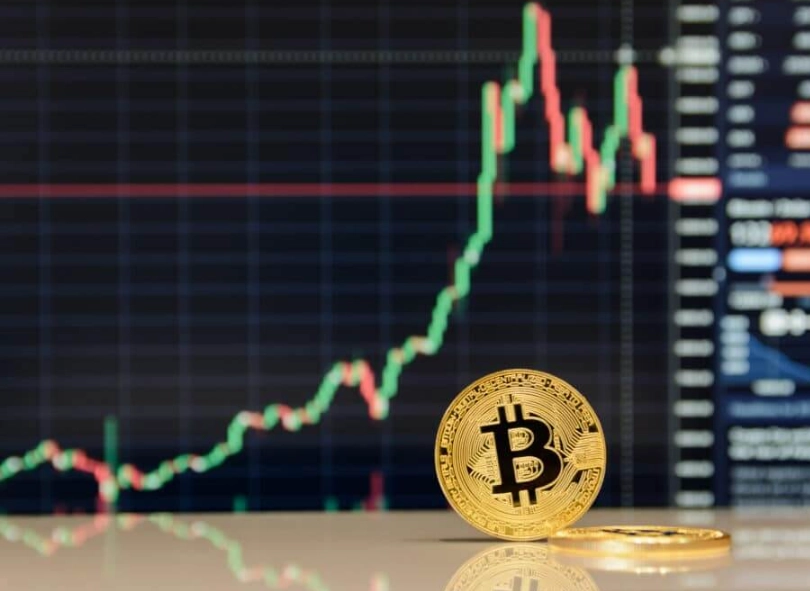
- TradingView is where the serious charting happens. The social aspect can be noisy, but the charting tools are unparalleled for drawing trend lines, looking at indicators (like RSI or MACD), and analyzing different time frames. This is where you go to understand the trend, not just the number.
For understanding why the price might be moving, you need context.
- Investopedia is fantastic for looking up terms you don't understand (like "contango" or "hash rate"). Don't be shy about using it.
- Following a few level-headed analysts or journalists on Twitter (or X) or via their newsletters can provide valuable commentary that ties news events to price action. Avoid the hyper-bullish or doom-and-gloom accounts; they're entertainment, not information.
Choosing Where to Buy: A Quick Comparison
Not all places that show you a Bitcoin price in USD are equal when you want to buy. Fees, security, and ease of use vary wildly. Here's a blunt look at the main options.
| Platform Type | Best For | Biggest Pros | Biggest Cons / Watch Outs |
|---|---|---|---|
| Centralized Exchanges (CEX) e.g., Coinbase, Kraken, Binance |
Beginners. Ease of use, buying with fiat (USD). | Simple interfaces, high liquidity, customer support (sometimes), insurance on custodial funds. | You don't control your private keys ("Not your keys, not your coins"). Subject to regulations/halts. Can have higher fees. |
| Decentralized Exchanges (DEX) e.g., Uniswap (for wrapped BTC) |
Experienced users who want self-custody from the start. | Trade directly from your own wallet. No sign-up/KYC. Censorship-resistant. | Can be complex. Fees ("gas") on Ethereum can be high. Risk of smart contract bugs. You are your own security. |
| Brokerage Apps e.g., Robinhood, Cash App |
Extreme simplicity, fractional shares. | Super easy, integrated with traditional investing. | You often cannot withdraw the Bitcoin you buy. You're buying a price exposure, not the actual asset. Features are limited. |
My take? Start with a reputable, regulated CEX if you're new. Get comfortable. Then, for any significant amount, learn how to transfer your bitcoin to a hardware wallet you control. The peace of mind is worth the learning curve.
Navigating the Volatility: It's a Feature, Not a Bug
People complain about Bitcoin's volatility, but that's what you sign up for. A 5% swing in a day is normal. A 20% drop in a week happens. If that gives you heart palpitations, this might not be for you. The key is managing your own psychology and strategy around the fluctuating Bitcoin price in USD.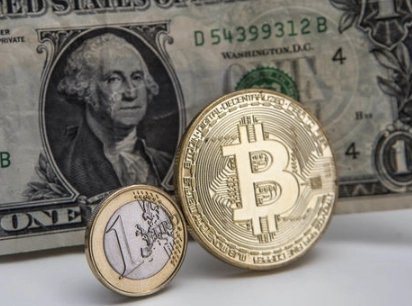
Dollar-Cost Averaging (DCA) is the most recommended strategy for a reason. It's boring, but it works. Instead of trying to time the market (which even pros are bad at), you set a schedule—say, $100 every Tuesday—and buy regardless of whether the Bitcoin price in USD is $60,000 or $30,000. Over time, you smooth out the spikes and crashes and get an average cost. It removes emotion from the equation.
Have an exit plan. Why are you buying? Is it a long-term hold for a portion of your savings (the "digital gold" thesis)? Is it a speculative trade? Define your goal before you buy. For a long-term hold, daily price movements become background noise. For a trade, you need clear entry and exit points (stop-losses, take-profit targets) and you must stick to them. The worst thing you can do is turn a short-term trade into a long-term bag-hold because the price went against you.
And please, for the love of sanity, never invest money you can't afford to lose. This is rule number one. The Bitcoin price in USD can go to zero. It's unlikely given its network effect, but it's possible. Don't bet your rent money, your emergency fund, or your kid's college savings.
What's Next for the Bitcoin Price in USD?
Crystal balls are famously cloudy in crypto. Anyone who tells you they know exactly where the Bitcoin price in USD is headed is lying or selling something. But we can look at the major narratives and forces that will shape the coming years.
The institutionalization wave is far from over. The approval of spot Bitcoin ETFs in the US was a watershed moment. These ETFs make it trivially easy for financial advisors, retirement funds, and everyday investors in traditional brokerages to get exposure. This is a pipeline of potential demand that is just starting to be tapped. Every quarter, we see more public companies adding Bitcoin to their treasury. This trend builds a stronger, more resilient price floor over time.
On the flip side, macroeconomic uncertainty is the big wildcard. Sticky inflation, geopolitical tensions, and the global debt picture will continue to create headwinds or tailwinds. Bitcoin has started to show moments of behaving as an inflation hedge (like in 2020-2021), but it's not a consistent correlation yet. It's still finding its identity in the global macro landscape.
The regulatory landscape will be decisive. Clear, sensible regulation in major economies like the US and EU could unleash a flood of institutional capital. Opaque, hostile, or fragmented regulation could stifle growth and innovation for years. This is a political process, and it's messy and slow.
Your Questions, Answered
Let's tackle some of the specific things people are typing into Google right now about the Bitcoin price in USD.
The Bitcoin price in USD is a number, but it's a doorway.
A doorway into understanding global finance, monetary policy, network effects, and human psychology. You can just stare at the number and feel excited or scared. Or you can walk through the door and start to understand the fascinating, chaotic, and revolutionary system that produces it.
Don't just watch the price. Understand the game. That's the only way to play it without losing your shirt—or your sanity.
Reader Comments