Quick Guide
- What Is Crypto Mining, Really? (And Why Should You Care?)
- How Does Mining Actually Work? A Simple Analogy
- The Gear: Choosing Your Mining Hardware
- Beyond Hardware: The Software and Wallet You'll Need
- The Make-or-Break Factor: Profitability and Costs
- Mining Pools: Why Going Solo is a Terrible Idea
- Setting It All Up: Your First 24 Hours
- Common Beginner Questions (FAQ)
- Final Thoughts Before You Hit "Start Miner"
Let's be honest. When you first hear "crypto mining," you probably picture some tech wizard in a basement surrounded by glowing, whirring machines, magically printing digital money. The reality is both simpler and more complicated. And way less glamorous.
I remember my own start. I bought a second-hand graphics card, convinced I'd be rolling in Bitcoin by the end of the month. The noise, the heat, the electricity bill that made my eyes water... it was a wake-up call. But it was also fascinating. This guide is what I wish I had back then—a no-fluff, step-by-step walkthrough for anyone curious about crypto mining for beginners.
We're not here to sell you a dream. Mining in 2023 and beyond is a technical hobby, a potential side hustle, and for a tiny few, a business. It's not a get-rich-quick scheme. But if you're interested in how blockchain really works and want to potentially earn some crypto while supporting a network, you're in the right place.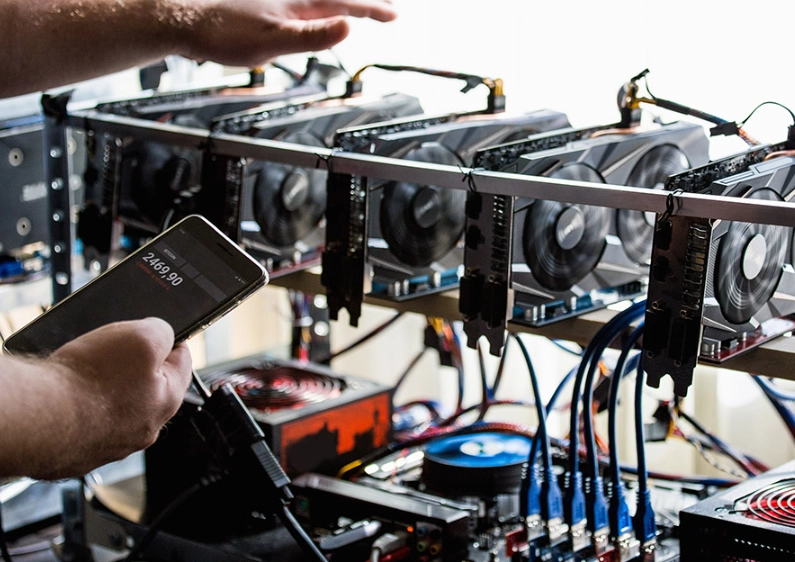
What Is Crypto Mining, Really? (And Why Should You Care?)
Forget the pickaxe and hard hat. In the digital world, mining is the process of validating transactions and adding them to a public ledger called the blockchain. It's the backbone of networks like Bitcoin and (until recently) Ethereum. Miners use computers to solve incredibly complex math puzzles. The first one to solve it gets to add a new "block" of transactions to the chain and is rewarded with newly minted cryptocurrency.
Think of it like a giant, global, competitive bookkeeping race. Your computer is the accountant, and the crypto reward is your pay.
But why does this matter for you? Well, if you're just buying crypto on an exchange, you're interacting with the end product. Mining lets you participate at the ground level. You're helping secure the network. You're earning coins directly, without paying a broker fee. For a beginner, it's the deepest dive into understanding what makes this whole system tick. That's the core value of any guide focused on crypto mining for beginners.
How Does Mining Actually Work? A Simple Analogy
Let's make this less abstract. Imagine a huge, public spreadsheet that records every single transaction (like "Alice sent Bob 0.05 BTC"). This spreadsheet is the blockchain. Every 10 minutes or so, a new page needs to be added to this spreadsheet with the latest transactions.
Miners around the world compete to be the one to add that page. The "contest" involves their computers guessing a random number (called a hash) that meets a specific, difficult criteria set by the network. It's pure guesswork, but with immense computing power.
The miner whose computer guesses the number first shouts, "I found it!" proves their work to everyone else, and gets to attach the new page. As a reward, they get a chunk of brand new Bitcoin (the block reward) plus any transaction fees users attached to their payments. Then the race starts all over again for the next page.
This process is called Proof of Work (PoW). It's secure because faking a transaction would require you to re-win all those races from that point forward—a computationally impossible task. Other methods like Proof of Stake (PoS) exist now (Ethereum switched to this), but PoW mining is where most beginners start.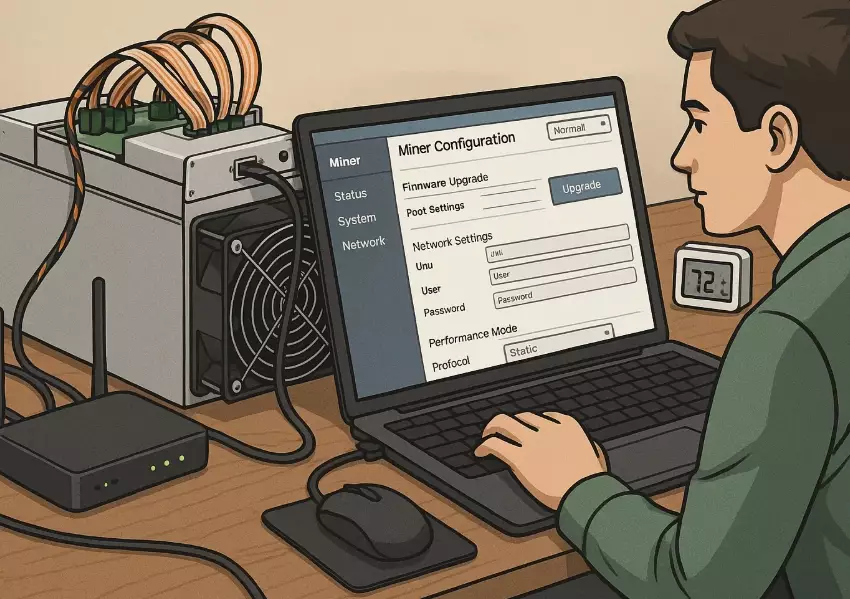
The Gear: Choosing Your Mining Hardware
This is where most beginners get stuck—or make expensive mistakes. Your choice of hardware dictates what you can mine, how much you can earn, and your upfront cost. Let's break down the three main paths.
CPU Mining: The (Mostly) Obsolete Starting Point
Your computer's Central Processing Unit (CPU) is its brain. In the very early days of Bitcoin (like 2009-2010), you could mine with a standard CPU. Those days are long, long gone. The competition is too fierce.
Today, CPU mining is only viable for a few, select cryptocurrencies designed to be resistant to specialized hardware. For the major coins like Bitcoin? Forget it. You'll spend more on electricity than you'll ever earn. I tried it once on an old laptop just for fun. After a week, I had earned a dusting of crypto worth maybe a few cents. The fan sounded like a jet engine the whole time.
Not worth it for a serious beginner.
GPU Mining: The Flexible, Entry-Level Favorite
This is the sweet spot for most people starting their crypto mining journey. GPU stands for Graphics Processing Unit—the chip in your graphics card that renders video games. They're great at handling the parallel computations needed for mining many cryptocurrencies.
Why are they good for beginners?
- Flexibility: You can mine different coins (Ethereum Classic, Ravencoin, Ergo) and switch based on profitability.
- Resale Value: If mining doesn't work out, you can sell the graphics card to gamers. It's not a total loss.
- Accessibility: You can start with a single card in your existing PC.
The downside? After Ethereum moved to Proof of Stake, the most profitable GPU mining landscape changed dramatically. It's less lucrative than it was in 2021, but it's still the most hands-on way to learn. Brands like NVIDIA (GeForce RTX series) and AMD (Radeon RX series) are the go-to. A used RTX 3070 can be a decent starting point if you find a good deal.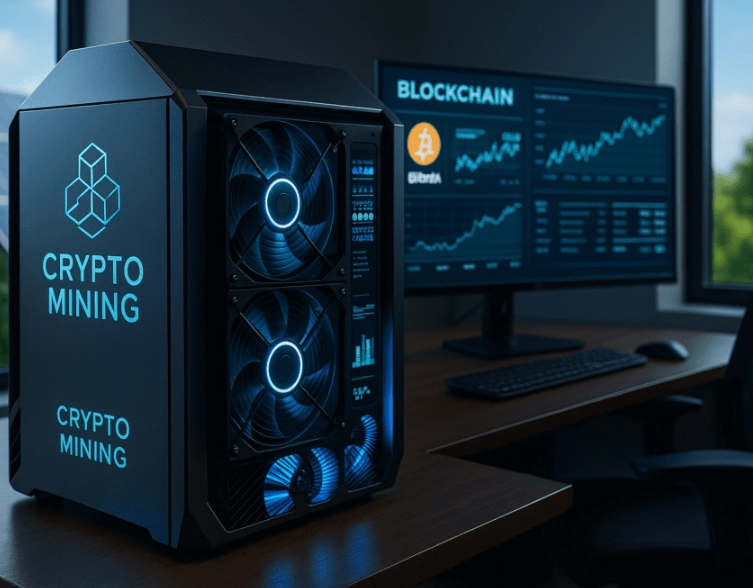
ASIC Mining: The Big League
ASIC stands for Application-Specific Integrated Circuit. These are machines built for one job and one job only: mining a specific cryptocurrency using a specific algorithm (like Bitcoin's SHA-256).
They are incredibly powerful and efficient at that one task. An ASIC miner can be hundreds of thousands of times faster than a GPU. But that's all it can do.
- Pros: Unbeatable hash rate and efficiency for their target coin. This is the only way to profitably mine Bitcoin today.
- Cons: Very expensive (thousands of dollars), incredibly loud (like a vacuum cleaner running 24/7), generate massive heat, and become obsolete quickly as newer models release. They also have zero resale value outside of mining.
For a true beginner, I generally advise against starting with an ASIC unless you have a serious budget, a very tolerant family/roommates, and a cool, ventilated space (like a basement or garage) you don't mind turning into a server room.
Here’s a quick hardware comparison to visualize the trade-offs:
| Hardware Type | Best For | Upfront Cost | Flexibility | Noise & Heat | Beginner Friendly? |
|---|---|---|---|---|---|
| CPU | Learning, mining obscure coins | Very Low (already owned) | High | Low-Medium | Yes, but not profitable |
| GPU | Most beginners, flexible mining | Medium-High ($300-$1000+ per card) | Very High | Medium-High | Yes, the best balance |
| ASIC | Profitable Bitcoin mining, serious operations | Very High ($2000-$10,000+) | None (single-coin) | Very High | No, too many hurdles |
Beyond Hardware: The Software and Wallet You'll Need
Hardware is just the muscle. You need software to make it work and a wallet to store your earnings. This part is less daunting than it sounds.
Mining Software
This is the program that tells your hardware what to mine and connects it to the blockchain network. Most are free. The choice depends on your hardware and chosen coin.
- For GPU Mining: Popular options include NiceHash (super easy for beginners—it automatically switches to the most profitable coin and pays you in Bitcoin) and GMiner, T-Rex, or TeamRedMiner (more advanced, for mining a specific coin directly).
- For ASIC Mining: The manufacturer usually provides software, or you'll use a firmware like Braiins OS+ or Vnish to improve performance.
NiceHash was my training wheels. I downloaded it, pointed it at my GPU, and it just worked. It's not the most profitable method in the long run, but for a total newbie, it removes so much confusion. It's a perfect tool for a first step in crypto mining for beginners.
The Crypto Wallet
This is non-negotiable. You need a place to receive your mining rewards. Never, ever mine directly to an exchange address (like Coinbase or Binance). Exchanges can change their deposit addresses, and if you send coins to an old one, they're gone forever.
Get a real wallet:
- Software Wallet (Hot Wallet): A free app on your phone or computer. Great for beginners. Exodus and Trust Wallet are user-friendly and support many coins. I started with Exodus.
- Hardware Wallet (Cold Wallet): A physical device like a Ledger or Trezor. This is the gold standard for security, especially as your crypto stack grows. You store your coins offline, safe from hackers. It's the next step after you start earning more than you'd be comfortable losing.
Set up your wallet first, get your receiving address, and then configure your mining software to send earnings there.
The Make-or-Break Factor: Profitability and Costs
Here's the cold water. Most beginner miners are shocked by the math. You can't just look at the price of Bitcoin and dream. You have to run the numbers. A guide to crypto mining for beginners would be irresponsible without hammering this point.
Your profit is simple in theory: Earnings - Costs = Profit.
Your earnings depend on:
- Your hardware's hash rate (its guessing speed).
- The current network difficulty (how hard the puzzles are).
- The coin's price.
- Your mining pool's reward scheme (more on pools next).
Your costs are primarily one thing: ELECTRICITY.
This is the silent killer. A single gaming GPU might draw 150-300 watts. An ASIC can draw 3000+ watts. That's like running 30+ incandescent light bulbs 24 hours a day.
You must use a profitability calculator. Websites like CryptoCompare or WhatToMine are essential. You plug in your hardware, electricity cost, and it shows you estimated daily profit or loss.
I'll give you a real-world snapshot. Let's say you have an NVIDIA RTX 4070, electricity at $0.14/kWh, and you're mining a coin like Nexa or Kaspa.
| Metric | Estimate | Note |
|---|---|---|
| Hash Rate | ~50 MH/s (for KAWPOW alg.) | Your mining speed |
| Power Draw | ~190 Watts | From the wall |
| Daily Electricity Cost | ~$0.64 | (190W * 24h / 1000) * $0.14 |
| Daily Coin Earnings | Varies daily | Check WhatToMine |
| Daily Profit (in $) | Maybe $0.20 - $0.80 | After subtracting electricity |
See that? Your profit might be less than a dollar a day. This is the reality for many small-scale miners. You're not quitting your job. You're accumulating coins slowly, betting their future value will rise enough to cover your hardware cost and electricity. It's a long-term game.
If your electricity cost is high (say, over $0.20/kWh), you will likely operate at a loss mining most coins. This is the single biggest reason people give up.
Mining Pools: Why Going Solo is a Terrible Idea
Remember that global race to solve the block? With the massive mining farms out there, your single GPU or even a small ASIC has about the same chance of winning that race as you do of winning the lottery. You could mine for years and never earn a thing.
That's where mining pools come in. This is a must for beginners.
A pool is a group of miners who combine their computing power. When the pool wins a block, the reward is split among all members based on how much work (shares) they contributed. Instead of a tiny chance at a huge reward (12.5 BTC), you get a very regular, tiny slice of that reward.
It turns your earnings from a lottery ticket into a small, steady trickle of income. Essential for sanity and cash flow.
Popular pools include:
- For Bitcoin: Foundry USA, Antpool, F2Pool, ViaBTC.
- For various GPU coins: 2Miners, HeroMiners, WoolyPooly.
Pools charge a small fee (usually 1-2%) for this service. It's worth every penny. When choosing a pool, look for one with a good reputation, low latency to your location, and a payout threshold you're comfortable with (the minimum amount you need to earn before they send coins to your wallet).
Setting It All Up: Your First 24 Hours
Let's walk through a simple, practical start for a GPU miner. This is the hands-on part every beginner wants.
- Get Your Wallet: Download Exodus or Trust Wallet on your phone. Get the receive address for Bitcoin (if using NiceHash) or another coin.
- Choose Your Software: For the absolute easiest start, download NiceHash Miner. For more control, pick a miner like GMiner.
- Configure: In NiceHash, it's mostly automatic. In GMiner, you'll need to edit the start.bat file with your pool address and your wallet address. Pool websites give you exact lines to copy-paste. It looks scary but it's just text.
- Test and Monitor: Run the miner. Watch the command window. You should see it accepting "shares" from the pool. Check the pool's website—you can usually type your wallet address in a stats page to see your live hashrate and pending earnings.
- Manage Heat and Noise: Your PC will get hot. Make sure it has good airflow. Consider using software like MSI Afterburner to slightly underclock your GPU. This can reduce power use and heat with a minimal impact on hash rate. It's called tuning for efficiency.
The first time you see a pending payment hit your wallet, it's a cool feeling. Even if it's just a few cents.
Common Beginner Questions (FAQ)
Let's tackle the real questions people have when they search for crypto mining for beginners.
Is crypto mining still profitable for beginners in 2023/2024?
It can be, but it's not easy money. Profitability is razor-thin for most. You need efficient hardware, very cheap electricity (ideally below $0.10/kWh), and patience. View it as a way to accumulate crypto at a potentially lower cost than buying, assuming the coin's price appreciates. It's a hobby with a potential payoff, not a guaranteed income.
Is crypto mining legal?
In most countries, yes. However, some places have banned it or restricted it due to energy concerns (like parts of China or Iran). Some U.S. states have proposed laws around energy use. Always check your local regulations. The legal landscape is something you must research yourself, as it changes. A good resource to understand the broader context is CoinDesk's overview.
What about cloud mining?
You rent mining power from a company instead of buying hardware. Sounds perfect, right? No noise, no heat. Sadly, the cloud mining space is riddled with scams. Many are Ponzi schemes that pay early investors with money from new investors. Even the legitimate services often have contracts where the fees and terms make it nearly impossible to profit. I personally advise beginners to steer clear. The control and transparency of running your own rig are worth the hassle.
How long does it take to get a return on investment (ROI)?
This is the million-dollar question. With current Bitcoin prices and network difficulty, a new $5,000 ASIC might have an estimated ROI of 18-24 months—if the price doesn't crash and difficulty doesn't rise. For a $700 GPU, ROI could be 2-3 years, if ever. Many miners never hit ROI on their hardware; they just hope the coins they mine become more valuable over time. You have to be comfortable with that risk.
What are the biggest risks?
- Price Volatility: The coin you mine could crash in value.
- Increasing Difficulty: As more miners join, the puzzles get harder, reducing your share.
- Hardware Failure/Obsoletion: Your expensive gear can break or become unprofitable fast.
- Regulatory Risk: Laws could change in your area.
- High Electricity Costs: This is the #1 killer of profitability.
Final Thoughts Before You Hit "Start Miner"
Diving into crypto mining for beginners is a fantastic way to learn about blockchain from the inside out. The educational value is huge. But go in with your eyes wide open.
Start small. Use a GPU you already have or buy one used. Run the profitability calculators obsessively. Factor in every cost. Join a pool. Secure your wallet.
Don't expect to get rich. Expect to learn, to tinker, and to become part of a fascinating technological process. The noise might annoy you. The heat in summer is real. The electricity bill will sting a little.
But when you see that first, tiny transaction you helped validate land in your wallet, you'll understand the magic of decentralized consensus in a way no textbook can explain. And that, for me, was worth all the hassle.
Good luck, and mine responsibly.
Reader Comments