Let's be honest. The biggest thrill in crypto isn't watching charts go up. It's the quiet confidence of knowing your digital wealth is safe. That peace of mind is priceless. But getting there? That's the real work. I've seen too many people focus on the wrong things—chasing the next 100x coin while leaving their front door wide open. Security isn't a feature; it's the foundation. This isn't about scaring you. It's about giving you a clear, actionable map to build that unshakable confidence.
Your Security Roadmap
The Foundation: Mastering Private Keys & Seed Phrases
Everything in crypto security boils down to one thing: who controls the private keys. If you don't control them, you don't own the crypto. It's that simple.
Your seed phrase (or recovery phrase) is the master key to generate all your private keys. It's typically 12 or 24 random words. Lose it, and you lose everything. Get it stolen, and someone else takes everything.
How to Store Your Seed Phrase Correctly
Forget paper. It burns, it gets wet, it degrades. You need durability and redundancy.
- Stainless Steel Plates: Engrave or stamp your words onto a fireproof, waterproof metal plate. Brands like CryptoSteel or Billfodl sell these. It's a one-time cost for permanent security.
- The Two-Location Rule: Create two identical copies. Store one in a high-security home safe. Store the second in a completely separate location—a bank safe deposit box, a trusted family member's safe (if you absolutely trust them), or a hidden, secure spot at your office. This protects against a single disaster destroying your only copy.
- Never, Ever: Store it in a password manager, cloud storage, or a text file. Never type it into any website or software except your hardware wallet during initial, verified setup.
Think of your seed phrase as the deed to your house. You wouldn't email that to yourself.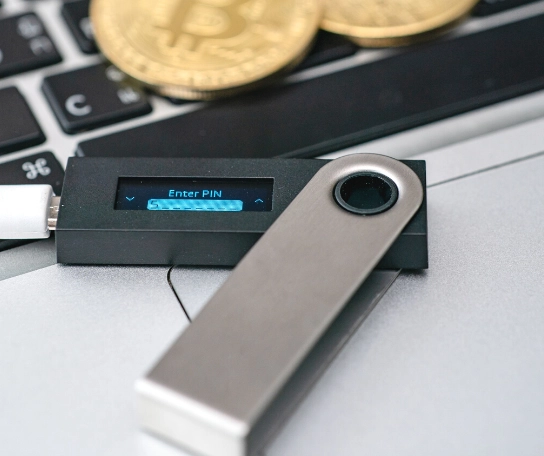
Choosing and Using Your Wallet: A Practical Guide
Wallets are your interface to the blockchain. Picking the right one and setting it up correctly is 80% of the battle.
| Wallet Type | Best For | Security Level | Key Consideration |
|---|---|---|---|
| Hardware Wallet (Cold Wallet) (e.g., Ledger, Trezor) |
Long-term storage of significant funds. Your primary vault. | Very High | Private keys never leave the device. Buy ONLY from the official manufacturer's website to avoid tampered devices. |
| Mobile/Desktop Wallet (Hot Wallet) (e.g., MetaMask, Trust Wallet) |
Smaller, daily-use funds. Interacting with DeFi, NFTs. | Medium | Your device's security becomes critical. Use a dedicated device if possible, with strong antivirus and no random software downloads. |
| Custodial Wallet (Exchange wallets like Coinbase, Binance) |
Active trading. Funds you're moving soon. | Variable (Depends on Exchange) | You do NOT control the private keys. The exchange does. Only keep what you can afford to lose if the exchange is hacked or fails. |
Here's my personal setup, which I recommend: Use a hardware wallet as your main vault. Connect it to a front-end interface like MetaMask for DeFi interactions, but always confirm transactions on the hardware device's screen. For small, frequent transactions, use a separate software wallet with a limited balance, like a spending wallet.
One subtle point everyone misses: when you first set up a hardware wallet, do it on a clean computer, not your daily driver full of software. The process of generating the seed phrase is the most critical moment.
Navigating Exchanges and DeFi Safely
You can't avoid exchanges entirely. But you can manage your risk.
On Centralized Exchanges (CEXs):
- Enable 2FA, but NOT SMS. Use an authenticator app like Google Authenticator or Authy. SIM-swap attacks are real and target SMS 2FA. According to the FBI's Internet Crime Complaint Center (IC3), crypto-related fraud often involves SIM-swapping.
- Use Whitelisting. Most top exchanges let you whitelist withdrawal addresses. Once set, crypto can only be sent to those addresses. It adds a crucial 24-48 hour delay if an attacker gets into your account.
- Withdraw Regularly. Don't let large sums sit on an exchange. The mantra is "Not your keys, not your coins." Move profits to your hardware wallet.
On DeFi Platforms:
DeFi is the wild west. The code is law, and bugs are exploited ruthlessly.
Always review transaction details in your wallet pop-up. Does the contract you're approving match the famous, verified contract? Is it asking for unlimited spending approval? If so, consider revoking it later using a tool like Revoke.cash.
The Human Layer: Outsmarting Scams and Yourself
Technology fails, but human error is the biggest vulnerability. Scammers are psychologists, not hackers.
Common Scams You Must Recognize
The "Support" Scam: You get a DM from someone pretending to be official support. They'll ask for your seed phrase to "verify" your wallet or help with a problem. Real support never asks for your seed phrase. Ever.
The Airdrop / NFT Scam: You receive a mysterious NFT or token in your wallet. The link in its description takes you to a site that asks you to connect your wallet and "claim" more. The site is malicious and will drain your funds the moment you sign the transaction.
The Sophisticated Phishing Email: It looks exactly like an email from Coinbase or Ledger, warning of suspicious activity. The link goes to a perfect clone of the login page. You enter your credentials, and they're gone. Always navigate to sites directly, never click email links for sensitive accounts.
My rule? Assume everyone is trying to scam you until proven otherwise. Be paranoid. It saves money.
Going Further: Advanced Operational Security
Once you've got the basics down, consider these steps for larger portfolios.
- Use a Multisig Wallet: For significant wealth, a multisignature wallet requires 2 or 3 out of 5 keys to approve a transaction. You can store these keys in different locations (hardware wallets, safes). It's complex but adds a massive layer of security against a single point of failure.
- Dedicated Devices: Use one computer only for crypto. No email, no web browsing, no games. This drastically reduces malware risk.
- Separate Your Identity: Don't use the same username or email for your crypto exchanges that you use on social media. Make it harder for attackers to connect your online persona to your crypto holdings.
Security isn't a destination; it's a habit. Review your practices every few months. Update software. Check for unauthorized connected apps.
Questions You're Probably Asking
Is a hardware wallet absolutely necessary for crypto security?
Where is the safest place to store my seed phrase?
How can I tell if a crypto exchange or DeFi platform is secure enough to use?
I clicked a phishing link but didn't enter my seed phrase. Am I safe?
Reader Comments