If you're looking at XRP USD, you're probably trying to figure out if it's a good time to buy, sell, or just understand what all the fuss is about. You're not alone. The price of XRP against the US dollar isn't just a number on a screen—it's a real-time battleground of legal news, market sentiment, and technological adoption. I've been trading this pair since 2018, and let me tell you, it's a rollercoaster that teaches you more about patience than any other asset. This guide cuts through the noise. We'll break down what actually moves the price, show you exactly how to trade it, and share strategies that go beyond the basic "buy low, sell high" advice you see everywhere else.
Your Quick Navigation
What Really Moves the XRP USD Price?
Forget the generic "supply and demand" explanation. With XRP, the drivers are hyper-specific. Most newcomers get this wrong. They stare at the chart, see a spike, and assume it's pure speculation. Often, it's not.
The single biggest factor, hands down, is news related to Ripple's ongoing lawsuit with the U.S. Securities and Exchange Commission (SEC). A positive court ruling can send the XRP to USD price soaring 50% in a day. A negative development can crush it just as fast. You need to follow this like a hawk. Official court documents are published on the SEC's website and via legal news services like Law360.
Beyond the lawsuit, you have two other core drivers.
Market Sentiment & Bitcoin's Shadow
XRP doesn't live in a vacuum. When Bitcoin (BTC) rallies or crashes, it drags the entire crypto market, including XRP USD, with it. This correlation isn't always 1:1, but it's strong. During a full-blown crypto bull run, even mediocre altcoins pump. During a bear market, even the strongest projects bleed. Check the BTC dominance chart on CoinMarketCap. If Bitcoin is dominating, XRP's individual news might matter less.
Adoption & On-Chain Activity
This is the long-term game. RippleNet's growth and the adoption of its On-Demand Liquidity (ODL) product for cross-border payments directly increase the utility—and potentially the value—of XRP. Watch for partnership announcements with major banks or financial institutions. A deal with a large remittance company is more meaningful than ten deals with tiny fintech startups. Resources like Messari's quarterly reports on XRP provide deep dives into on-chain metrics like active addresses and transaction volume.
A Step-by-Step Guide to Trading XRP for USD
Let's get practical. You want to convert your US dollars into XRP, or vice versa. Here’s exactly how to do it, avoiding the common pitfalls.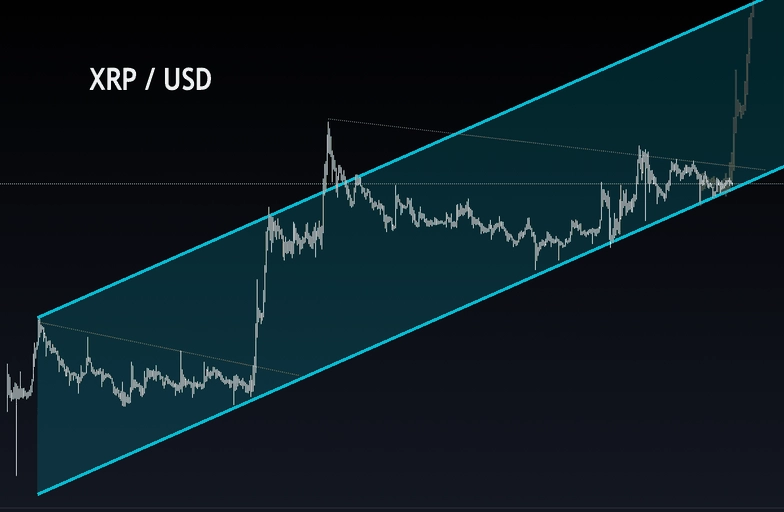
Step 1: Choosing Your Battlefield (The Exchange)
Not all exchanges are created equal. Your choice depends on your location, how much you're trading, and whether you want to hold the XRP yourself.
| Exchange | Best For | Key Consideration | USD Deposit Method |
|---|---|---|---|
| Coinbase | Beginners in the U.S. | Extremely user-friendly, but higher fees. Fully regulated. | Bank Transfer (ACH), Debit Card |
| Kraken | Intermediate traders | Better fees than Coinbase, strong security reputation. | Bank Transfer (Wire, ACH) |
| Binance.US | Active traders seeking low fees | Not available in all U.S. states. Check your eligibility first. | Bank Transfer (ACH), Debit Card |
| Uphold | Traders who also want easy fiat withdrawals | Unique "Anything to Anything" trading pairs. Direct XRP withdrawals to external wallet are seamless. | Bank Transfer, Debit/Credit Card |
My personal go-to for larger amounts is Kraken. Their fee structure is clearer, and I've had fewer issues with customer support. For a quick, small trade, I might use Coinbase despite the fee because it's just faster for me.
Step 2: Funding Your Account & Placing an Order
Once your account is verified—a process that can take a few hours to a couple of days—link your bank account. ACH transfers are usually free but take 3-5 business days. Wire transfers are faster (same/next day) but often have a fee from your bank.
Now, the order. Don't just click "Buy."
- Market Order: Buys XRP instantly at the best available price. Use this if speed is critical and the market is calm.
- Limit Order: You set the price. "Buy XRP at $0.50 USD." The order only fills if the market hits your price. This is my default. It prevents you from overpaying during a sudden spike.
Step 3: Withdrawal & Storage - The Non-Negotiable Step
If you're not actively trading, do not leave your XRP on the exchange. Exchanges can be hacked (remember Mt. Gox?). They can also freeze withdrawals during extreme volatility.
Withdraw your XRP to a personal wallet. For beginners, a software wallet like Exodus or Trust Wallet is a good start. For significant holdings, invest in a hardware wallet like a Ledger Nano X or Trezor. It's the difference between keeping cash in your pocket versus in a bank vault you don't control.
Beyond the Basics: Trading Strategies & Risk Management
Okay, you know how to buy. Now, how do you not lose your shirt? This is where most guides stop. Let's go deeper.
Strategy 1: The News Trader (High Risk, High Stress)
This involves positioning yourself before major lawsuit updates. It's gambling unless you have a legal background to interpret filings. I tried this in 2021. The stress wasn't worth the 10% gain I scraped out. The pros have algorithms scanning court dockets. You don't.
Strategy 2: Dollar-Cost Averaging (DCA) - The Boring Winner
This is my core strategy for building a long-term position. You invest a fixed dollar amount (e.g., $100) in XRP USD at regular intervals (e.g., every week), regardless of the price. When the price is high, you buy fewer XRP. When it's low, you buy more. It removes emotion and timing from the equation. Set it up automatically on an exchange like Coinbase or Kraken and forget it. Over 2-3 years, this almost always beats trying to time the market.
Strategy 3: Technical Analysis for Swing Trades
For active trading, you need to read the chart. Key levels for XRP USD are well-established from years of trading.
- Support: The price level where buying interest tends to emerge. For XRP, $0.40-$0.45 has been a major support zone. A break below can signal further decline.
- Resistance: Where selling pressure builds. The $0.75-$0.85 area has been a tough ceiling to break.
- Volume: A price move on high volume is more significant than one on low volume. It shows conviction.
Don't get lost in 20 indicators. Start with simple moving averages (like the 50-day and 200-day) and the Relative Strength Index (RSI). An RSI above 70 suggests overbought conditions (maybe time to sell some). Below 30 suggests oversold (maybe time to buy).
Reader Comments