Key Sections
- How Does Bitcoin Actually Work? The Engine Under the Hood
- Getting Your Hands on Bitcoin: A Step-by-Step Reality Check
- So, Should You Invest in Bitcoin? Let's Talk Honestly
- Beyond the Price: What Can You Actually *Do* With Bitcoin?
- The Future of Bitcoin: Speculation and Challenges
- Your Bitcoin Questions, Answered (FAQ)
Let's be honest. You've heard the word "Bitcoin" thrown around everywhere. From your tech-savvy cousin's dinner table rants to alarming headlines about millionaires and bankruptcies. It's confusing, right? One day it's the future of money, the next it's a scam. I remember the first time I tried to buy some Bitcoin years ago. The process felt like trying to open a bank account on Mars. Wallets, private keys, exchanges... my head was spinning.
So, what is this thing really? Is it magic internet money? A speculative bubble? Or something fundamentally new? I'm not here to shill it or scare you away. My goal is to strip away the noise and give you a clear, practical, and honest look at Bitcoin. We'll cover everything from the absolute basics to the nitty-gritty details that most guides gloss over. By the end, you'll have a solid understanding, not just buzzwords.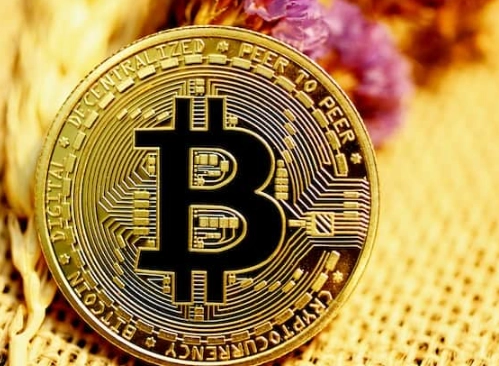
Bitcoin (often abbreviated as BTC) is a decentralized digital currency. There's no central bank or single administrator. It operates on a peer-to-peer network where transactions are verified by network nodes through cryptography and recorded on a public ledger called a blockchain. It was invented in 2008 by an unknown person or group using the name Satoshi Nakamoto.
That's the textbook definition. But let's unpack what that actually means for you and me.
How Does Bitcoin Actually Work? The Engine Under the Hood
Forget the complex jargon for a second. Imagine a giant, public Google Sheet that everyone in the world can see, but no single person or company controls. This sheet records every single Bitcoin transaction ever made. That's the blockchain in a very simple nutshell. It's not stored in one place; it's copied across thousands of computers worldwide.
When you send Bitcoin to a friend, you're broadcasting a message to this network: "Hey, I want to send 0.05 BTC from my address to Sarah's address." The network then checks its public ledger to make sure you actually have that 0.05 BTC to send. Once verified, your transaction is bundled with others into a "block." This block is then cryptographically sealed and linked to the previous block, forming a chain—hence, blockchain.
The Role of Miners (It's Not Just Digging)
Who does the verifying and sealing? This is where miners come in. They're not people with pickaxes, but powerful computers running special software. These computers race to solve an incredibly complex mathematical puzzle. The first one to solve it gets to add the new block of transactions to the blockchain and is rewarded with newly created Bitcoin (this is called the "block reward") plus any transaction fees attached to those transactions.
This process is called Proof-of-Work. It's what secures the network. To fraudulently alter a transaction, a bad actor would need to redo the proof-of-work for that block and all following blocks, which would require more computing power than the entire honest network. It's practically impossible, making the Bitcoin ledger incredibly secure and tamper-proof.
But here's a personal gripe: the energy consumption. All those computers solving puzzles use a lot of electricity. It's Bitcoin's biggest environmental criticism, and honestly, it's a valid concern. Proponents argue it's securing a global monetary system and that much of the energy is increasingly from renewable sources, but the debate is far from settled.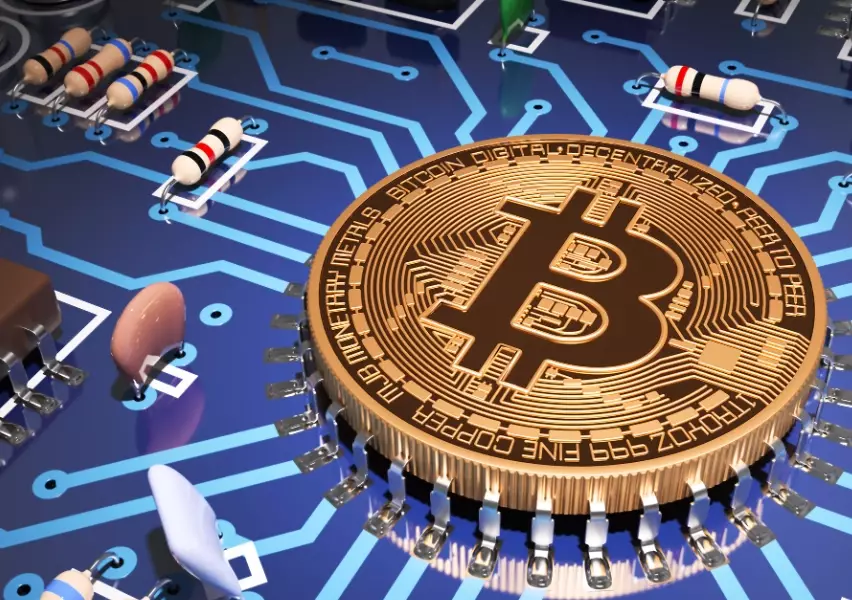
Getting Your Hands on Bitcoin: A Step-by-Step Reality Check
Okay, so you understand the concept. How do you actually get some? The process is much easier now than when I started, but it still requires careful steps.
First, you need a wallet. This isn't a physical leather wallet. It's a software program (or a hardware device) that stores your cryptographic keys. Think of it this way: your public key is your account number—you can share it with people so they can send you Bitcoin. Your private key is your super-secret password that allows you to spend your Bitcoin. Lose your private key, and your Bitcoin is gone forever. No customer service can recover it. This is non-negotiable.
There are a few main types of wallets:
| Wallet Type | Best For | Security Level | Drawbacks |
|---|---|---|---|
| Custodial Wallet (on an Exchange) | Beginners, small amounts, active trading. | Medium (You trust the exchange). | You don't control your private keys. The exchange does. If they get hacked or go bankrupt, you could lose funds. |
| Software Wallet (Mobile/Desktop) | Easy access, daily use. | Medium-High (You control keys). | Your device could be hacked or infected with malware. |
| Hardware Wallet (e.g., Ledger, Trezor) | Long-term storage of significant amounts. | Very High (Keys stored offline). | Costs money ($50-$200), slightly less convenient for frequent use. |
| Paper Wallet | Ultra-long-term, cold storage. | Extreme (Fully offline). | Inconvenient, paper can be lost, damaged, or fade. |
My advice? Start with a small amount on a reputable exchange like Coinbase or Kraken to get a feel for it. If you decide to invest more seriously, move the majority to a hardware wallet. "Not your keys, not your coins" is a mantra in the crypto world for a reason.
Where to Buy Bitcoin
Once you have a wallet address from your chosen wallet, you need to buy Bitcoin with traditional currency (like USD, EUR). The main avenues are:
- Centralized Exchanges (CEXs): The most common method. You create an account, verify your identity (this process, called KYC, can be a hassle), link a bank account or card, and buy. Examples: Coinbase, Kraken, Binance.
- Peer-to-Peer (P2P) Platforms: Connect directly with another person who wants to sell Bitcoin. The platform acts as escrow. Offers more privacy and sometimes more payment methods. Example: LocalBitcoins (though its landscape has changed).
- Bitcoin ATMs: Physical kiosks. Fast and anonymous (to a limit), but they charge extremely high fees—often 10-15%. I'd avoid these unless it's a tiny amount for experimentation.
Fees matter. Always check the fee structure before buying.
So, Should You Invest in Bitcoin? Let's Talk Honestly
This is the million-dollar question, literally. I can't tell you what to do with your money. But I can lay out the common arguments for and against, so you can make an informed decision.
⚠️ Critical Warning: Bitcoin is highly volatile. Its price can swing 10-20% in a single day. You should only invest money you are prepared to lose entirely. It is not a "get rich quick" scheme. Many people have lost money chasing peaks.
The Case For Bitcoin (The Bullish Perspective)
- Digital Gold / Store of Value: Its supporters call it "digital gold." Like gold, it's scarce (only 21 million will ever exist), durable, portable, and fungible. But it's infinitely easier to transfer across borders. In countries with unstable currencies or capital controls, Bitcoin offers an escape hatch.
- Decentralization & Censorship Resistance: No government or bank can freeze your Bitcoin account or stop you from sending value. This is powerful for people in oppressive regimes or for those who prioritize financial sovereignty.
- Inflation Hedge (The Narrative): With central banks printing money, some see Bitcoin's fixed supply as a hedge against currency devaluation. This narrative has gained traction, though it's still being tested.
The Case Against Bitcoin (The Bearish Perspective)
- Extreme Volatility: Makes it a poor medium of exchange and a stressful store of value in the short term. Can you imagine buying coffee with an asset that might double in value tomorrow?
- Regulatory Uncertainty: Governments are still figuring out how to handle it. Crackdowns or unfavorable regulations in major economies can crash the price.
- Environmental Impact: As mentioned, the Proof-of-Work energy use is a massive point of contention.
- Use Case Evolution: Is it a currency, an investment asset, or a settlement layer? Its primary use case is still debated, which adds risk.
My own view is messy. I think the technology is revolutionary. The idea of a decentralized, global, neutral ledger is profound. But as an investment, it's a wild rollercoaster. I have a small portion of my portfolio in it, but it's money I've mentally written off. The peace of mind is worth more than potential gains.
Beyond the Price: What Can You Actually *Do* With Bitcoin?
Everyone focuses on the price, but what's the point if you can't use it? The ecosystem is growing, albeit slowly for everyday purchases in many countries.
- Send Money Internationally: This is where it shines. Sending $10,000 overseas via a bank can take days and cost hundreds in fees. Sending the equivalent in Bitcoin can take 10-60 minutes and cost a few dollars, regardless of amount.
- Online Purchases: A growing number of online retailers accept it, especially in tech, gaming, and privacy-focused sectors. Some companies like Overstock and Newegg have accepted it for years.
- Donations & Remittances: Non-profits and content creators use it to receive borderless donations. People working abroad use it to send money back home cheaper and faster than services like Western Union.
- As Collateral: In the decentralized finance (DeFi) world, you can lock up your Bitcoin as collateral to borrow stablecoins or other assets. This is advanced and carries significant risks.
Is it your primary spending money yet? No, not really. But the utility is expanding beyond just "HODLing" (a meme term meaning to hold on for dear life).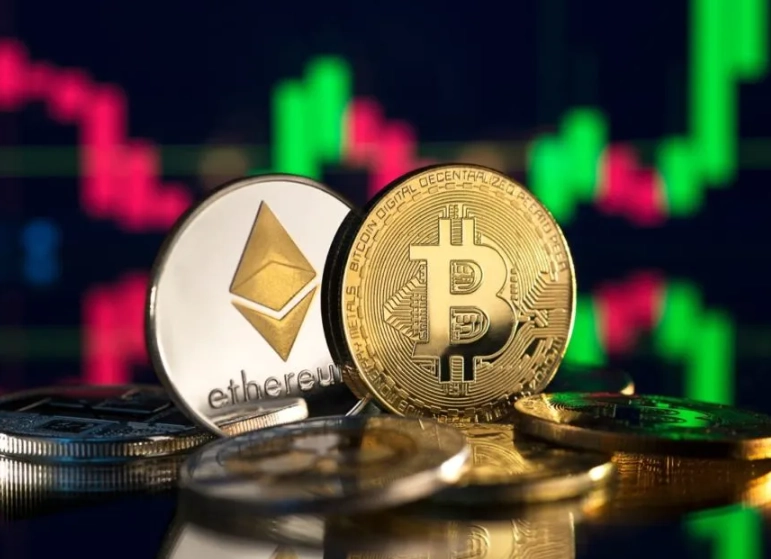
The Future of Bitcoin: Speculation and Challenges
Crystal balls are notoriously cloudy. Bitcoin's future hinges on a few key battles.
Scalability: The base Bitcoin network can only process about 7 transactions per second. Visa does tens of thousands. This leads to congestion and high fees during busy periods. Solutions like the Lightning Network (a "layer 2" protocol) aim to solve this by creating fast, cheap payment channels off the main chain. It's promising but still in development.
Regulation: Will governments embrace it, regulate it into a corner, or try to ban it? The approach varies wildly. El Salvador made it legal tender. China banned mining and trading. The US is taking a more piecemeal, agency-by-agency approach. This uncertainty is a major overhang.
Competition: Thousands of other cryptocurrencies (altcoins) exist, many claiming to be faster, greener, or more feature-rich. Ethereum, for example, is more of a programmable world computer. Will Bitcoin remain the dominant store of value, or will a competitor dethrone it? Its first-mover advantage and brand recognition are massive moats.
The next decade will be defining.
Your Bitcoin Questions, Answered (FAQ)
I've gotten a lot of the same questions from friends and readers. Let's tackle them head-on.
Is Bitcoin Anonymous?
No. It's pseudonymous. All transactions are public and permanently recorded on the blockchain. Your identity isn't directly attached to your wallet address, but if someone can link that address to you (through an exchange KYC, you posting it online, etc.), they can see your entire transaction history. For true privacy, additional tools are needed, which is complex.
How Do Taxes Work with Bitcoin?
In most countries, including the US and UK, Bitcoin is treated as property for tax purposes, not currency. This means:
- Selling Bitcoin for fiat (like USD) is a taxable event.
- Trading Bitcoin for another cryptocurrency is a taxable event.
- Using Bitcoin to buy a good or service is a taxable event (you've "disposed" of an asset).
You owe capital gains tax on the profit (sale price minus purchase price). Keep meticulous records of every transaction. This is a huge pain point for users.
What's "Halving" and Why Does Everyone Talk About It?
Approximately every four years, the block reward given to miners is cut in half. This is programmed into Bitcoin's code. The most recent halving was in 2024, reducing the reward from 6.25 to 3.125 BTC per block. Why does it matter? It controls the new supply of Bitcoin. The theory is that if demand stays the same or increases while new supply is cut, the price should rise. Past halvings have been followed by major bull markets, but past performance is no guarantee.
Is Bitcoin a Bubble?
It has certainly exhibited bubble-like characteristics in its past cycles (2013, 2017, 2021). Massive price run-ups followed by brutal 80%+ crashes. Whether it's a bubble that will eventually pop to zero or an asset finding its price through volatile cycles is the core debate. Its persistence and continued development over 15+ years suggest it's more than a simple Ponzi scheme, but the volatility is undeniable.
How Do I Start Learning More?
Start with the source: read (or at least skim) the original Bitcoin whitepaper by Satoshi Nakamoto. It's surprisingly readable.
For data and charts, CoinMarketCap and CoinGecko are industry standards.
For news, be wary of hype-driven outlets. CoinDesk and The Block are more established.
So, where does that leave us? Bitcoin is a fascinating, frustrating, and world-changing experiment. It's not for everyone. The technology is robust and secure. The investment thesis is high-risk, high-potential-reward. The user experience is getting better but still has rough edges.
If you take anything away from this, let it be this: Do your own research. Understand what you're buying before you put a single dollar into Bitcoin. Start small. Secure your keys. And never, ever invest more than you can afford to lose. The world of Bitcoin is exciting, but it demands respect and a clear head.
Maybe it will become the backbone of a new financial system. Maybe it will remain a niche digital asset. Only time will tell. But now, at least, you have the tools to understand the conversation.
Reader Comments