You see the price jump 5% on a Tuesday morning. Your Twitter feed is suddenly full of euphoric "To the moon!" posts. A major financial news outlet runs a headline about institutional adoption. What does it all mean for Bitcoin? Most people look at the price and stop there. That's a mistake. The true BTC market meaning is a layered story told through price action, collective psychology, and hard data on the blockchain itself. If you only listen to one narrator, you'll miss the plot. Let's decode all three.
What You'll Learn in This Guide
How to Read BTC Price Action Like a Pro
Price is the most obvious signal, but it's also the noisiest. The key isn't just the number; it's the how and where.
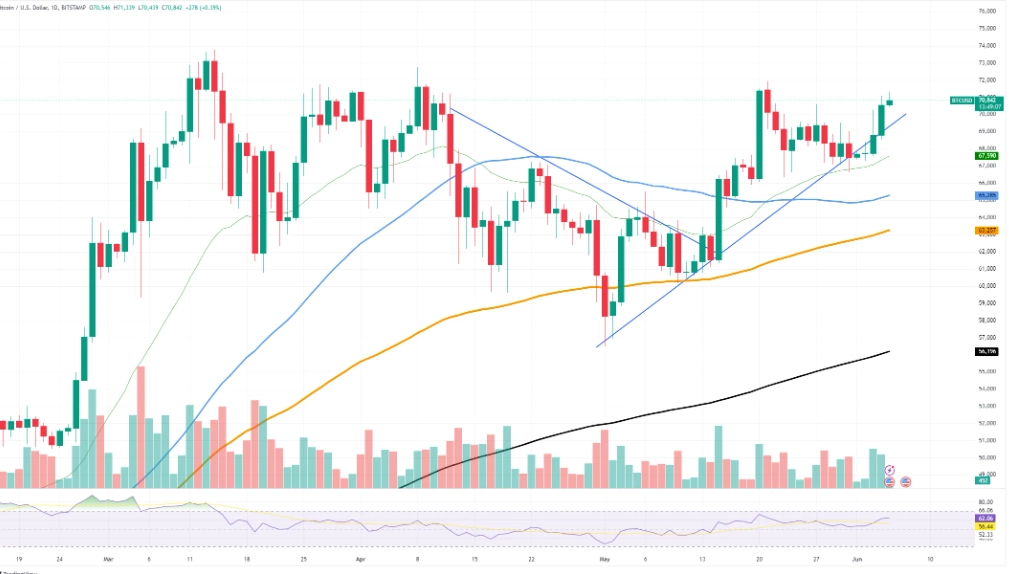
Think of support and resistance levels not as magic lines, but as zones where a large number of past decisions were made. A true breakout above a major resistance zone (say, $68,000) on high volume is a much stronger signal than a tiny wick that briefly touches it. I've seen traders get excited about a wick, only to watch the price slam back down. Volume confirms the story. Low-volume moves are often fakeouts.
Then there's the market structure. Are we making higher highs and higher lows (uptrend)? Or lower highs and lower lows (downtrend)? This seems basic, but in a choppy market, it's easy to lose the forest for the trees. Zoom out to the weekly chart. The daily noise fades, and the real trend becomes clearer.
Beyond the Basic Chart: Order Book Depth
This is where many retail investors never look, and it's a goldmine. The order book shows all the buy and sell orders waiting to be filled. A thick wall of buy orders just below the current price suggests strong support—many people are waiting to buy the dip. A massive sell wall above suggests resistance.
But be wary. These walls can be spoofed—large orders placed to manipulate perception and then canceled. I look for consistency. Does a sell wall at $70,000 persist across multiple major exchanges like Coinbase and Binance? If it's only on one smaller exchange, it's less credible.
What Market Sentiment Really Tells You (And What It Doesn't)
If price is the "what," sentiment is the "why" behind the crowd's moves. It's the fear, greed, hope, and panic that fuel the volatility.
The Crypto Fear & Greed Index is a great starting point. It aggregates data from volatility, market momentum, social media, surveys, and dominance. When it hits "Extreme Greed" (above 80), it's often a contrarian indicator—a sign the market is overheated and due for a pullback. "Extreme Fear" (below 20) can signal a buying opportunity.
The catch? This index is often a lagging indicator. It confirms what just happened. By the time it hits "Extreme Fear," the sharpest drop may already be over. I use it more as a context-setting tool than a timing tool.
Social Media & News: The Narrative Machine
Twitter, Reddit, and headlines create narratives that move markets. A positive narrative around Bitcoin ETF inflows can drive prices up. A negative narrative about regulatory crackdowns can tank it.
The subtle error here is taking narratives at face value. In early 2023, every piece of positive economic news was framed as "bad for Bitcoin" because it meant less chance of Federal Reserve rate cuts. The market sometimes moved on this logic, but not always. The relationship is messy. You need to gauge the intensity and consensus of the narrative. Is everyone saying the same thing? That's when a surprise move is most likely.
Tools like Santiment's social trends or LunarCrush track social volume and dominance. Seeing "Bitcoin" social volume spike while the price is flat can be a precursor to a big move, as it shows building attention.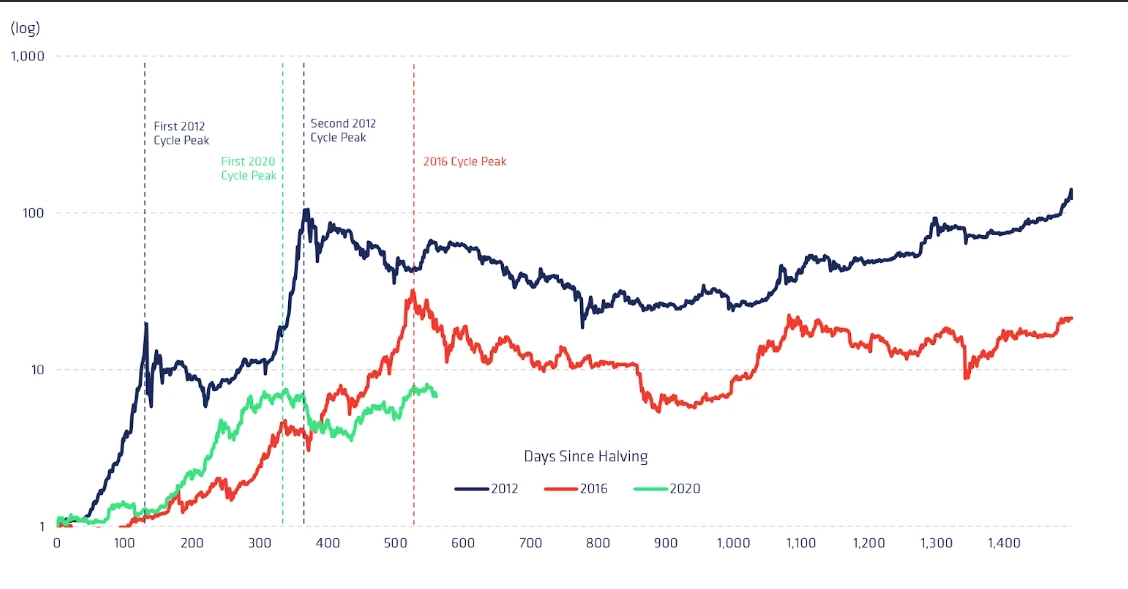
The On-Chain Data Decoder: From HODLing to Profit-Taking
This is the most objective layer—the raw activity recorded on Bitcoin's blockchain. It tells you what investors are actually doing, not what they're saying. For deep analysis, I rely on reports from firms like Glassnode and CoinMetrics.
Here are the metrics I watch like a hawk:
Net Unrealized Profit/Loss (NUPL): This shows whether the network as a whole is in profit or loss. When NUPL goes into the "Euphoria" zone (high profit), it often coincides with market tops. When it's deep in the "Capitulation" zone (high loss), it can mark bottoms. It's a powerful macro indicator.
Spent Output Profit Ratio (SOPR): This measures whether coins being spent that day are, on average, moved at a profit or loss. A SOPR consistently above 1 means investors are taking profits. A SOPR below 1 means they're selling at a loss (capitulation). I look for shifts. A sustained move of SOPR above 1 after a long bear market is a very bullish sign of returning confidence.
Active Addresses & Network Growth: Are more or fewer people using the network? Stagnant or falling active addresses during a price rally is a major divergence and a warning sign. It suggests the rally is driven by speculation, not organic use or new adoption.
| On-Chain Metric | What It Measures | Bullish Signal | Bearish Warning |
|---|---|---|---|
| HODLer Net Position Change | Whether long-term holders are accumulating or distributing. | Sustained accumulation during price dips. | Long-term holders start distributing en masse. |
| Exchange Net Flow | Net BTC moving into/out of exchange wallets. | Large, sustained outflows (moving to cold storage). | Large, sustained inflows (preparing to sell). |
| MVRV Z-Score | How far current price deviates from "fair value" (realized cap). | Deep negative value (undervalued). | High positive value (overvalued). |
Putting It All Together: A Real-World Scenario
Let's say Bitcoin pumps 15% in a week. Here's how I'd assess it:
Price Action: Did it break a key resistance level with high volume? Or is it stuck below a known wall? Check the weekly chart.
Sentiment: Is the Fear & Greed Index jumping from Fear to Greed? Is social media exploding with bullish calls from new accounts? That can signal a short-term top is near.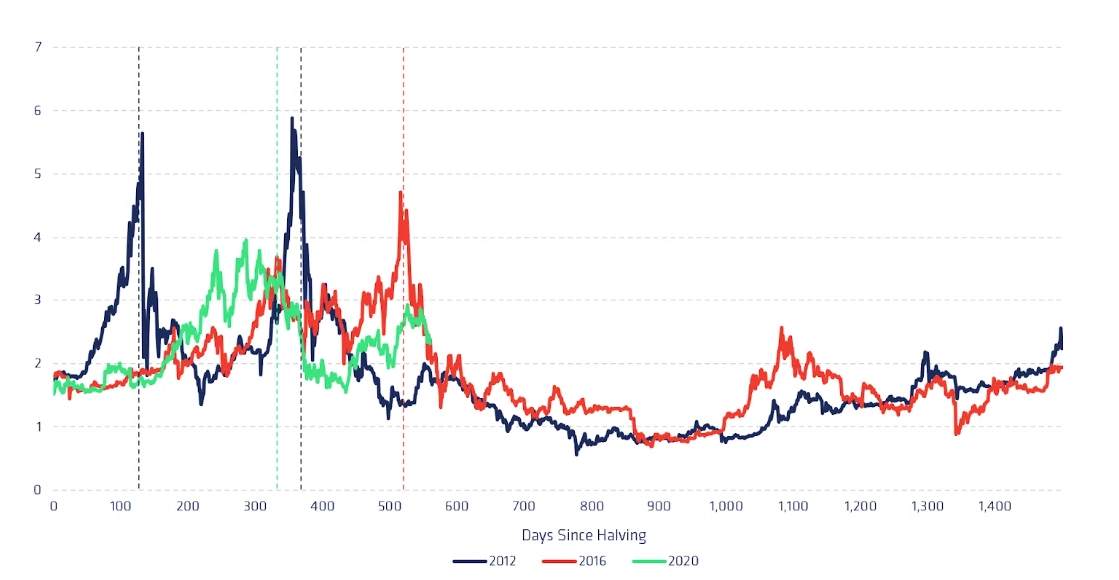
On-Chain: This is the truth serum. Check the Exchange Net Flow. If the price is rising but BTC is flowing onto exchanges, smart money might be preparing to sell into the strength. Check SOPR. If it's sharply above 1, old hands are taking profits. If NUPL is entering the Euphoria zone, the rally is mature.
If all three align bullishly—breakout on high volume, sentiment not yet euphoric, and on-chain shows accumulation (outflows from exchanges, HODLers holding)—that's a high-conviction signal. If they conflict, the market meaning is unclear, and it's time for caution.
3 Costly Mistakes When Interpreting the BTC Market
- Over-Indexing on One Signal: Falling in love with a single indicator (like the Fear & Greed Index) is dangerous. I did this early on. The market is multi-dimensional. You need confluence from price, sentiment, and on-chain data.
- Misreading On-Chain Activity: A spike in new addresses could be genuine user growth or it could be a single entity creating thousands of spam wallets. Look at the sustainability and context. Reports from Glassnode often highlight these nuances.
- Letting Narrative Override Data: When a compelling story ("This ETF will change everything!") is everywhere, it's easy to ignore weakening on-chain fundamentals or poor price structure. The data is often less exciting but more honest.
Your Burning Questions Answered
 The Fear & Greed Index is in Extreme Fear, but the price keeps falling. When is it actually a buy signal?
 How reliable are predictions based on past halving cycles for understanding current market meaning?
Reader Comments