If you've been in crypto for a while, you've seen the pattern. First, whispers about "regulatory concerns." Then, a major exchange announces it's delisting Monero (XMR) for users in a specific country. Finally, the news hits: another jurisdiction has effectively banned privacy coins, with Monero at the top of the list. It's not speculation anymore; it's a sustained global trend. But the question most people get wrong is "why?" They think it's just about crime. That's a surface-level answer. The real reasons are a tangled web of financial regulation, technological fear, and a fundamental clash between the ethos of cryptocurrency and modern state power.
I've watched this unfold for years, talking to compliance officers who sweat over Monero transactions and developers who are genuinely puzzled by the hostility. The ban isn't about a single event. It's about Monero working exactly as designed.
What You'll Find in This Guide
- Where Is Monero Actually Banned? (It's Not Everywhere)
- Why Exports Are Delisting Monero: The Compliance Bottleneck
- The 3 Core Reasons Regulators Want Monero Gone
- How Monero's Privacy Works (And Why It Scares Authorities)
- What's Next for Monero and Privacy Coins?
- Your Monero Regulation Questions, Answered
Which Countries Have Banned Monero?
Let's be precise. There's a spectrum from "restricted" to "fully illegal." Saying "Monero is banned" globally is false and creates unnecessary FUD. The situation is fragmented, which is actually more telling.
Key Distinction: A country "banning" Monero often means prohibiting regulated financial institutions (exchanges, banks) from offering it to customers. It doesn't always mean individual possession is a crime, though that's the practical outcome for most users.
Here are the frontline jurisdictions in the crackdown:
Japan is the classic case study. In 2018, the Japanese Financial Services Agency (FSA) directed cryptocurrency exchanges to delist privacy coins. Their reasoning was squarely focused on Anti-Money Laundering (AML) compliance. Exchanges like Coincheck and bitFlyer complied. Japan's move was significant because it's a major, tech-forward market that initially embraced crypto. It set a precedent that other regulators watched closely.
South Korea followed a similar path. While not a single legislative act named Monero, the Financial Services Commission (FSC) and Financial Intelligence Unit (FIU) have enforced strict rules that make offering privacy coins untenable for licensed exchanges. The "Travel Rule" implementation, which requires identifying information to travel with transactions, is impossible to satisfy with Monero by design.
Then you have places like Dubai's Virtual Assets Regulatory Authority (VARA). In 2023, VARA's marketing regulations explicitly prohibited the promotion of "Anonymity-Enhanced Cryptocurrencies (AECs)," a direct reference to coins like Monero. You can't advertise it.
More broadly, the pressure comes from international bodies. The Financial Action Task Force (FATF), whose recommendations shape laws in over 200 countries, has consistently flagged the risks of virtual assets with "enhanced anonymity features." While not a direct ban, a FATF "red flag" is enough for a national regulator to take action. Countries aiming to stay off the FATF's "grey list" feel compelled to show they're tough on this issue.
It's a domino effect. One major regulator acts, others observe the lack of catastrophic backlash, and then they feel safer implementing their own restrictions.
Why Are Exchanges Delisting Monero?
This is where users feel the pain directly. You wake up to an email from Binance or Kraken saying Monero trading will be suspended. It's not (usually) because the exchange has a moral objection. It's a cold, calculated business decision about risk and access.
I spoke to a former compliance lead at a top-5 exchange (who asked not to be named). He put it bluntly: "Monero is a compliance officer's nightmare. Every transaction is a black box. When regulators or banking partners ask us to trace the source of funds for a suspicious account, we can say 'we tried' with Bitcoin or Ethereum. With Monero, we have to say 'it's impossible.' That's a conversation that ends with them threatening to cut off our fiat banking rails."
Fiat banking rails. That's the phrase to remember. Exchanges need traditional bank accounts to handle USD, EUR, GBP deposits and withdrawals. Banks are terrified of regulatory fines for AML failures. If a bank perceives an exchange is facilitating untraceable transactions, they will sever the relationship. No bank accounts, no business.
Look at the timeline:
- 2020: ShapeShift delists Monero, citing the need to comply with regulations.
- 2021: Bittrex removes XMR for US customers.
- 2024: Binance, the world's largest exchange, delists Monero. This was the watershed moment. Their announcement cited "compliance requirements." Industry insiders knew it was the cost of maintaining global banking partnerships and appeasing regulators in key markets.
For an exchange, listing Monero is an active liability. It attracts scrutiny without offering proportional trading fee revenue compared to giants like Bitcoin or Solana. The math is simple, even if it frustrates privacy advocates.
The 3 Unspoken Reasons Regulators Fear Monero
Beyond the official "AML/CFT" (Combating the Financing of Terrorism) boilerplate, the resistance to Monero runs deeper.
1. The Loss of Financial Surveillance
This is the big one. Modern states have grown accustomed to a level of financial transparency that would have been unthinkable 50 years ago. Tax authorities, intelligence agencies, and law enforcement rely on following the money. A truly private digital cash system breaks that capability. It's not just about catching criminals post-crime; it's about the deterrent effect of knowing transactions can be traced. Monero removes that deterrent entirely. For a regulator, that feels like going back to the age of untraceable cash, but on the global internet.
2. The Challenge to Capital Controls
Nations use capital controls to manage their economies—preventing massive, destabilizing outflows of money. Imagine a citizen in a country with strict controls using Monero to move wealth abroad. There's no intermediary to block it, no transaction to flag. This is a direct threat to a key policy tool for many governments, especially those with unstable currencies. It's a geopolitical concern, not just a criminal one.
3. The "Bad Example" Problem
Monero proves that strong, default-on privacy is technically feasible in a cryptocurrency. If it survives and thrives, it sets a precedent. What's to stop the next major smart contract platform from integrating similar features? Regulators fear a future where all crypto is private by default, making their current rulebook obsolete. By targeting the most successful and pure privacy coin now, they hope to deter the wider ecosystem from following its path.
A Quick Tech Breakdown: Why Monero Can't Be Traced
If you think Monero is just a "mixed" Bitcoin, you're missing the point. Its privacy is baked into the protocol's foundation.
Ring Signatures: When you make a Monero transaction, your signature is combined with several other decoy signatures from the blockchain. To an outside observer, every signature in the "ring" looks equally likely to be the real spender. It's like leaving a room with four identical doors; no one knows which one you used.
Stealth Addresses: Every transaction creates a one-time, unique address for the recipient. The public blockchain never shows the recipient's main address. Compare this to Bitcoin, where you can see that address "1ABC..." received 10 BTC from "1XYZ..." and then later sent 2 BTC to "1DEF...". That chain analysis is impossible with Monero.
Confidential Transactions (RingCT): The amount of every transaction is encrypted. You can verify the math is correct (no coins are created from thin air) without knowing the actual figures. On the Bitcoin ledger, everyone sees you sent 1.5 BTC. On Monero, they see a valid transaction of an unknown amount.
These three features work together to hide the sender, receiver, and amount on every single transaction, by default. It's not an optional feature you turn on. This is what makes it fundamentally incompatible with laws that demand visibility.
What's the Future for Monero and Privacy?
It's a tough road, but not a dead end. The bans and delistings force Monero into a specific niche: a peer-to-peer, over-the-counter (OTC), and decentralized exchange (DEX) asset. Its value proposition shifts from being a tradable speculative asset on Binance to being a functional tool for digital cash.
This is where the community's resilience is tested. Development remains active. Projects like Haveno (a decentralized exchange) and community-driven OTC platforms aim to create an ecosystem that doesn't rely on permissioned central exchanges. The network itself, the blockchain, keeps running regardless of what any government says.
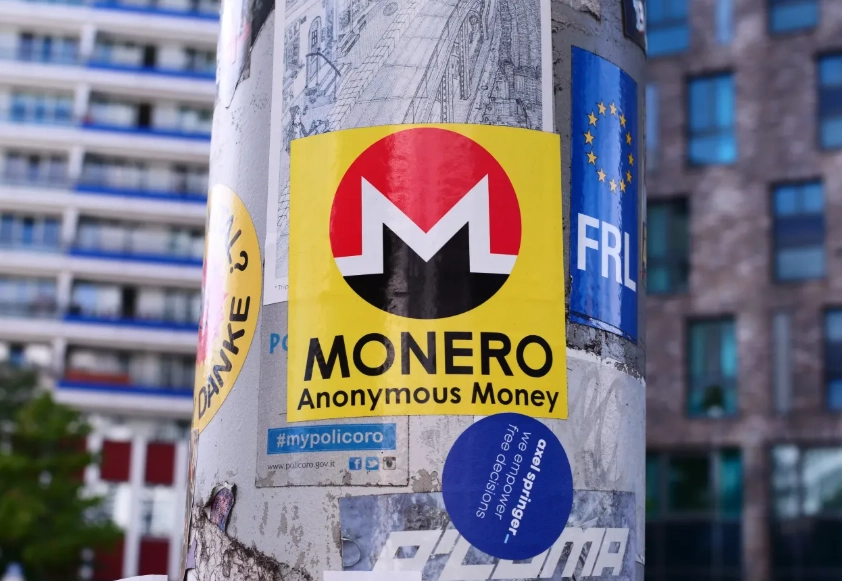 However, the regulatory noose will likely tighten. We can expect more countries to adopt explicit bans, especially those aligning with FATF standards. The pressure will extend from exchanges to other service providers: wallet providers, node hosts, and even miners in some jurisdictions.
The ironic twist? Every ban becomes a marketing point for Monero. It "proves" the technology works. For users who prioritize privacy above all else—and not all of them are criminals; think of journalists, activists, or ordinary people in oppressive regimes—the regulatory hostility confirms Monero's utility.
My view? Monero won't disappear. It will become the digital equivalent of a Swiss numbered account or physical gold bullion: harder to access legally, operating in a grayer area, but persistently valuable for a specific set of use cases. Its price might become more volatile and detached from the broader crypto market trends, reflecting its unique and contested status.
Your Monero Regulation Questions, Answered
 Are any countries becoming more friendly towards privacy coins?
Reader Comments