Let's get one thing straight: a decentralized autonomous organization isn't some magical, self-running robot company. It's a group of people who've agreed to play by a set of rules written in code. The "autonomous" part is a bit of a misnomer – humans are still very much in the driver's seat, making proposals and voting. The real shift is that the rulebook, the treasury, and the voting mechanisms are all managed by a smart contract on a blockchain, not a central CEO or board of directors. This changes everything about how we think about collective action and ownership.
I've been following this space since the early days of "The DAO" hack in 2016. Back then, it was pure chaos and idealism. Today, it's messy, complicated, and incredibly promising. This guide is for anyone who's heard the term DAO thrown around but wants to understand what it actually means to participate in one, start one, or just wrap your head around why they matter.
What's Inside?
The Core Components That Make a DAO Tick
Think of a DAO like a digital nation-state with a constitution. You can't have one without a few essential pieces.
Smart Contracts: This is the bedrock. The rules of engagement – how proposals are made, how voting works, how funds are released – are all encoded into a smart contract. Usually, this lives on Ethereum or a similar blockchain. It's transparent and, once deployed, very hard to change unilaterally. A common mistake newcomers make is thinking the code is perfect. It's not. It's only as good as the developers who wrote it and the community that audits it. The infamous hack of "The DAO" was due to a vulnerability in its smart contract code.
Governance Tokens: This is your passport and your voting power. Holding a DAO's governance token typically grants you the right to vote on proposals. Sometimes, one token equals one vote. Often, it's one *token* equals one vote, which leads to a problem we'll discuss later. You usually get tokens by contributing work, providing liquidity, or purchasing them.
A Treasury: The DAO's bank account, also managed by smart contracts. This holds the group's assets, which could be cryptocurrency (ETH, DAI, USDC) or even NFTs. Spending from this treasury requires a community vote, as per the rules in the smart contract.
A Community & Social Layer: This is the most human part. The code handles the "what," but the community on Discord, Telegram, or forums debates the "why." This is where proposals are discussed, alliances are formed, and the actual culture of the DAO is built. A DAO with a dead Discord server is a dead DAO, no matter how fancy its smart contract is.
How DAO Governance Actually Works in Practice
Governance is where the rubber meets the road. It's also where most DAOs stumble. The theory of one-person-one-vote quickly collides with the reality of token distribution.
The Token-Based Voting Problem
If voting power is proportional to tokens held, you get plutocracy – rule by the wealthiest token holders ("whales"). A whale with 40% of the tokens has 40% of the voting power. This can lead to voter apathy among smaller holders. Why bother voting if a few big players decide everything?
Some DAOs are experimenting with solutions:
- Quadratic Voting: Makes additional votes exponentially more expensive, theoretically reducing whale power. It's complex but interesting.
- Conviction Voting: Allows voters to stake tokens on a proposal over time, with their voting power growing the longer they support it. This filters out fleeting trends.
- Reputation-Based Systems: Voting power based on proven contributions, not just capital. This is harder to game but also harder to implement fairly.
Most DAOs still use simple token voting because it's easy. The governance platforms have made it plug-and-play.
The Tools of the Trade
Very few DAOs build their governance from scratch. They use platforms like:
| Platform | Best For | A Key Consideration |
|---|---|---|
| Snapshot | Off-chain, gas-free voting & signaling. | Great for gauging sentiment, but votes don't automatically execute on-chain actions. You need trusted multisig signers to implement results. |
| Tally | On-chain governance with built-in delegate discovery. | Votes are binding and execute directly via the smart contract. Requires gas fees, so it's more for serious, high-stakes decisions. |
| DAOstack | DAOs needing complex proposal pipelines. | Uses a "holographic consensus" model to surface the most relevant proposals. Steeper learning curve. |
The workflow is usually: Discuss on Forum -> Create Proposal on Snapshot/Tally -> Vote -> (If on-chain) Automatic Execution.
Beyond Hype: Real-World Use Cases for DAOs
Forget the abstract. What are people actually doing with this technology?
Protocol DAOs: These govern decentralized finance (DeFi) protocols. Think Uniswap or Compound. Token holders vote on things like fee structures, new asset listings, or treasury management. The protocol's code is often upgradeable only via DAO vote.
Investment DAOs: Like a digital venture fund or angel syndicate. Members pool capital (into a smart contract-controlled treasury) and vote on which startups, NFTs, or assets to invest in. LAO is a famous, legally-wrapped example based in the US.
Collector DAOs: Groups formed to collectively buy and manage high-value assets, usually NFTs. PleasrDAO is known for buying culturally significant NFTs like the original Doge meme image. Governance decides on buying, selling, and displaying the assets.
Grants & Philanthropy DAOs: These distribute funds to projects or causes. Gitcoin DAO funds public goods in the Web3 ecosystem. Contributors vote on which grant proposals receive funding from the community treasury.
Social & Community DAOs: Focused on membership and shared interests rather than heavy financial activity. Friends with Benefits ($FWB token) requires holding tokens to access its private chats and IRL events. Governance shapes the community's direction and events.
The Unspoken Challenges and Common Pitfalls
Nobody talks about this enough when they're selling the DAO dream.
The "Cold Start" Problem: Launching a DAO is hard. You need a critical mass of engaged, knowledgeable members from day one. A DAO with 10 people and $1000 in its treasury isn't decentralized or autonomous; it's just a group chat with extra steps.
Legal Gray Zone: In most jurisdictions, the legal status of a DAO is unclear. Is it a general partnership? An unincorporated association? This exposes members to potential joint liability. Some, like American CryptoFed DAO, are seeking formal legal recognition as a decentralized autonomous organization, but it's an uphill battle. You can't open a bank account for your DAO. The treasury is a blockchain wallet, which creates massive accounting and tax headaches for real-world operations.
Governance Inertia & Voter Apathy: This is the silent killer. After the initial excitement, participation rates in voting often plummet to the low single digits. The majority of token holders become passive, letting a small, dedicated (and sometimes self-interested) group steer the ship. It's a tragedy of the commons in digital form.
The Contributor Coordination Nightmare: How do you manage full-time contributors? Who sets their pay? How do you hold them accountable without a traditional HR department? Many DAOs use "workstreams" or "small teams" with budgets approved by the broader DAO, but it's messy. Getting paid in volatile governance tokens is another whole layer of complexity.
How to Get Started with a DAO (A Practical Walkthrough)
Ready to dive in? Here's a non-technical path from zero to participant.
Step 1: Lurk and Learn. Don't buy tokens immediately. Pick 2-3 DAOs in an area you're interested in (e.g., DeFi, art, gaming). Join their Discord servers. Read their forum posts on Commonwealth or Discourse. Follow a full governance cycle – from proposal discussion to vote to execution. See how the community interacts. Is it toxic or constructive?
Step 2: Make a Small Contribution. Earn your stripes. This is better than buying in. Can you write a summary of a complex proposal? Design a graphic for an upcoming event? Help moderate the Discord? Find a small task, do it well, and share it in the relevant channel. This builds social capital and often leads to being noticed by core contributors.
Step 3: Acquire Governance Tokens (If Necessary). If you want formal voting power, you'll likely need tokens. You might receive some as a reward for your contributions (a "grant" or "reward"). Otherwise, you can purchase them on a decentralized exchange like Uniswap. Do your own research. Understand what the token actually grants you (just voting? also fee revenue?).
Step 4: Participate Deliberately. Start voting on proposals. But don't just click "yes" or "no" randomly. Read the discussion. If a proposal lacks clear metrics for success or a detailed budget, be skeptical. Ask questions in the forum. Your vote is your voice.
Step 5: Consider Delegation. Don't have time to research every proposal? Most platforms allow you to delegate your voting power to someone you trust who is deeply involved. Choose a delegate whose commentary you've consistently found valuable and aligned with the DAO's long-term health.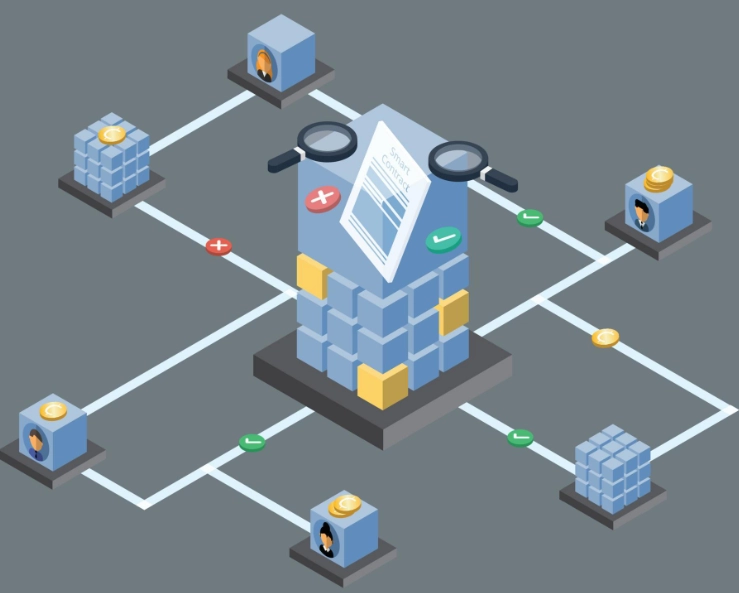
Reader Comments