Quick Navigation
- The Core of It All: What Makes Blockchain a Real-World Problem Solver?
- Where is Blockchain Used in Real Life? 12 Sectors Getting a Major Upgrade
- Comparing the Real-World Impact: A Quick Overview
- The Other Side of the Coin: Challenges and Real-World Hurdles
- Common Questions About Blockchain in the Real World
- Final Thoughts: The Quiet Revolution
Let's be honest. When most people hear "blockchain," their minds jump straight to Bitcoin, Dogecoin, or the wild price swings of the crypto market. It's all about digital money, right? Well, not quite. I used to think the same way until I started digging deeper. The real story—the one that's quietly transforming industries from the ground up—is happening far away from the trading charts and meme coins.
So, where is blockchain used in real life? The answer is everywhere you don't expect it. It's tracking the mango you buy at the supermarket, securing your medical records, and even proving the authenticity of a luxury handbag. It's the invisible layer of trust for the digital age. This isn't about replacing your bank account with digital tokens (at least, not yet for most of us). It's about solving fundamental problems of trust, transparency, and inefficiency that have plagued systems for decades.
Think of blockchain less as a cryptocurrency engine and more as a revolutionary ledger system. It's a shared, unchangeable database that records transactions and tracks assets across a network. The "block" is the digital record, and the "chain" is the public database that links them together. Once something is on there, it's incredibly difficult to alter or fake. That simple, powerful idea is what's driving its adoption in the real world.
The Core of It All: What Makes Blockchain a Real-World Problem Solver?
Before we jump into the examples, it's worth understanding why anyone bothers. Why go through the hassle of implementing a complex new technology? The answer lies in a few key features that are like a Swiss Army knife for broken systems.
First, decentralization. No single entity—not a company, not a government—has complete control. The record is maintained by a network of computers. This cuts out middlemen, reduces single points of failure, and theoretically, prevents manipulation.
Then there's immutability. Once a transaction is verified and added to the chain, it's sealed. You can't go back and secretly change an entry. This creates an audit trail that is permanent and transparent.
And finally, transparency. Depending on the type of blockchain (public vs. private), participants can see the entire history of transactions. This shared visibility builds trust among parties who might not otherwise trust each other.
So, with that foundation, let's get practical. Let's look at where this technology is actually rolling up its sleeves and getting to work.
Where is Blockchain Used in Real Life? 12 Sectors Getting a Major Upgrade
I've grouped these into areas you interact with, either directly or indirectly. This isn't an exhaustive list, but it covers the most impactful and mature applications happening right now.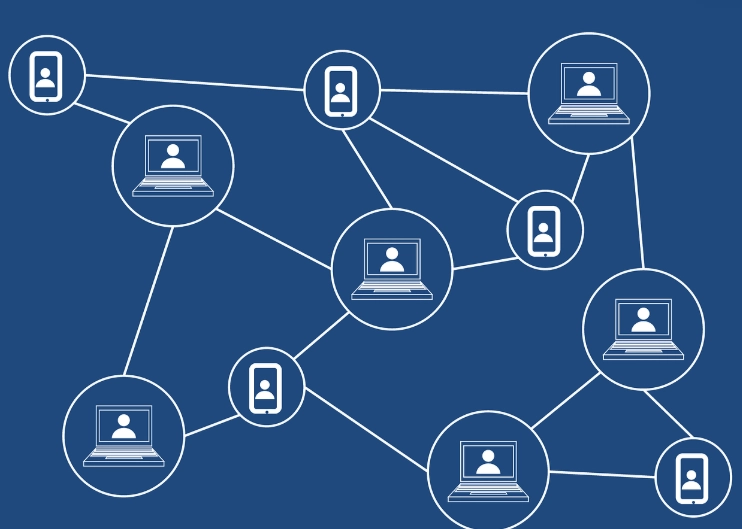
1. Supply Chain & Logistics: From Farm to Fork, with Full Visibility
This is, in my opinion, one of the most compelling answers to "where is blockchain used in real life?" Supply chains are nightmares of paperwork, blind spots, and finger-pointing. A product might change hands dozens of times before it reaches you. Blockchain introduces a single source of truth.
Real-World Example: IBM's Food Trust network is a classic case. Major retailers like Walmart use it to track food items. In a pilot, they traced the origin of mangoes from a store back to the farm in seconds, a process that previously took nearly 7 days using paper-based systems. For outbreaks of contamination, this speed is the difference between a targeted recall and a public health crisis.
Another great example is the shipping giant Maersk's now-discontinued TradeLens initiative. While it ultimately shut down due to commercial challenges, it proved the concept on a massive scale, showing how blockchain could digitize and streamline the millions of documents involved in global shipping. The lessons learned there are being applied elsewhere.
What does this mean for you? Soon, scanning a QR code on your steak packaging might show you the cow's birth farm, what it was fed, its vaccination history, and the carbon footprint of its journey. That's powerful.
2. Finance & Banking: Beyond the Hype of Crypto
Yes, cryptocurrencies live here. But the underlying blockchain technology is doing much quieter, more foundational work. Traditional cross-border payments are slow (3-5 days) and expensive, bleeding money in fees and currency conversions.
Blockchain-based systems enable near-instantaneous settlement. SWIFT, the global messaging backbone for banks, is experimenting with blockchain to modernize its service. Projects like JPMorgan's JPM Coin are used for instantaneous transfers between institutional clients.
It's not just moving money faster. It's about making the whole system leaner and less prone to error.
3. Digital Identity & Credentials: Owning Your Data
This one hits close to home. How many times have you had to scan your passport, driver's license, or diploma and email it to some insecure portal? Your identity is fragmented across a hundred different company databases, each one a potential target for hackers.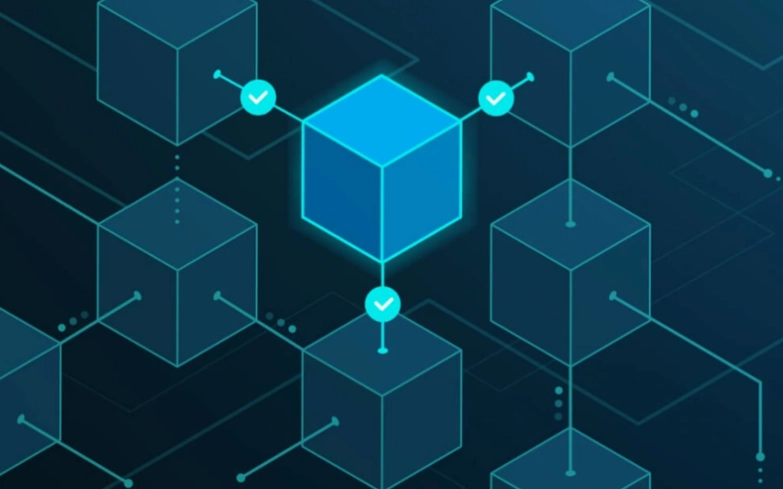
Blockchain offers a vision of self-sovereign identity. You could hold verified credentials (your degree, your professional license, your age proof) in a secure digital wallet on your phone. You then grant specific, time-limited access to whoever needs to verify it—a new employer, a bank, a bar—without handing over the raw document itself.
Countries like Estonia have been pioneers in digital identity for years and are exploring blockchain to further secure their systems. Microsoft's decentralized identity initiative is another big player betting on this future.
4. Healthcare: Securing Your Most Sensitive Data
Medical records are a mess. They're stuck in different hospital systems, clinics often can't talk to each other, and patients have little control. Blockchain can create a secure, unified, and patient-centric health record.
Imagine a ledger where every test result, prescription, and diagnosis is logged with a timestamp and cryptographic seal. You control the keys. You decide which doctor or researcher gets access to which part of your history. It improves care coordination, reduces administrative costs, and is a fortress for data privacy. Companies like Mediledger are using it to track pharmaceuticals and fight counterfeit drugs—a multi-billion dollar problem that costs lives.
5. Real Estate & Property: Cutting Through the Red Tape
Buying a house involves a mountain of paperwork, title searches, notaries, and agents. It's opaque and slow. Blockchain can digitize the entire property lifecycle.
A property's history—past owners, liens, permits, sales—can be stored on a tamper-proof ledger. Smart contracts (self-executing code on the blockchain) could automate the process. Once conditions are met (funds transferred, inspections passed), the title automatically transfers to the new owner. This reduces fraud, cuts down closing times from weeks to days, and lowers costs. Places like Georgia and Sweden have run successful pilots for land registry on blockchain.
6. Voting & Governance: A Tool for Trust in Elections?
This is a controversial but fascinating area. The goals are clear: increase accessibility (remote voting), eliminate fraud, ensure anonymity, and provide a verifiable, auditable trail so anyone can confirm the results are accurate.
Small-scale experiments have happened in places like West Virginia, USA (for military overseas voters) and Moscow, Russia. The potential is huge, but so are the challenges. The system needs to be perfectly secure, simple enough for everyone to use, and—most importantly—trusted by the public. The technology might be ready before society is. Personally, I'm skeptical about large-scale national elections using it anytime soon, but for corporate shareholder voting or community polls, it's a very promising answer to the question of where blockchain is used in real life.
7. Intellectual Property & Royalties: Fair Pay for Creators
Musicians, artists, and writers often get a raw deal. Royalties get lost in complex distribution chains, and proving ownership of digital art was nearly impossible until NFTs (Non-Fungible Tokens) came along.
While the NFT market has been volatile and full of speculation, the core idea is powerful. An NFT on a blockchain can irrefutably prove who created a digital asset and who owns it. More importantly, smart contracts can be baked in so that every time that asset is resold, a percentage automatically goes back to the original creator. This promises a new paradigm for artist compensation. Platforms like Audius are trying to do this for music.
8. Luxury Goods & Anti-Counterfeiting
Buying a luxury bag, a bottle of expensive wine, or a Swiss watch? How do you know it's real? Counterfeiting is a massive global industry. Companies like LVMH (Louis Vuitton, Dior) and De Beers (diamonds) are using blockchain to give each physical item a unique digital passport.
At the point of manufacture, a product gets a QR code or NFC chip linked to a blockchain record. That record follows the item through the supply chain to the retail store. As a buyer, you scan the code and see the entire authenticated history. No more guessing. It protects the brand and gives the customer absolute confidence.
9. Energy Trading: Peer-to-Peer Solar Power
This is a cool one. With the rise of home solar panels, people are becoming both energy consumers and producers. Blockchain enables peer-to-peer energy trading. Your neighbor with excess solar power can sell it directly to you, without going through the traditional utility company grid.
Micro-transactions are automated via smart contracts. Projects like Brooklyn Microgrid have tested this. It promotes renewable energy use, increases grid resilience, and can lower costs. It turns the energy market into a local, transparent network.
10. Charity & Aid: Ensuring Donations Reach Their Destination
A major pain point for donors is not knowing if their money actually helps the cause. Administrative overhead and corruption can siphon off funds. Blockchain brings radical transparency to donations.
Every dollar can be tokenized and tracked on a public ledger from the donor's wallet to the final beneficiary. Donors can see exactly how their funds were spent—on medicine, food, or building materials. The UN World Food Programme's "Building Blocks" project has used this to distribute aid to refugees, cutting banking fees and giving donors more confidence.
11. Gaming & Digital Assets: True Ownership of Virtual Items
Gamers spend real money on in-game items—skins, weapons, characters. But traditionally, you don't own these items; the gaming company does. They live on the company's server, and if the company shuts down the game or bans your account, you lose everything.
Blockchain changes that. In-game assets can be minted as NFTs, meaning you truly own them in your digital wallet. You could potentially sell or trade them outside the game's official marketplace, or even use them across different compatible games. It creates a player-driven economy. Games like Axie Infinity exploded this concept, despite its later financial issues.
12. Legal & Contracts: Automating the Fine Print
We touched on smart contracts with real estate, but their use is broader. Any multi-step agreement with clear conditions can be automated. Insurance is a prime candidate.
Imagine flight delay insurance. A smart contract could be connected to a trusted data source for flight status. If your flight is delayed more than 2 hours, the contract verifies this automatically and instantly pays the compensation into your account. No claim forms, no waiting, no arguing. It's a win for the customer and reduces processing costs for the company.
Comparing the Real-World Impact: A Quick Overview
To help visualize where blockchain is making the biggest practical difference right now, here's a simple breakdown. This isn't about ranking, but about understanding the nature of the impact.
| Sector/Use Case | Primary Problem Solved | Real-World Maturity Level | User Experience Impact |
|---|---|---|---|
| Supply Chain Tracking | Lack of transparency & traceability | High (Pilots & Live Deployments) | Indirect (Safer products, less fraud) |
| Cross-Border Payments | Slow speed & high cost | Medium (Banking Pilots) | Direct (Faster, cheaper transfers) |
| Digital Identity | Fragmentation & insecurity of personal data | Medium (Growing Pilots) | Very Direct (Control over your ID) |
| Anti-Counterfeiting | Product fraud | High (Live use by major brands) | Direct (Scan to verify authenticity) |
| Healthcare Records | Fragmented, inaccessible patient data | Low to Medium (Early stages) | Very Direct (Unified health history) |
| Smart Contracts (Insurance) | Slow, manual claim processes | Medium (Growing pilots) | Direct (Automatic payouts) |
The Other Side of the Coin: Challenges and Real-World Hurdles
It's not all smooth sailing. Anyone asking "where is blockchain used in real life?" also needs to know where it's stumbling. The hype often glosses over the real barriers.
Scalability: Many blockchains, especially public ones like Ethereum (though it's improving), can process far fewer transactions per second than, say, Visa. This is a major hurdle for mass adoption in payment systems.
Energy Consumption: Proof-of-Work blockchains (like Bitcoin's original design) are notoriously energy-intensive. This is a huge environmental and PR problem. The shift to more efficient consensus mechanisms like Proof-of-Stake (which Ethereum completed) is critical.
Regulation & Law: The technology moves faster than lawmakers. Legal frameworks for smart contracts, digital asset ownership, and liability are still being written. This uncertainty scares off large corporations.
Complexity & User Experience: Let's face it, managing private keys, gas fees, and wallet addresses is still a nightmare for the average person. Until using blockchain is as easy as using an app, mainstream adoption will be limited.
Interoperability: There are hundreds of blockchains. Getting them to communicate and share data seamlessly is a massive technical challenge that's still being worked on.
The biggest challenge isn't technical. It's about changing human behavior and entrenched business processes.
Common Questions About Blockchain in the Real World
Absolutely not. That's the biggest misconception. As we've seen, its core value is as a secure, transparent, and tamper-proof record-keeping system. That applies to tracking physical goods (supply chain), verifying identities, securing medical data, and automating legal agreements—none of which are purely financial.
It's real, but it's often in the pilot or limited deployment phase. Giants like Walmart, Maersk, De Beers, and IBM have moved beyond talk to concrete projects with measurable results (like tracing food in seconds). The adoption is cautious and focused on specific pain points, not a wholesale replacement of systems.
You probably already are, just invisibly. When you buy a verified luxury item, eat food tracked for safety, or eventually get instant insurance payouts, blockchain will be the backend engine. You might not have a "blockchain app" on your phone, but you'll benefit from the trust and efficiency it provides to the services you use.
This is crucial: no system is 100% secure. Blockchain is highly secure due to its cryptographic and decentralized nature, making it extremely difficult and costly to attack. However, the weak point is often not the blockchain itself, but the endpoints—the exchanges, wallets, and user mistakes (like losing private keys). It's like having an unbreakable vault (the blockchain) but sometimes leaving the key under the doormat (poor personal security).
Final Thoughts: The Quiet Revolution
So, where is blockchain used in real life? The answer is becoming clearer every day. It's in the background, fixing broken links in global trade, putting you in control of your data, and ensuring the things you buy are genuine.
The cryptocurrency rollercoaster grabs headlines, but the real transformation is quieter and more profound. It's about rebuilding trust in systems that have lost it. The journey is messy, with technical hurdles and regulatory gray areas. Some projects will fail (as Maersk's TradeLens did), but others will become as fundamental as the internet itself.
My own view? The most exciting applications aren't the ones trying to get rich quick. They're the ones you barely notice—the ones that make things work better, cheaper, and more fairly. That's where the real value of blockchain lives. Keep an eye on the supply chains, the identity projects, and the quiet infrastructure upgrades. That's the real world talking.
Reader Comments