In This Deep Dive
- What Is Market Cap, Really? (And How Dogecoin Fits In)
- The Key Drivers of Dogecoin's Valuation: It's Not Just Elon
- A Rollercoaster Ride: Dogecoin Market Cap History in Context
- How Does Dogecoin's Market Cap Stack Up? The Competitive Landscape
- Your Practical Guide: Analyzing and Using Dogecoin Market Cap Data
- Common Questions About Dogecoin's Valuation (FAQ)
- Final Thoughts: The Bottom Line on DOGE Market Cap
Let's talk about Dogecoin's market cap. You've probably seen the number floating around—sometimes it's $10 billion, sometimes it's $20 billion, and during those crazy 2021 days, it was knocking on the door of $90 billion. It's a figure that gets tossed around in headlines, but what does it actually mean for DOGE, the internet's favorite joke-turned-serious-asset? If you're trying to figure out whether Dogecoin is a legit investment or just a speculative rollercoaster, understanding its market capitalization is your starting point. It's more than just price times supply; it's a pulse check on the collective belief in a digital asset that started with a Shiba Inu meme.
I remember first buying a few DOGE for laughs back in 2017. The price was a fraction of a cent, and the total Dogecoin market cap felt like play money. Fast forward a few years, and seeing that valuation hit tens of billions was surreal. It forces you to ask: how did we get here? And more importantly, where is it going? This guide isn't about hype or shilling. We're going to peel back the layers on the Dogecoin market cap, look at what moves it, and try to separate the signal from the noise in a space dominated by tweets and viral moments.
Quick Reality Check: A high market cap doesn't automatically mean "stable" or "low risk." Dogecoin's history is proof of that. Its valuation can be incredibly fluid, swayed by factors that traditional analysts might dismiss. That's what makes it fascinating—and risky.
What Is Market Cap, Really? (And How Dogecoin Fits In)
Everyone throws the term "market capitalization" around, but let's strip it down to basics. In the crypto world, a coin's market cap is calculated by taking the current price of a single coin and multiplying it by the total number of coins in circulation. Not the total that will ever exist, but the ones actually out there, available to trade.
For Dogecoin, the formula is simple: DOGE Price x Circulating Supply = Dogecoin Market Cap.
But here's the first twist with DOGE: its supply isn't fixed. Unlike Bitcoin with its hard cap of 21 million, Dogecoin has an inflationary model. It creates about 5 billion new coins every year. This constant, predictable inflation is a core part of its design, originally intended to encourage spending rather than hoarding. This directly influences its long-term valuation mechanics in a way that's fundamentally different from Bitcoin.
Think of market cap as the total perceived value the market is placing on the entire network at that moment. It's a snapshot of sentiment, liquidity, and speculation all rolled into one number.
So when you see headlines screaming "Dogecoin market cap surges 50%!" it doesn't necessarily mean a flood of new money entered all at once. It could mean the price per coin jumped significantly, driven by a relatively smaller amount of trading volume on exchanges. That's a key point—market cap can be a bit of an illusion when it comes to liquidity. A coin with a high market cap but low trading volume can be more volatile than the number suggests.
Why Tracking Dogecoin's Market Cap Matters More Than Just Price
Newcomers often just watch the price. Was DOGE $0.15 or $0.16 today? But the price alone is misleading. Here's a scenario: If the Dogecoin developers decided to magically burn (destroy) half of all circulating coins tomorrow, the price would likely skyrocket because scarcity increased. But would the network suddenly be twice as valuable or useful? Probably not immediately. The market cap might adjust to reflect new scarcity dynamics.
Tracking the market cap of Dogecoin gives you a better sense of its relative size and clout in the broader crypto ecosystem. It answers questions like:
- Is Dogecoin a top 10 crypto by size, or has it fallen to top 20?
- How does its valuation compare to a "utility" coin like Chainlink or a "stable" legacy like Litecoin?
- Is its growth organic, or is it being pumped by isolated events?
It's the difference between looking at a stock's share price and looking at the company's total valuation. One gives you a unit cost; the other gives you a sense of scale.
The Key Drivers of Dogecoin's Valuation: It's Not Just Elon
Okay, let's be real. Elon Musk's tweets have had an undeniable, sometimes seismic, impact on Dogecoin's market cap. But reducing it all to one man's Twitter feed is lazy analysis. The Dogecoin market cap sits where it does because of a complex mix of factors, some unique to memecoins and some shared with the wider crypto market.
The Big Four Drivers: 1) Social Sentiment & Viral Trends, 2) Broader Crypto Market Health, 3) Adoption & Utility Developments, and 4) Supply Dynamics. Let's break each one down.
1. The Social Sentiment Engine
This is Dogecoin's primary rocket fuel. Its entire origin is a joke, and its community is built on humor and a lighthearted, welcoming vibe (the "Do Only Good Everyday" ethos). This creates a powerful, viral-ready culture. Positive sentiment on Reddit (like the famous r/SatoshiStreetBets and r/dogecoin), Twitter, and TikTok can translate directly into buying pressure. Negative news or jokes at its expense can do the opposite.
It's a feedback loop. Rising price and market cap generate more social media buzz, which attracts new buyers, which pushes the market cap higher. The reverse is also painfully true. I've watched DOGE charts flatline for weeks until a trending hashtag or a celebrity mention gives it a jolt. This makes the Dogecoin market valuation incredibly reactive to the news cycle in a way that more technical projects are not.
Is this a weakness? From a traditional investing standpoint, yes—it's a high-risk driver. But it's also the core of Dogecoin's identity and a major reason it hasn't faded into obscurity.
2. The Crypto Tide (It Lifts All Boats, Even Meme Ones)
Dogecoin doesn't exist in a vacuum. When Bitcoin and Ethereum are in a bull market, capital flows into the entire sector. Investors get greedy, look for higher-risk, higher-reward plays, and often land on well-known altcoins like DOGE. When the crypto tide goes out, during a "crypto winter," Dogecoin's market cap almost always shrinks significantly. Its correlation with Bitcoin's price, especially during downturns, is quite strong.
So, a big part of predicting where Dogecoin's market cap is headed involves having a view on the overall crypto market. If you believe we're heading into a sustained bull run, DOGE will likely participate. If you think a major correction is coming, Dogecoin will probably feel the pain, perhaps even more sharply due to its speculative nature.
3. Adoption: The Holy Grail for Sustainable Value
This is the factor that could potentially transition Dogecoin from a pure memecoin to something with more enduring value. Social hype can spike the Dogecoin market cap temporarily, but real-world use can support a higher floor.
We've seen fits and starts of this:
- Merchant Acceptance: A handful of companies, like the Dallas Mavericks (under owner Mark Cuban) and some online retailers, accept DOGE for payments. This is huge—it gives the coin a utility beyond trading.
- Tip Culture: Its original use case! Tipping content creators online with small amounts of DOGE remains a niche but genuine use.
- Technical Developments: While development is slower than in Ethereum or Solana, updates to improve transaction efficiency or security can boost long-term confidence. The community-funded Dogecoin Core developers do make progress, which is often overlooked.
Every time a new, legitimate business announces it will accept Dogecoin, it's a small brick in the foundation of its valuation. It answers the critic's question: "But what is it for?"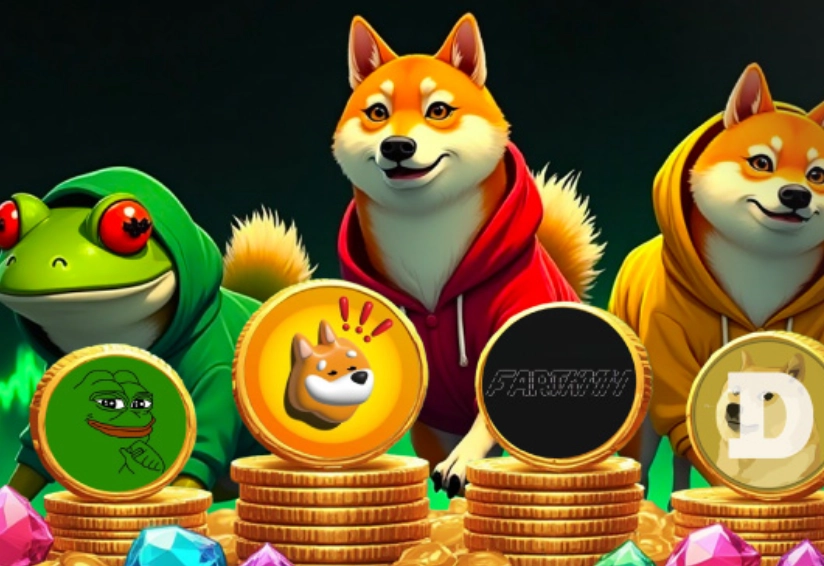
4. Supply Dynamics: The 5 Billion DOGE per Year Question
As mentioned, about 5 billion new Dogecoins enter circulation each year. At a price of $0.15, that's $750 million worth of new supply the market needs to absorb just to keep the price stable. At a price of $0.50, that's $2.5 billion of new supply.
This is a constant, gentle downward pressure on price (and thus market cap) that must be overcome by sustained demand. In a low-demand environment, this inflation can weigh heavily. In a high-demand, hype-driven environment, it can be easily overshadowed by buying pressure. It's a fundamental that long-term holders must keep in the back of their minds.
A Personal Take: The inflationary model is my biggest fundamental concern with DOGE as a long-term store of value. It's great for a currency meant to be spent, but it creates a constant headwind for price appreciation that fixed-supply coins don't have. You're betting that demand growth will outpace supply growth, year after year.
A Rollercoaster Ride: Dogecoin Market Cap History in Context
To understand the present, you have to look at the past. Dogecoin's market cap history is a masterclass in volatility and internet-driven phenomena. Let's map out the major eras. You can track this historical data on sites like CoinMarketCap, which provides charts going back to its inception.
The Early Days (2013-2016): Born from a meme in December 2013, Dogecoin's market cap was measured in the thousands, then millions of dollars. It was a fun community project for tipping and fundraising (like sponsoring a NASCAR driver). The valuation was trivial by today's standards, but the culture was set.
The First Spark (2017-2018): During the crypto bull run of late 2017, Dogecoin rode the wave. Its market cap first breached $1 billion, and at its peak in January 2018, it reached nearly $2 billion. This was its first real taste of mainstream speculative attention before crashing back down with the rest of the market.
The Sleeping Giant (2019-2020): It traded sideways for years, with a market cap typically between $200-$400 million. Many wrote it off as a dead meme. I certainly thought my 2017 bags were a permanent souvenir.
The Supernova (2021): This is the chapter everyone remembers. Fueled by the GameStop saga, pandemic retail trading, and the ultimate hype-man Elon Musk, Dogecoin went parabolic. In April 2021, its market cap exploded from around $7 billion to over $50 billion in a matter of weeks. It peaked in May 2021 at an astonishing $88 billion, briefly becoming a top 5 cryptocurrency. Let that sink in—a joke coin was valued at nearly ninety billion dollars. The pullback was brutal, but it forever changed the perception of Dogecoin's market cap potential.
The New Normal (2022-Present): After the 2021 mania, DOGE found a new, higher baseline. Its market cap has typically fluctuated between $8 billion and $25 billion, reacting to broader market cycles and sporadic news events (like Musk's Twitter acquisition). It's no longer a micro-cap curiosity; it's a established, if unconventional, player in the top 15 by market cap.
Here’s a simplified table to visualize its peak valuations and what drove them:
| Period | Approx. Market Cap Peak | Key Catalysts | Rank at Peak |
|---|---|---|---|
| Jan 2018 | $2 Billion | 2017 Altcoin Boom | Top 30 |
| May 2021 | $88 Billion | Elon Musk, Reddit, SNL Hype | Top 5 |
| Oct 2021 | $35 Billion | Broader Crypto ATH, Musk tweets | Top 10 |
| Current Range | $10B - $25B | General Crypto Market Sentiment | Top 15 |
How Does Dogecoin's Market Cap Stack Up? The Competitive Landscape
One of the best ways to gauge Dogecoin's position is to compare its market cap to its peers. It's not competing with Bitcoin (store of value) or Ethereum (smart contracts) directly. Its real competition is in two camps: other payment-focused cryptocurrencies and other memecoins.
Against Payment Coins: Dogecoin is often compared to Litecoin (LTC) and Bitcoin Cash (BCH). They all aim to be fast, cheap, digital cash. For a long time, Litecoin's market cap was orders of magnitude larger than Dogecoin's. The 2021 frenzy flipped that script entirely. As of now, Dogecoin's market cap often dances around or exceeds both Litecoin and Bitcoin Cash. This is a testament purely to its brand strength and community, as its technical merits are arguably less developed than Litecoin's.
Against the Memecoin Army: This is the new battleground. Dogecoin is the OG, but Shiba Inu (SHIB) launched explicitly as a "Dogecoin killer." The competition for the "top dog" memecoin market cap is fierce. SHIB has, at times, come very close to or even briefly surpassed DOGE's valuation. Then there's a whole zoo of others: Floki, Bonk, Dogwifhat. Dogecoin's first-mover advantage, stronger brand recognition, and Elon's apparent favor give it a defensive moat, but it's no longer the only memecoin in town. Its market cap is now a measure of its ability to retain relevance in a crowded field.
Your Practical Guide: Analyzing and Using Dogecoin Market Cap Data
So you want to use this information? Here’s how a regular person (not a Wall Street quant) can think about the Dogecoin market cap in their research.
Where to Find Reliable Data:
Don't just Google "DOGE price." Go to the aggregators that track market cap in real-time. My go-to is CoinMarketCap. It's the industry standard for a reason. CoinGecko is another excellent, trustworthy source. These sites show you the current Dogecoin market cap, its ranking, its trading volume, and its historical chart. Always cross-check if something seems off.
Key Metrics to Watch Alongside Market Cap:
1. 24-Hour Trading Volume: Is the market cap moving on thin volume (a potential red flag for a pump) or heavy volume (suggesting broader participation)?
2. Market Dominance: What percentage of the TOTAL crypto market cap is Dogecoin? Growing dominance in a bull market is a strong sign.
3. Circulating Supply Growth: Keep an eye on the supply figure. Is it steadily increasing by that ~5 billion per year? It should be—if it's not, something is wrong with your data source.
A Simple Framework for Your Own Analysis:
When news hits, ask yourself: "Will this likely increase the number of DOGE holders/buyers (demand), or increase the utility of the Dogecoin network (fundamental value)?" If yes, it could justify a higher future market cap. If the news is just a vague tweet with no actionable outcome, treat any resulting market cap spike with extreme caution—it's likely speculative and temporary.
Common Questions About Dogecoin's Valuation (FAQ)
Final Thoughts: The Bottom Line on DOGE Market Cap
Dogecoin's market cap is a story of internet culture colliding with global finance. It's a number that embodies community, hype, speculation, and a dash of genuine utility. It defies traditional models, which is both its appeal and its danger.
If you're looking at the Dogecoin market cap to make a decision, remember this: it tells you the "what" (the current size) but not the "why" or the "what next." Dig into the drivers. Is the latest move based on a viral trend or a partnership announcement? Is trading volume supporting the rise? How is its inflation keeping pace?
My own journey with DOGE has been a mix of amusement, disbelief, and hard lessons about volatility. I've learned to respect the power of its community while never forgetting its origins as a joke. That tension is what makes analyzing its market cap so uniquely interesting. It's not just another crypto asset; it's a social phenomenon with a price tag.
Whether you're a curious observer, a seasoned trader, or someone who just likes the Shiba Inu, understanding the mechanics behind that multi-billion dollar figure is the first step to seeing Dogecoin for what it truly is—and what it likely can, and cannot, become.
Reader Comments