Let's cut to the chase. Crypto taxes aren't optional, and the IRS is getting serious. I've seen too many people get a nasty surprise come tax season because they thought decentralized meant untraceable. It doesn't. Every trade, swap, or purchase you make with cryptocurrency is a potential tax event. Ignoring it is the fastest way to turn your digital gold into a real-world audit.
The good news? It's manageable. Complicated, sure, but manageable. This guide won't give you generic advice you can find anywhere. We're going deep into the practical steps, the common traps, and the strategies that can actually save you money.
What's Inside This Guide?
What Actually Triggers a Crypto Tax Bill?
Forget the idea that you only pay tax when you "cash out" to your bank. The IRS views crypto as property, not currency. That means every time you dispose of it, it's a taxable event.
Here’s the complete list of actions that will likely create a tax liability:
- Selling crypto for fiat (like USD, EUR). This is the obvious one.
- Trading one crypto for another (e.g., swapping ETH for SOL). This is a huge one people miss. You've disposed of your ETH, triggering a gain/loss, and acquired SOL with a new cost basis.
- Using crypto to buy goods or services. Buying a laptop with Bitcoin? That's two events: selling your BTC (taxable) and buying the laptop.
- Receiving crypto as income (staking rewards, mining income, DeFi yields, airdrops). This is taxed as ordinary income at its fair market value when you receive it.
- Gifting crypto above the annual exclusion ($18,000 in 2024). The giver doesn't realize a gain, but the recipient takes on the giver's cost basis.
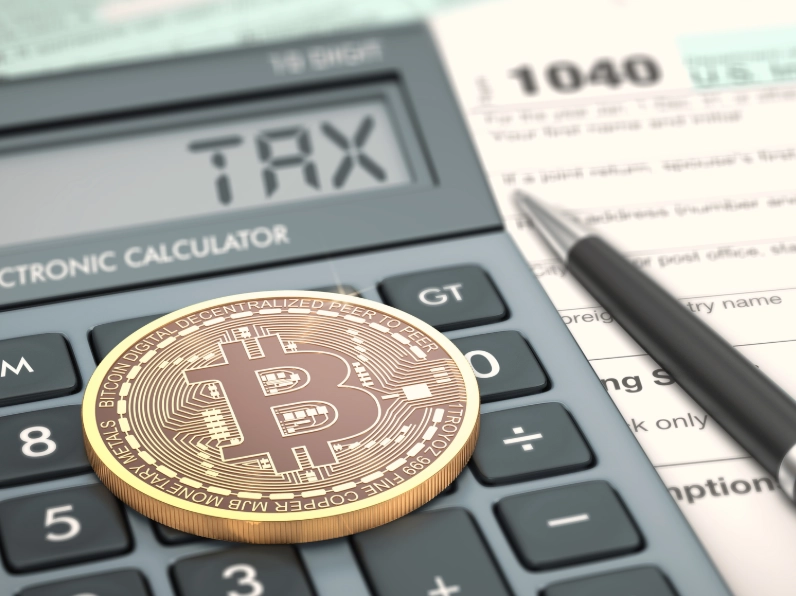
What's NOT Taxable (Usually): Buying crypto with fiat and holding it in your wallet. Transferring crypto between wallets you own. Donating crypto to a qualified 501(c)(3) charity (this can be a great tax move).
How to Calculate Your Crypto Gains and Losses (Step-by-Step)
The core formula is simple: Sale Price - Cost Basis = Capital Gain (or Loss). The devil is in the details of figuring out your "cost basis."
Your cost basis is essentially what you paid for the asset, including fees. The IRS allows you to choose a cost basis accounting method. This choice is critical and can significantly impact your tax bill.
| Method | How It Works | Best For... | Potential Drawback |
|---|---|---|---|
| FIFO (First-In, First-Out) | The first coins you bought are the first ones you sell. | Simplicity; it's the default if you don't specify. | Can result in higher taxes if your earliest coins were bought cheap. |
| LIFO (Last-In, First-Out) | The most recent coins you bought are the first ones sold. | Managing taxes in a falling market by selling high-cost-basis coins first. | Can be complex to track; not always optimal. |
| HIFO (Highest-In, First-Out) | You sell the coins with the highest cost basis first. | Minimizing current-year tax liability. This is the savviest method for active traders. | Requires detailed records and software support. |
| Specific Identification | You identify the exact lot of coins you're selling (by wallet ID, transaction ID). | Maximum control for advanced tax planning. | Extremely manual; you must meticulously track and report each lot. |
Once you have your gain or loss, you need to determine if it's short-term (held one year or less, taxed at your ordinary income rate) or long-term (held more than one year, taxed at preferential lower rates, 0%, 15%, or 20%). Holding for 366 days instead of 365 can literally cut your tax rate in half.
The IRS Forms You Can't Ignore
This is where rubber meets the road. You'll likely need a combination of these forms.
Form 8949: The Transaction Ledger
This is the core form for reporting your capital gains and losses from sales and trades. You'll list every single taxable disposal. Each entry needs the description of the asset, date acquired, date sold, proceeds, cost basis, and resulting gain/loss. Manually filling this out for hundreds of trades is a special kind of hell. This is the primary reason people use crypto tax software—it auto-generates this form.
Schedule D: The Summary
You take the totals from your Form 8949 and carry them over to Schedule D, which summarizes your total capital gains and losses for the year.
Schedule 1 (Form 1040): For Crypto Income
Any crypto you received as income—staking rewards, interest from lending platforms, mining income, airdrops—gets reported as "Other Income" on Schedule 1. You report the fair market value in USD on the day you received it.
The Form 8300 Trap: If you receive more than $10,000 in cash from a single crypto transaction (e.g., selling to a private party), you must file IRS Form 8300. This is an anti-money laundering rule that catches many OTC traders off guard.
Choosing Your Weapon: Crypto Tax Software Compared
Unless you made fewer than ten trades all year, manual tracking is a recipe for errors. Good software connects to your exchange APIs, imports your wallet addresses, and classifies transactions. But they're not all equal.
I've tested most of the major platforms. Here’s the real breakdown:
- Koinly: My top recommendation for most users. The interface is intuitive, it supports a massive number of exchanges and blockchains, and the tax reports are clear. Their customer support is actually responsive. The pricing is based on transaction count, which is fair.
- CoinTracker: Very popular and user-friendly. Integrates well with TurboTax, which is a big plus for some. However, I've found its handling of complex DeFi transactions to be less robust than Koinly's, and it can get pricey for active traders.
- TaxBit: Used by major institutions and has a very powerful engine. It's excellent for complex portfolios and offers a professional, audit-defense focus. The trade-off is that it's generally more expensive and its interface feels more "enterprise" than consumer-friendly.
- ZenLedger: A solid contender, especially for CPAs and tax professionals managing multiple clients. It has good DeFi support and offers a free tier for very small portfolios.
My advice? Start with a free account on one or two platforms. Let them import your data and generate a preview report. See which one correctly categorizes your tricky transactions (like that liquidity pool exit you forgot about). The time saved is worth the $50-$300 fee.
Beyond Basics: Tax Strategies for the Active Trader
Here's where experience pays off. Anyone can report gains, but smart planning reduces them.
1. Tax-Loss Harvesting: Your Silver Lining
This is the most powerful tool in your arsenal. If an asset is down, selling it to realize the loss isn't just admitting defeat—it's strategic. You can use that loss to offset other capital gains. If your losses exceed your gains, you can deduct up to $3,000 against ordinary income each year and carry the rest forward.
The subtle mistake: The wash-sale rule. For stocks, you can't buy a "substantially identical" asset 30 days before or after selling at a loss. The IRS hasn't officially extended this to crypto, but many experts believe it's coming. I operate as if it already applies. Don't sell your ETH at a loss on Coinbase and immediately buy it back on Binance.
2. Mind the Holding Period for Long-Term Gains
It sounds basic, but the difference between 364 days and 366 days is the difference between your top marginal tax rate (maybe 37%) and the long-term capital gains rate (maybe 15%). Plan your exits. Sometimes it's worth waiting two extra days.
3. Charitable Contributions of Crypto
If you have a highly appreciated crypto asset (bought low, now worth a lot), donating it directly to a qualified charity is a triple win. You get to deduct the full fair market value as a charitable contribution, you pay zero capital gains tax on the appreciation, and the charity gets the full amount. This is vastly more efficient than selling, paying tax, and donating the cash.
Your Burning Crypto Tax Questions, Answered
The bottom line is this: Crypto taxes are a fact of life in this ecosystem. The upfront work of setting up a tracking system—whether that's a detailed spreadsheet or, more realistically, a software subscription—pays for itself in peace of mind and potential tax savings. Start now, not on April 14th.
Reader Comments