Let's get this out of the way first: nobody knows exactly where the Bitcoin price is going next. Anyone who tells you they have a 100% accurate model is selling something, probably a dubious trading signal service. But that doesn't mean prediction is useless. Far from it. Successful Bitcoin market prediction isn't about finding a magic formula; it's about understanding probabilities, weighing conflicting data, and managing risk. It's less like fortune-telling and more like being a detective, piecing together clues from charts, blockchain data, and global headlines. This guide is for those who want to move from watching price charts in confusion to analyzing them with purpose.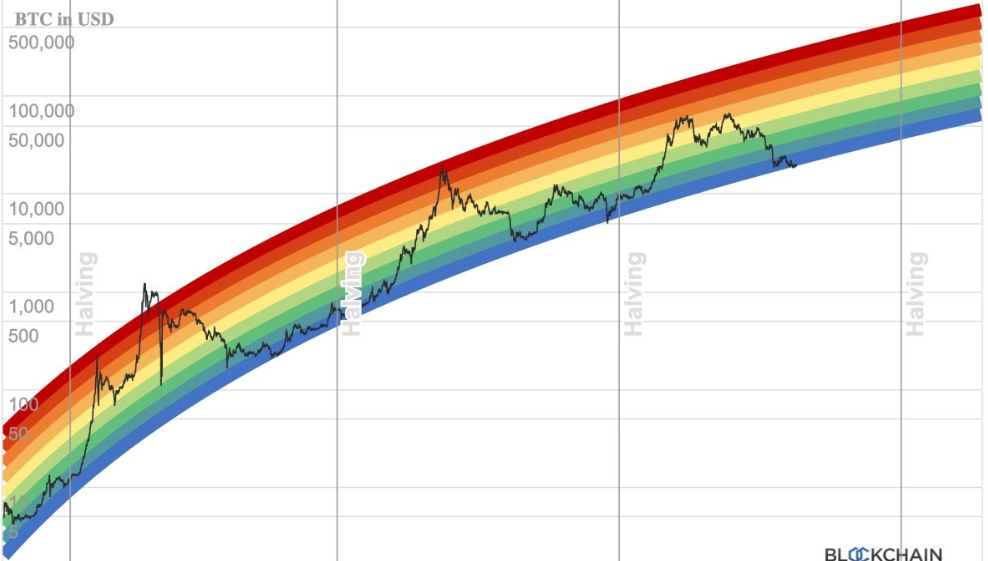
Your Roadmap to Smarter Bitcoin Analysis
- What Bitcoin Market Prediction Really Means (It's Not What You Think)
- The Three Pillars of a Serious Forecast
- How to Combine Signals Without Losing Your Mind
- The Essential Toolkit: From Free Charts to Deep Data
- The Predictable Mistakes Most New Analysts Make
- Looking Ahead: What Could Change the Prediction Game
- Straight Talk: Your Burning Prediction Questions Answered
What Bitcoin Market Prediction Really Means (It's Not What You Think)
When most people hear "Bitcoin forecast," they imagine a single price target and a date. "BTC to $100,000 by December!" That's entertainment, not analysis. In reality, professional-grade prediction is about defining a probabilistic range and identifying key price levels that, if broken, signal a shift in market structure.
Think of it as weather forecasting. A good meteorologist doesn't say "It will rain at 3:07 PM." They say, "There's a 70% chance of showers in the afternoon, with the highest risk between 2 PM and 5 PM." Your job is to decide whether to carry an umbrella. Similarly, a solid BTC market analysis might conclude: "The bullish thesis remains intact above $58,000, but a sustained break below $56,500 would invalidate the current uptrend and suggest a retest of $52,000." This gives you actionable levels, not fantasy numbers.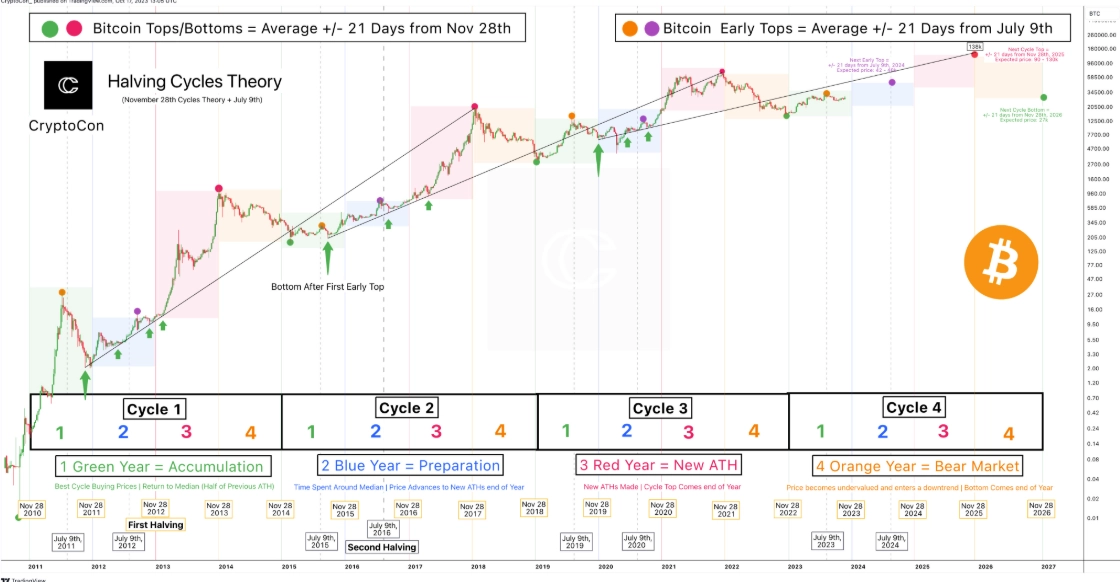
The core shift: Stop asking "What will the price be?" Start asking "What conditions would prove my current market bias wrong?" Defining your failure point is the most powerful prediction tool you have.
The Three Pillars of a Serious Forecast
Relying on one method is a surefire way to get blindsided. The market is a complex system. You need multiple lenses. These three frameworks form the backbone of most institutional-grade Bitcoin market analysis.
1. Technical Analysis (TA): Reading the Market's Psychology on the Chart
TA gets a bad rap sometimes, often from people who've only seen oversimplified "head and shoulders" patterns on Twitter. Used correctly, it's not about predicting the future in a vacuum; it's about identifying supply and demand imbalances and collective market psychology. Key elements aren't just lines on a chart, they're stories.
- Support & Resistance: These aren't magical lines. They represent price levels where a large number of trades happened in the past. A strong support zone is where buyers consistently stepped in. When price revisits it, you're watching to see if those buyers are still there. If they're not, and the level breaks, that's a major narrative shift.
- Moving Averages: The 200-day simple moving average (SMA) is famously watched. But here's a nuance most miss: its significance changes in different macro regimes. In a roaring bull market, the price might dip to the 20-day SMA and bounce. In a bear market, a rally to the 200-day SMA might be the selling opportunity. Context is everything.
- Volume Profile: This is where you see where the market actually agreed on price. A "high volume node" is a price area where a ton of BTC changed hands. The market tends to get pulled back to these areas. It's often more reliable than trendlines drawn by hand.
2. On-Chain Analytics: Seeing What the Blockchain Actually Does
This is your reality check. While TA interprets price action, on-chain data shows you the underlying behavior of network participants. It's the difference between watching a crowd cheer (price going up) and counting how many people are actually entering or leaving the stadium (coins moving).
Key metrics I check almost daily:
- Realized Price / MVRV Ratio: This tells you the average price at which all circulating coins last moved. If the current price is far above it (high MVRV), coins are in significant profit, which can lead to selling pressure. If it's below, coins are at a loss, which can indicate capitulation or accumulation.
- Exchange Net Flow: Are coins flowing into exchanges (potentially to be sold) or out of them (potentially to cold storage for holding)? Sustained outflow is a strong bullish signal. A sharp, large inflow can precede a dump.
- Entity-Adjusted Dormancy: This tries to measure whether older, presumably wiser hands are spending their coins (bearish) or if new, eager buyers are the ones active (can be bullish or frothy).
You don't need to calculate this yourself. Use sites like Glassnode or CoinMetrics.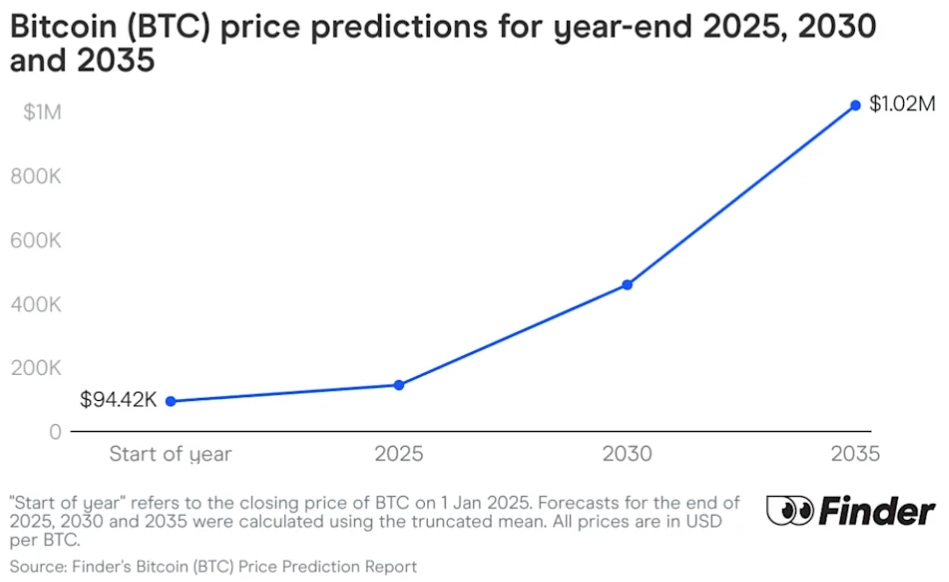
3. Macro & Fundamental Analysis: The World Outside Crypto
Bitcoin doesn't trade in a bunker. Since 2020, its correlation with risk assets like the Nasdaq has been undeniable. Ignoring macro is like trying to predict a boat's path in a storm while only looking at the engine.
- Liquidity Conditions: Is the Federal Reserve adding liquidity (QE) or draining it (QT)? Easy money tends to find its way into risk assets, including crypto. Tight money does the opposite.
- Dollar Strength (DXY): A roaring US dollar often pressures Bitcoin and other non-yielding assets.
- Network Fundamentals: Hash rate security, adoption metrics (like active addresses), and development activity. A rising hash rate during a price drop can be a powerful counter-trend signal, showing miner commitment.
| Methodology | Best For... | Biggest Pitfall | Key Tool/Resource |
|---|---|---|---|
| Technical Analysis (TA) | Identifying entry/exit points, short-term momentum, and market sentiment extremes. | Becoming a "chart zombie" who ignores fundamental reality. Over-optimizing on historical data (curve-fitting). | TradingView, with community scripts for volume profile. |
| On-Chain Analysis | Assessing long-term holder behavior, spotting accumulation/distribution, and validating price trends with network data. | Misinterpreting data. High exchange inflow could be for trading, staking, or a CEX's own wallet management, not just selling. | Glassnode Studio, CryptoQuant. |
| Macro & Fundamentals | Understanding the broader market regime, positioning for major trend shifts, and long-term valuation. | Getting the direction right but the timing terribly wrong. "Markets can stay irrational longer than you can stay solvent." | Fed statements, DXY chart, Bitcoin network stats. |
How to Combine Signals Without Losing Your Mind
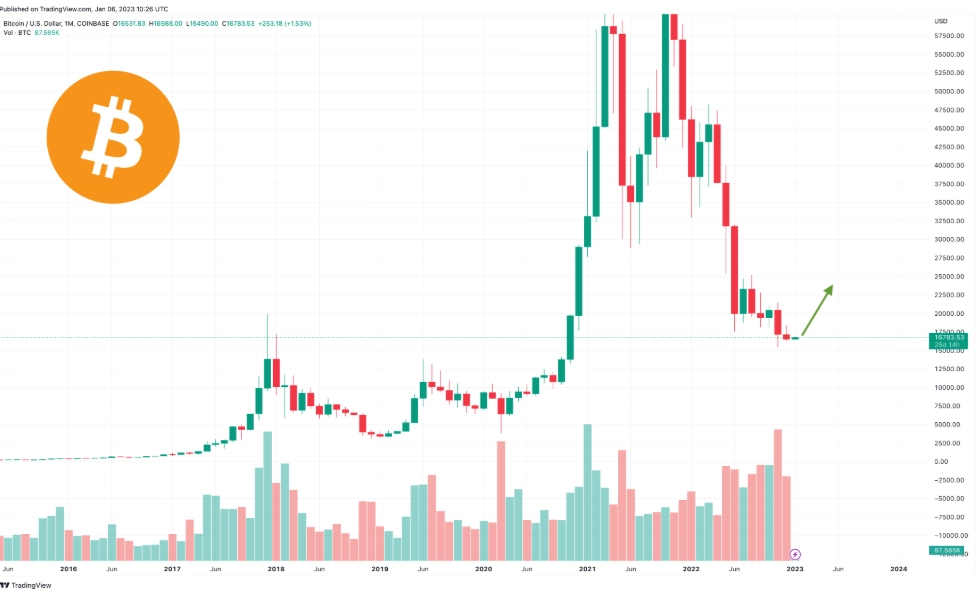
This is the art. Let me walk you through a hypothetical scenario from early 2023, when Bitcoin was languishing around $20k after the FTX crash.
The Conflict: Technically, the chart was a mess—still in a clear downtrend. Macro was awful—the Fed was hiking rates aggressively. Fear was palpable. But the on-chain data started whispering something else. Long-term holders (entities holding for 155+ days) stopped selling and began accumulating again. The amount of Bitcoin held on exchanges plummeted to multi-year lows. The MVRV ratio was deep in the "undervalued" zone, historically associated with bear market bottoms.
The Synthesis: The technical and macro picture said "risk off." But the on-chain story said "the people who understand Bitcoin best are quietly buying while everyone panics." A prediction based only on charts would have been bearish. A prediction incorporating the stubborn, quiet accumulation seen on-chain would have leaned towards a potential bottom forming, even if the immediate price direction was unclear. The subsequent move to $30k+ was driven by that underlying strength finally manifesting in price.
Your process should be a checklist: Do these three pillars agree? If they conflict, which one has the strongest, most historically reliable signal? Often, on-chain data leads price by weeks or months.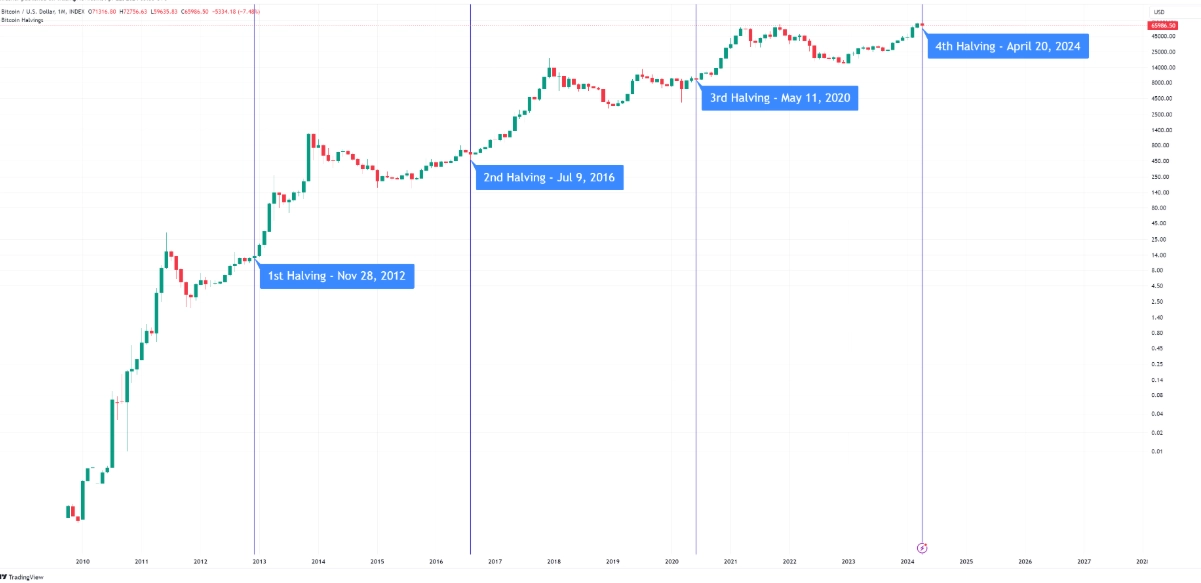
The Essential Toolkit: From Free Charts to Deep Data
You don't need to spend thousands. Start here.
- For Charts & TA: TradingView is the industry standard. The free tier is plenty to start. Learn to use the volume profile tool.
- For On-Chain Data: Glassnode's free tier offers key metrics. CryptoQuant also has valuable free community charts. For a quick, visual overview, LookIntoBitcoin charts are fantastic.
- For Market Sentiment: The Crypto Fear & Greed Index. It's simplistic, but extremes (below 20 for fear, above 80 for greed) have often marked local turning points.
- For News & Narrative: Follow a few key analysts on Twitter/X, but curate carefully. Avoid the permabulls and permabears. Follow people who show their data and reasoning, not just their price targets.
The Predictable Mistakes Most New Analysts Make
I've made these. Everyone has.
Mistake 1: Over-reliance on a single indicator. The RSI is overbought, so it must crash! Except in a strong bull trend, RSI can stay "overbought" for months. Use it as one piece of a puzzle.
Mistake 2: Confusing correlation for causation. "Bitcoin always goes up after the halving!" While historically true, it's not a causal law. The halving reduces new supply; the price impact depends on demand. If demand is flat or falling, the effect is muted.
Mistake 3: Letting your portfolio bias your analysis. If you're heavily long, you'll seek out bullish analysis and dismiss bearish data. It's human nature. Force yourself to write down the three strongest arguments against your current position.
Mistake 4: Chasing "predictions" for validation. The goal isn't to be "right" on Twitter. The goal is to make sound risk-adjusted decisions with your capital. A correct prediction with bad risk management can still lose you money.
Looking Ahead: What Could Change the Prediction Game
Prediction models must evolve. The dominance of US ETF flows is a new, massive variable. Large-scale adoption by nation-states or corporations could decouple Bitcoin from traditional tech stocks, breaking the recent macro correlation. The emergence of sophisticated derivatives and options markets adds layers of complexity to price action that didn't exist in 2017.
The next frontier is likely the integration of AI and machine learning to process these disparate data sets (news sentiment, on-chain flows, macro data) in real-time. But the core principle will remain: triangulate evidence, understand probabilities, and always know what would prove you wrong.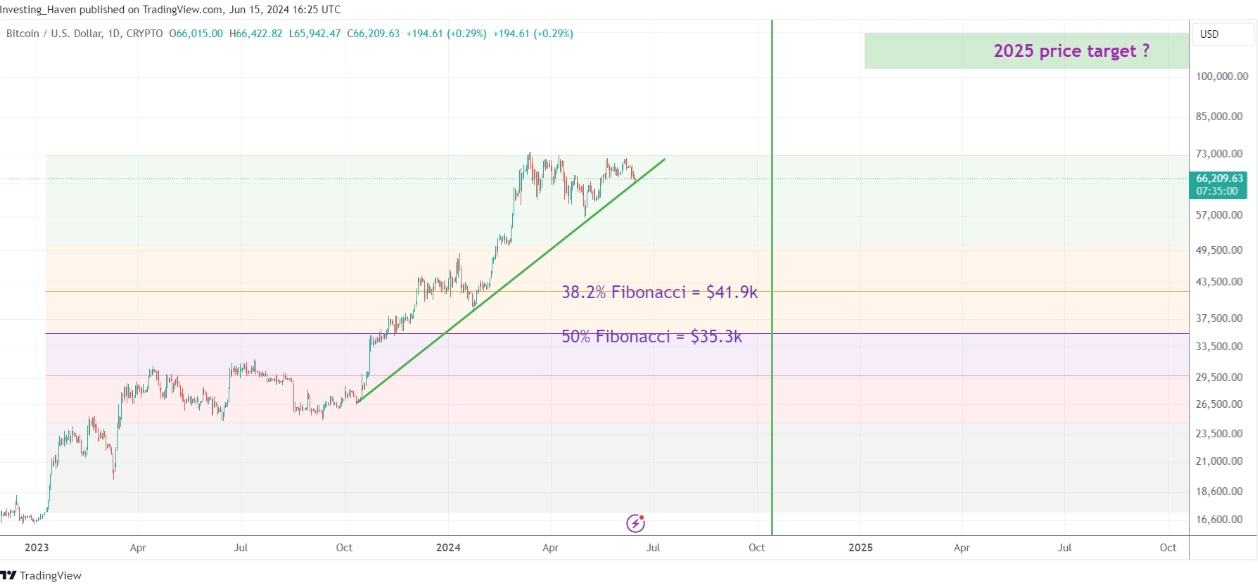
Straight Talk: Your Burning Prediction Questions Answered
I see AI models making Bitcoin price predictions. Should I trust them?
Treat them as one more data point, not an oracle. Most AI models are trained on historical price and sentiment data. They're excellent at recognizing past patterns but notoriously bad at pricing in novel, black-swan events (like a major exchange collapsing or a sudden regulatory shift). They often fail at the turning points that matter most. Use them to gauge consensus or potential trend exhaustion, but never outsource your final decision to an algorithm you don't understand.
How do I use prediction when everyone is talking about a "supercycle" to $500k?
Narrative euphoria is itself a powerful prediction signal—just not in the way the crowd thinks. When "supercycle" and ludicrous price targets dominate social media, it's often a sign of a late-stage bullish sentiment extreme. Your prediction work here shifts from finding upside targets to identifying weakness. Look for divergences: Is price making new highs but on-chain momentum (like Network Growth) slowing down? Are short-term holders dominating the volume? This is when you tighten stop-losses and start scaling out of positions, not FOMO in.
What's one on-chain metric that most retail traders overlook but is incredibly useful?
The Spent Output Profit Ratio (SOPR) for specific cohorts. The overall SOPR shows if the market is in profit or loss. But the real gold is filtering it for long-term holders. When LTH-SOPR breaks above 1 (meaning they start spending coins at a profit) after a long period of holding, it can signal they believe a local top is in. Conversely, if they spend coins at a loss during a crash (LTH-SOPR
 Final thought: Bitcoin market prediction is a skill that compounds over time. You'll get some calls wildly wrong. The key is to have a rigorous, repeatable process for each forecast you make. Write down your reasoning, the key levels to watch, and what would invalidate your view. Review it later. That feedback loop is how you learn, adapt, and move from guessing to analyzing. Now go look at a chart—not for an answer, but for the next clue.
Reader Comments