In This Article
- What Exactly is Pi Coin, Anyway?
- The Murky World of Pi's Current "Value"
- How to Actually Think About the Value of 1000 Pi
- The Big "If": What Has to Happen for Pi to Get a Real Dollar Value?
- Common Questions (And Straight Answers)
- A Realistic Scenario for Your 1000 Pi
- Final Thoughts: Managing Your Expectations
So, you've been tapping that lightning bolt every day, watching your Pi balance grow, and now you're staring at it thinking, "Okay, but what's this actually worth?" Specifically, you want to know: how much is 1000 Pi in dollars? Let's cut through the noise right away. As I write this, if you try to check a place like CoinMarketCap or CoinGecko, you won't find an official price. Zero. Zilch. Nada. That's because Pi isn't listed on any major exchanges yet. The Pi Network is still in its Enclosed Mainnet phase, meaning Pi coins can't be freely traded for dollars, euros, or Bitcoin on the open market.
But that doesn't mean your 1000 Pi are worthless, or that we can't talk about potential value. It just means the answer is more of an educated estimate than a hard number. The whole point of this article is to unpack that estimate from every angle. We'll look at the unofficial trading that does happen, how to think about valuation, what the future might hold, and crucially, the massive caveats you need to understand before you get too excited (or too disappointed). I've been following this project for a while myself, and I've seen the hype cycles come and go. My take? It's fascinating, but it's also a giant question mark.
What Exactly is Pi Coin, Anyway?
Before we even attempt to put a dollar sign on 1000 Pi, we have to be clear on what we're talking about. Pi isn't like Bitcoin you buy on Coinbase. It's a digital currency you "mine" (or more accurately, claim) from your phone. The project, led by a team of Stanford graduates, aims to create a cryptocurrency that's accessible to everyday people without sucking your phone's battery dry.
The process is simple: you download the app, hit a button every 24 hours, and you earn Pi. You can increase your rate by building a "security circle" and an "earning team." It feels like a game, and that's part of its appeal—and also part of the skepticism. Is this real crypto or just a clever app with a big user base? The developers argue they are building a robust ecosystem (they have a wallet, are developing apps, etc.) before opening the floodgates to trading. This "build first, trade later" approach is the core reason why asking "how much is 1000 pi in dollars?" is so tricky right now.
I remember when I first joined. A friend sent me an invite, and I thought, "Why not? It costs nothing." But a year in, with a few thousand Pi in my wallet, the novelty wore off and the practical questions set in. Sound familiar?
The Murky World of Pi's Current "Value"
Since there's no official market, where do people get these numbers like "$30 per Pi" or "$0.01 per Pi" you might see in online forums? It comes from two main places: Peer-to-Peer (P2P) platforms and IOUs on futures exchanges.
Peer-to-Peer (P2P) Trading
This is where things get wild and risky. On platforms like certain Telegram groups or niche crypto forums, people buy and sell Pi directly. A seller, who has passed KYC and can theoretically transfer Pi within the enclosed mainnet, agrees to send Pi to a buyer's wallet. The buyer sends fiat (like PayPal or Venmo) or another cryptocurrency in return. The prices here are all over the map and should be taken with a mountain of salt.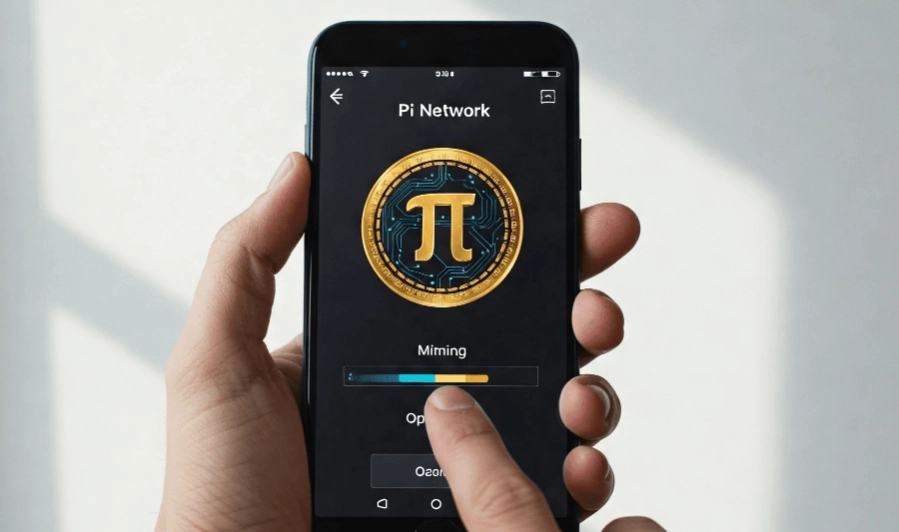
IOUs and Futures Listings
Some lesser-known crypto exchanges, like Huobi or BitMart, have listed "Pi IOUs." An IOU (I Owe You) is a futures contract—the exchange is promising to give you real Pi tokens if and when they become available for trading. The price of these IOUs is highly speculative and driven by hype and sentiment on that particular exchange. It's not a price for the actual Pi token in your mainnet wallet. The volatility is insane, and it's a pure bet on the future.
So, if we look at these unofficial channels, the estimated value for 1 Pi has floated anywhere from $0.10 to over $200. That means the answer to how much is 1000 pi in dollars could be anywhere from $100 to $200,000 based on pure speculation. See the problem?
How to Actually Think About the Value of 1000 Pi
Since we can't get a clean number, we need better frameworks. Instead of asking "how much is 1000 pi in dollars?", try asking: "How might the value of Pi be determined in the future?" Here are the main methods analysts use.
| Valuation Method | How It Works | Estimated Value of 1 Pi | What 1000 Pi Might Be Worth | Reality Check |
|---|---|---|---|---|
| Market Cap Comparison | Compares Pi's potential market cap to existing coins. If Pi had Dogecoin's market cap, what would each Pi be worth? | $0.10 - $15 | $100 - $15,000 | Assumes Pi achieves similar adoption/ hype as major altcoins. Very speculative. |
| Circulating Supply Model | Looks at how many Pi will be in circulation. With tens of billions mined, high per-coin value requires a massive total market cap. | $0.01 - $1 | $10 - $1,000 | More conservative. Highlights the dilution challenge from a large supply. |
| Utility & Ecosystem Value | Value derived from actual use: buying goods/services in Pi apps, paying for ads, etc. This is the team's stated goal. | Unknown. Could be low initially. | Unknown | The healthiest long-term driver, but takes years to build and is unproven for Pi. |
| P2P / IOU Price (Current Speculation) | Reflects current hype and demand from a tiny, illiquid market. | $10 - $50 (wildly variable) | $10,000 - $50,000 | Emotional and manipulative. Likely to crash if/when real trading launches. |
Looking at that table, the most talked-about range for a potential future price is between $0.10 and $5. That would put 1000 Pi in dollars at a range of $100 to $5,000. Honestly, I think the lower end of that is more realistic initially, given the huge supply. Anyone promising you a sure path to $30 per Pi is selling dreams, not analysis.
The Big "If": What Has to Happen for Pi to Get a Real Dollar Value?
Your 1000 Pi only convert to real dollars if a few major milestones are hit:
- Open Mainnet Launch: This is the big one. The Pi Core Team must transition from the current "Enclosed Mainnet" to an "Open Mainnet." This means the blockchain becomes permissionless, wallets can interact freely with external exchanges, and Pi becomes a tradable asset. There is no official date for this. The team's official website and social channels are the only source for this news—ignore random "launch date" rumors.
- Exchange Listings: Major exchanges like Binance, Coinbase, or Kraken must decide to list Pi. This isn't automatic. Exchanges will evaluate the project's legitimacy, technology, and user base. A listing on a top-tier exchange would provide the first true, liquid answer to how much is 1000 pi in dollars?
- Real Utility and Demand: For value to sustain beyond a initial hype spike, people need to want Pi for reasons other than selling it. Does the Pi app ecosystem have compelling dApps? Can you buy useful things with it? Without utility, it's just a speculative token with a huge supply, which is a tough sell.
Common Questions (And Straight Answers)
Officially, no. The Pi app wallet is not connected to any exchange. The only way is through the risky, unofficial P2P methods described above, which violate the terms of service and are full of scammers. I strongly advise against it.
Nobody knows for sure. It depends entirely on the Open Mainnet launch. The Core Team has been deliberately vague on timing, focusing on "building" instead. Any website or YouTube video giving you a specific date is guessing or lying.
If/when Pi is listed on an exchange like Coinbase, the process would be standard: 1) Transfer your Pi from your Pi Wallet to the exchange. 2) Sell your Pi for a stablecoin like USDT or directly for USD. 3) Withdraw the USD to your bank account. It will feel just like selling any other crypto.
Worth it in terms of time? It takes 30 seconds a day. So yes, the time cost is negligible. Worth it in terms of guaranteed future money? Absolutely not. You should view it as a high-risk, zero-cost lottery ticket. Don't invest money in it, don't quit your job over it, and don't believe anyone who says it's a sure thing. I keep mining, but it's more out of curiosity than expectation.
Apart from the project failing? The massive supply. Billions of Pi have been mined. If even a small percentage of holders try to sell when it lists, the price could drop precipitously. The initial sell pressure could be enormous. This is why realistic expectations are so important.
A Realistic Scenario for Your 1000 Pi
Let's try to ground this. Imagine Open Mainnet happens next year. Pi gets listed on a mid-tier exchange first. What might happen?
Day 1: Hype is through the roof. The price might spike to something crazy based on IOU prices—let's say $20. Your 1000 Pi looks like $20,000! But this is a paper gain.
Week 2: Selling pressure hits. Early miners who have hundreds of thousands of Pi start taking profits. The price begins to fall rapidly. It stabilizes at a much lower level as the initial frenzy dies down.
Month 6: The price finds its "true" early market level based on real trading, not hype. If the project shows some utility and development continues, maybe it settles around $0.50. If not, it could be a fraction of a cent. At $0.50, your 1000 Pi in dollars is now $500.
Is $500 for a few seconds of work each day a good return? Of course. Is it life-changing money? For most people, no. And this is a moderately optimistic scenario. It could be $50. It could (unlikely, but possibly) be $5,000. The key is to not bank on the highest number.
Final Thoughts: Managing Your Expectations
Chasing the answer to "how much is 1000 pi in dollars?" can drive you in circles because there isn't one. The project is in a state of limbo, and its value is purely notional.
My personal strategy, and what I'd suggest, is this:
- Keep mining if it's effortless for you, but treat it as a fun experiment, not an investment.
- Ignore the price speculators and "gurus" on social media. They profit from your hype.
- Focus on official sources like the Pi Network homepage and their official blog for real updates.
- Diversify. If you're interested in crypto, put real money (what you can afford to lose) into established projects with clear use cases and liquid markets. Don't put all your hopes in Pi.
The dream of turning a phone tap into a down payment on a house is powerful. It's the modern-day gold rush story. But for every Bitcoin, there are thousands of forgotten tokens. Pi has a massive community, which is its biggest strength and also its biggest risk—if that community's only goal is to cash out, the project will struggle.
So, bookmark this page. When Pi finally does get a real price, come back and see if any of these guesses were close. Until then, take a deep breath, tap your button if you feel like it, and go about your day. The answer to how much your 1000 Pi is worth in dollars is, for now, patiently waiting in the future.
Reader Comments