Let's talk about Worldcoin. You've probably heard the name, seen the weird silver Orb, and maybe even gotten a DM about "free crypto for scanning your eye." It sounds like sci-fi, and honestly, parts of it are. Founded by Sam Altman (of OpenAI fame) and Alex Blania, Worldcoin isn't just another cryptocurrency. It's a massive, audacious experiment with two core parts: a digital identity system called World ID, powered by biometric iris scans, and a cryptocurrency (WLD) meant to fund a future version of universal basic income (UBI).
I’ll be honest, the Orb made me pause. Handing over my iris data to a for-profit company for some crypto? But after digging into the tech, the team's white papers, and the actual user experience, I see a project trying to solve a real, gnarly problem: proving you're a unique human online without sacrificing all your privacy. Whether they succeed or create a dystopian nightmare is the trillion-dollar question.
What’s Inside This Guide
What is Worldcoin and How Does It Work?
At its heart, Worldcoin wants to be the global standard for proof of personhood. On today's internet, bots are everywhere—scraping data, spreading misinformation, gaming airdrops. How do you build systems (like fair voting or equitable resource distribution) when you can't tell a real person from a sophisticated script? Worldcoin's answer is World ID.
The Orb: Your Gateway to World ID
This is the most visible (and controversial) piece. The Orb is a custom-built, bowling-ball-sized hardware device. You find one at a pop-up location in a major city—they’ve been in places like Berlin, Tokyo, and Mexico City. You look into it, it scans the unique patterns of your iris, and it confirms you're a real, unique human who hasn't signed up before.
Here’s the crucial tech detail: the Orb doesn't store a photo of your eye. It uses sensors to create a unique, irreversible code called an iris hash. Think of it like a fingerprint, but for your iris. The raw image is deleted on the device. This hash is then used to issue your World ID, a zero-knowledge proof credential that lives in your World App.
Note on Availability: Orb operations are not global. They expand city by city based on regulatory approval and operational capacity. You can't get a World ID in every country yet. Check the official Worldcoin website for the latest map of active Orb locations.
The World App: Your Digital Wallet and Identity Manager
This is the app you download (available on iOS and Android). It's a multi-functional tool:
- Wallet: It holds your WLD tokens and other supported cryptocurrencies like Ethereum and USDC.
- Identity Vault: It securely stores your World ID credential.
- Verification Tool: You can use your World ID to anonymously prove your humanity to third-party apps and websites ("Sign in with Worldcoin").
The user flow is simple: download the app, get a QR code, take it to an Orb, scan your iris, and if you're verified, your World ID is issued and any available WLD token grant is deposited into your app wallet.
The World ID Protocol: More Than Just an Airdrop
Most people fixate on the free tokens. That's a marketing hook. The real long-term bet is on World ID becoming a fundamental web3 (and maybe even web2) primitive.
Imagine a social media platform that wants to limit one account per real person to cut down on harassment bots. Or a decentralized governance system for a DAO that wants one-vote-per-human. Or even an online educational platform offering one free course to each unique individual. These are potential use cases for World ID.
The protocol uses zero-knowledge proofs (ZKPs). This is fancy cryptography that lets you prove a statement is true without revealing the underlying information. In this case, you can prove "I have a valid, unique World ID" to a website without revealing which specific World ID you have. This aims to preserve privacy while preventing sybil attacks.
Developers can already integrate it. The Worldcoin developer documentation shows how apps can use the World ID SDK to add "proof of personhood" gates.
How to Get Worldcoin (WLD) Tokens
There are three main paths, and their availability depends entirely on where you live.
| Method | What You Do | What You Get | Key Limitation |
|---|---|---|---|
| 1. Orb Verification Grant | Visit an Orb, verify your iris, receive a World ID. | A periodic grant of free WLD tokens (e.g., 1 WLD every two weeks). Amount and frequency vary by region. | Orbs are not available in most countries, notably the USA. Grants are not available everywhere. |
| 2. Purchase on Exchanges | Create an account on a major crypto exchange. | Buy WLD tokens directly with fiat (USD, EUR) or other crypto. | You do NOT get a World ID this way. You're just trading the token. |
| 3. Receive as Payment | Offer goods/services, list WLD as a payment option. | WLD tokens sent from a customer's wallet to yours. | Requires a merchant ecosystem, which is still nascent. |
For most people outside Orb-operating regions, buying on an exchange like Binance, Kraken, or Bybit is the only practical option. The token trades like any other asset there. The grant system is an incentive mechanism to bootstrap the World ID network, not the primary way to acquire WLD.
The Elephant in the Room: Privacy, Security, and Centralization
Let's not sugarcoat this. The criticisms are serious and come from heavyweights like Edward Snowden and multiple data protection authorities.
The Privacy Trade-off: You are trading a highly sensitive biometric marker (your iris) for a digital credential and some crypto. Worldcoin's argument is that the iris hash is irreversible and the Orb deletes the image. But you are still creating a permanent, unique biometric key tied to your identity. If that hash were ever leaked or compromised in a future database, it's permanently linked to you. There's no changing your iris.
Centralization Irony: The project's goal is decentralized identity, but the onboarding is hyper-centralized. You must trust Tools for Humanity (the company behind Worldcoin) to build a secure Orb, to properly delete the images, and to not be coerced by a future government. The company also initially custodians your World ID private keys in the "managed" mode of the World App, though a self-custody option exists. This creates a massive single point of failure and control in the system's early, most critical phase.
Regulatory Headwinds: Countries like Portugal, Spain, and Kenya have halted Orb operations over data collection concerns. The UK's ICO has expressed significant doubts. Navigating global biometric data laws (like GDPR in Europe) is a minefield. This regulatory friction is a major roadblock to the "global" part of their vision.
My take? The technical approach to privacy (iris hashing, ZKPs) is more sophisticated than critics sometimes give it credit for. But the real risk isn't a hack of the hash; it's the potential for function creep and the sheer attractiveness of this centralized database to bad actors or overreaching states. The promise of decentralization feels years away.
Worldcoin's Roadmap and Future Outlook
Where is this all going? Worldcoin's whitepaper outlines a transition to full community governance. The aim is for the World ID protocol and the WLD token to be governed by a decentralized autonomous organization (DAO), removing Tools for Humanity from the driver's seat.
The success hinges on a few fragile assumptions:
- Adoption of World ID: Will enough developers and users actually use this for it to become a standard? Competing proof-of-personhood methods, like social graph analysis or phone verification, are less invasive.
- Navigating Regulation: Can they design a system that satisfies the world's toughest data privacy regulators? This is an open, and very expensive, question.
- Transition to Decentralization: Can a company truly hand over the keys to a system it built and funded? History in crypto is mixed on this.
- The UBI Promise: The distribution of WLD tokens today is a tiny, targeted experiment. A true, global, life-sustaining UBI funded by a token economy is a monumental economic and logistical challenge far beyond current tech.
Worldcoin is a breathtakingly ambitious bet. It's trying to build foundational infrastructure, and those projects are always messy, slow, and controversial. Whether you see it as a visionary solution to online identity or a dangerous biometric data grab depends largely on your trust in the team's execution and your faith in decentralized governance to eventually take over.
For now, if you're curious, you can interact with the token on exchanges without ever going near an Orb. If you're considering an Orb scan, weigh the permanent biometric commitment against the temporary token reward. And watch the regulatory landscape—it will likely determine Worldcoin's fate more than any code commit.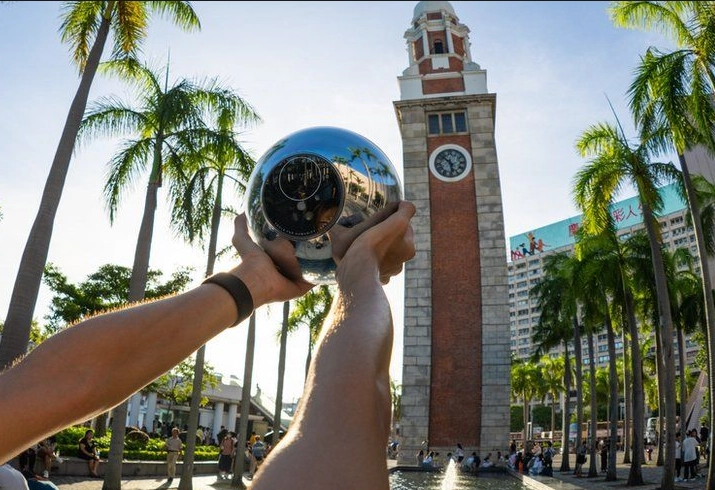
Your Burning Worldcoin Questions, Answered
Is the Worldcoin Orb safe? Can my iris data be misused?
Do I need to scan my iris to just buy and trade WLD tokens?
What happens if Worldcoin the company fails? Does my World ID become useless?
Reader Comments